B Narsing Rao: The artist who turned Telangana’s cultural memory into cinema
From cinema and theatre to painting, photography and literature, B. Narsing Rao has spent decades documenting Telangana's people, culture and social history. His honorary doctorate from Dr B R Ambedkar Open University recognises a multifaceted artistic legacy rooted in the region's soil.
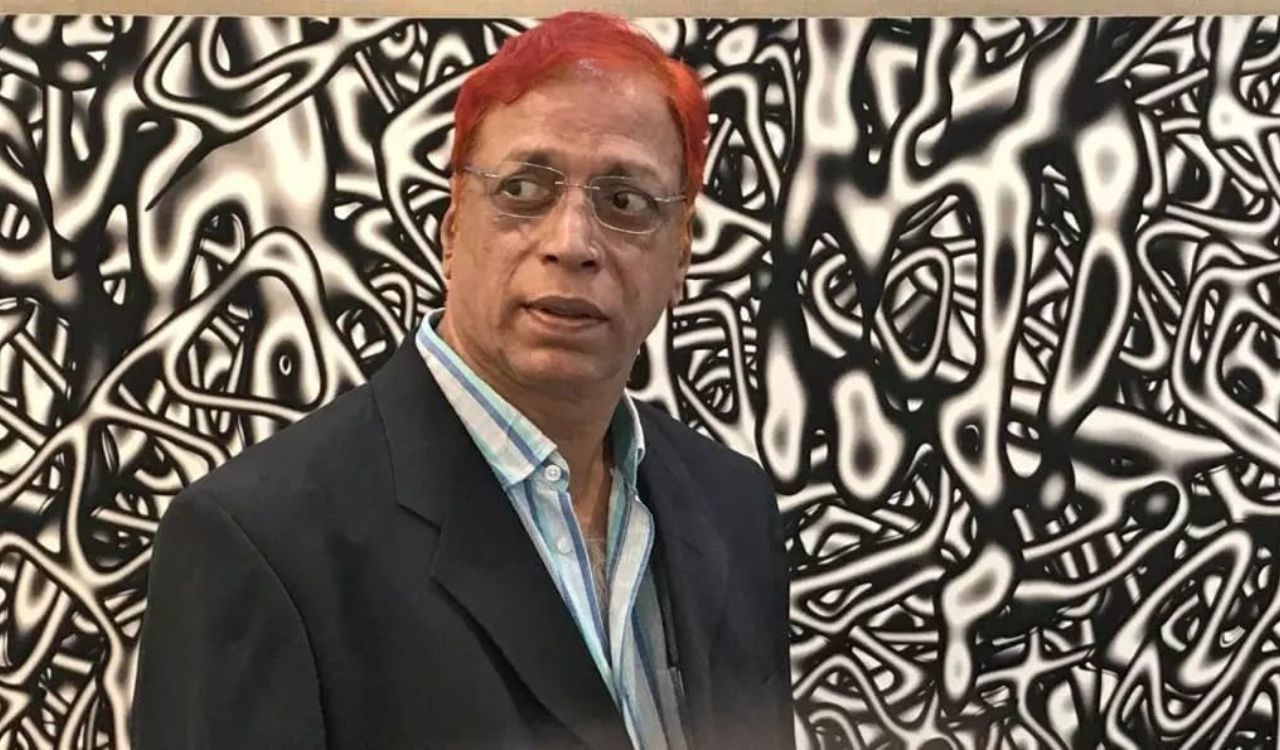


By Dr. J. Vijaykumarji
Hyderabad: When art reflects the life of the people, it ceases to be mere art. It becomes a testimony of an era. And when that testimony is preserved through painting, cinema, literature and photography, it becomes a guiding light for future generations. B. Narsing Rao is one of those rare creative geniuses who walked that path.
His deep bond with the soil of Telangana and its living culture echoes in every frame of his creation. To measure the talent of such an artist through a single art form is impossible, and to confine his creative journey to a single definition is even more difficult. Film director, producer, writer, poet, actor, painter, photographer, music lover, theatre activist – he is a cultural document who appears in many forms.
It is a moment of great honour for Telangana that Dr. B. R. Ambedkar Open University has conferred an Honorary Doctorate on this multifaceted genius, in recognition of his extraordinary service to Telangana’s art and cultural heritage.
More Than Just Films
What B. Narsing Rao created as a film director are not just films, but memories of a bygone era. What he portrayed are not just people, but the life of a society. What he did was not just art, but a vast and vivid canvas that brings Telangana’s cultural history to life.
The soil of Telangana, its language and dialect, rural life, folk culture and social reality are recurring themes in his work. Therefore, to see him merely as a film director is to diminish the scope of his creativity.
From a Golden Spoon to the People’s Path
Narsing Rao was born on 6th December 1946 in Pragnapur in the erstwhile Hyderabad State, into a wealthy feudal family that owned hundreds of acres and employed sixty to seventy workers. He lived a life of privilege – a golden spoon childhood. But because his father was a progressive thinker, his life took a different turn.
He came in contact with a fine arts teacher named Vithal, who was also an actor. With his encouragement, he began staging plays at Ravindra Bharathi. With Vithal’s support, he joined Fine Arts and completed his degree. During this time, he studied theatre, arts, literature and folk performance forms with great depth.
In the late 1960s, at a time of revolutionary upsurge, B. Narsing Rao founded the ‘Art Lovers Association’. He transformed song, poetry, street performance, folk art forms and theatre into a medium for direct dialogue with the people. The group would travel to rural areas, observe people’s lives and reflect them in their art. In this cultural movement, Gummadi Vithal Rao, who had not yet become Gaddar, joined him as a companion.
They became the cultural torchbearers of people’s art and began giving inspiring performances. They collected thousands of folk and revolutionary songs and performed them in villages around Hyderabad. In 1972, Narsing Rao renamed the Art Lovers Association as ‘Jana Natya Mandali’. The duo’s later role in building a cultural movement is itself history. They wrote and staged plays like Pothula Vyavasayam, Samadhi, Beedala Patlu and Kotta Manishi. Though born into a landlord family, he yearned for the poor and the oppressed. Between 1972 and 1975, unexpectedly drawn to the revolutionary path, he spent some time underground.
This early experience profoundly influenced his later artistic journey. His cinema reflects the perspective of going amidst the people to see their lives, rather than observing them from a distance.
A Realistic Lens on Society
He did not use cinema merely as a tool for storytelling, but as a medium to reveal society with a realistic vision.
The film Maa Bhoomi (1979) was a milestone in his journey as a producer and writer. While Gautam Ghosh directed the film, Narsing Rao was its producer and co-writer. The film stands as a testimony to the Telangana peasant struggle and the miserable lives of common people under the feudal system. His passion is evident in bringing the reality of that time to the screen.
Maa Bhoomi earned a unique place in Telugu cinema as a mirror of Telangana’s social reality. It proclaimed that cinema is not just for entertainment, but a powerful medium to document the history of a region, the experiences of its people and its social consciousness. By bringing issues like the Telangana peasant revolt, the zamindari system and the life of poor farmers to the public through cinema, he brought the history of a region into the discourse of Indian cinema. Gaddar’s song ‘Bandenaka Bandi Katti Padahaaru Bandlu Katti’ from the film became a massive hit. Therefore, Maa Bhoomi should be seen not just as a film, but as a visual form of Telangana’s people’s history.
From there, Narsing Rao’s cinematic journey took a more distinctive direction. His directorial debut Rangula Kala explored the inner world of an artist. It is the story of painters searching for direction in art.
Rangula Kala created another important chapter in his creative journey. The indigenous music gave life to the film. With Gaddar acting and singing songs like ‘Jum Jummal Marri’ and ‘Bhadram Koduko’, the film was taken to the next level. The songs make the heart melt.
Rangula Kala is an experimental film. If you want to see the life of Hyderabad city of that era, you can watch this film. It stands as the highest form of art and displays a rebellion against slavery. The film won the National Award for Best Telugu Feature Film. Here, he appears not just as a director, but as a creator who sees cinema as a comprehensive art form, where music, painting, literature, acting and photography naturally flow from one form to another.
The Voice of Silence
His next film Daasi (1988) gave a voice to silence. It is one of the most important Indian films in his career. The film realistically reflected the life of a socially oppressed woman, the exploitation in the feudal system and the inner struggle for human dignity.
Winning five National Film Awards including Best Telugu Film, and receiving a Diploma of Merit at the Moscow International Film Festival, was a rare honour for his creativity. More important than the awards, he proved that even the life of a person on the margins of society can be portrayed with artistic dignity and a humane perspective.
It is said that after watching Rangula Kala, Harindranath Chattopadhyay, brother of Sarojini Naidu, shed tears. Arudra wrote a 16-page review in a daily newspaper. After watching Daasi, the Bengali director Tapan Sinha, Jnanpith awardee U. R. Ananthamurthy from Karnataka, and Raj Kapoor’s eldest son Randhir Kapoor said the same thing on different occasions: “My country is proud of you.” What a great compliment indeed.
Documenting the Soil
Along with films like Matti Manushulu and Harivillu, he also made documentaries like Maa Ooru, The City and Aakriti. Through his films, he sublimely showed on screen the great bond between this land and man.
Matti Manushulu reflects the relationship between man and land and many harsh realities of rural life. The film also received international recognition.
Similarly, Maa Ooru stands as a film that documented the lifestyle, customs, memories and social structure of a village community. It won the award for Best Film at the 36th National Film Awards. His films stay in your memory for a long time after you watch them.
Among those introduced to Telugu cinema by B. Narsing Rao are director Gautam Ghosh, Archana, Roopa, Neena Gupta, actors Bhupal, Sai Chand, Gaddar, Khader Ali Baig, famous painter Thota Vaikuntam, poet Devipriya, Chandra and many others.
But Narsing Rao’s creative horizon does not end with cinema. His creative nature is to not stop after achieving success in one field, but to explore another art form.
This Honorary Doctorate being conferred on B. Narsing Rao in his creative journey is not just a felicitation. It is a great honour bestowed upon a multifaceted artistic creation born from the soil of Telangana, and upon a representative of a generation who preserved cultural memories through art.
Author is Telangana theatre searcher.
Related News