Ban all new oil and gas fields
If we are serious about limiting global warming, we should only burn a small fraction of our known fossil fuel reserves


By David Waltham
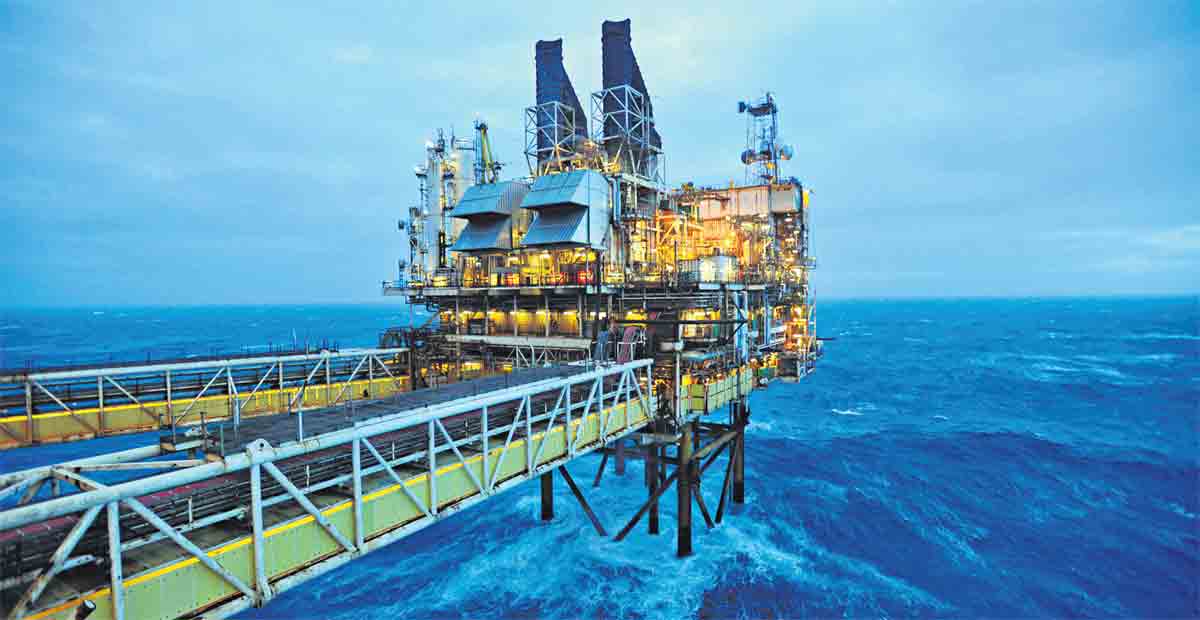
As a professor of geophysics, I have spent 36 years training young geologists destined to work in the fossil fuel industry how to look for oil and gas. But now I believe it’s time to stop fossil-fuel exploration and halt the development of all new oil and gas fields. We cannot safely set fire to all the fuel we’ve already found, so why look for more?
BP’s annual energy review for 2021 estimates that the world has discovered 1.7 trillion barrels of oil, 188 trillion cubic metres of gas and nearly three trillion tonnes of coal that are commercially extractable – but that has not yet been actually extracted.
My calculations, based on the typical carbon contents of these fuels and the expected effects of emissions on temperatures, suggest that emissions from using those barrels of oil alone would raise global temperatures by almost 0.6°C. Using the natural gas would add another 0.2°C. And as for the coal, burning it all would raise temperatures by a further 2°C.
Realisation
The conclusion seems clear: if we are serious about limiting global warming (already at 1.1°C above pre-industrial levels) to “well below 2°C” – as specified by the Paris Agreement on climate change – we can only burn a small fraction of our known fossil fuel reserves.
Others have arrived at the same realisation. A recent, more detailed analysis in Nature similarly concluded that to reach global climate targets, most planned fossil fuel extraction projects can’t go ahead. And in May, the International Energy Agency (IEA) explicitly called for an end to new oil and gas fields, as well as to new coal mines and mine extensions, around the world.
Some countries are taking this idea seriously. Countries like France, Ireland, New Zealand, Costa Rica and Denmark have already placed partial or complete bans on fossil fuel exploration within their jurisdictions.
And Denmark and Costa Rica have gone further, also launching the Beyond Oil And Gas alliance at the UN climate conference COP26 to encourage more nations to implement similar bans. Although Wales signed up to the alliance quickly, neither England nor Scotland look likely to join any time soon. Although that may change depending on recommendations to be offered by the UK government’s climate change committee early in 2022.
Money Matters
Surprisingly, an end to new oil and gas fields could be in the financial interests of fossil fuel companies. Exploring for and developing a new field costs billions of pounds: money that could be saved by not investing in fields that, because of climate concerns, may never be used. Limiting supply also helps maintain oil and gas prices, and therefore the value of existing oil and gas fields.
In contrast, continually adding new capacity to extract fossil fuels will lead to a price collapse when actions to combat climate change hopefully lead to greatly reduced fossil fuel demand. Such price falls would not only hurt oil company profits, but would also encourage additional fossil fuel usage and make climate targets even harder to meet.
An end to new oil and gas fields may also be in the interest of countries that are financially dependent on exporting fossil fuels. The IEA has pointed out that, if we stopped field developments now, most of our oil and gas would still end up coming from oil-exporting nations like Saudi Arabia and Qatar.
However, this message isn’t being listened to by most in the fossil fuel industry. Although I think the oil industry is preparing for a low-carbon future much faster than most environmentalists give it credit for, current plans for this “energy transition” towards renewable energy still include exploration and development of new fields.
Carbon Capture
One justification for continuing exploration is that carbon capture and storage techniques (CCS), where carbon dioxide is captured and buried safely underground, can help reduce emissions from fossil fuel burning.
We know that CCS can help the world decarbonise. And it’s already doing so. For example, in the North Sea, one successful project has been burying carbon dioxide one kilometre below the sea floor at the rate of a million tonnes a year since 1996. However, CCS is unlikely to become widespread enough to discount the fact that we have far more fossil fuel reserves than we can safely burn.
Plans for keeping climate change to 1.5°C targets generally include CCS, but none envisage it as more than a small part of a large mix of approaches. For example, the IEA’s scheme to achieve net zero emissions by 2050 involves capturing and burying carbon dioxide at a relatively ambitious rate of 7.8 gigatonnes of carbon dioxide per year. But achieving this would still only allow us to consume an extra 1% of existing oil reserves each year.
Further exploration and development are also justified by suggesting that less climate-friendly fields could be closed to build newer, more efficient ones that produce fewer emissions for each barrel of fuel extracted. But this is unconvincing.
We’re already seeing owners of prematurely closed coal-fired power stations demanding compensation for lost earnings, making such closure plans expensive to implement and complex to negotiate. Compensating oil-field investors will be even harder and more expensive. It would be much better for people and planet if there were no further investments in the first place.

Now you can get handpicked stories from Telangana Today on Telegram everyday. Click the link to subscribe.
Click to follow Telangana Today Facebook page and Twitter .

Related News
-

Trump announces Greenland security deal with Denmark
-
Denmark, 4 EU nations agree on ‘return hubs’ outside bloc for rejected asylum seekers
-
Danish PM says her country is ‘ready to defend’ Greenland as Trump joins NATO leaders in Turkiye
-
Tuchel hails England’s intensity after convincing win over Costa Rica