Calcutta High Court bars coercive action against Abhishek Banerjee till November 30
The Calcutta High Court on Tuesday barred police from taking coercive action against TMC MP Abhishek Banerjee in three criminal cases till November 30, saying custodial interrogation was unnecessary, while directing him to cooperate with the investigations
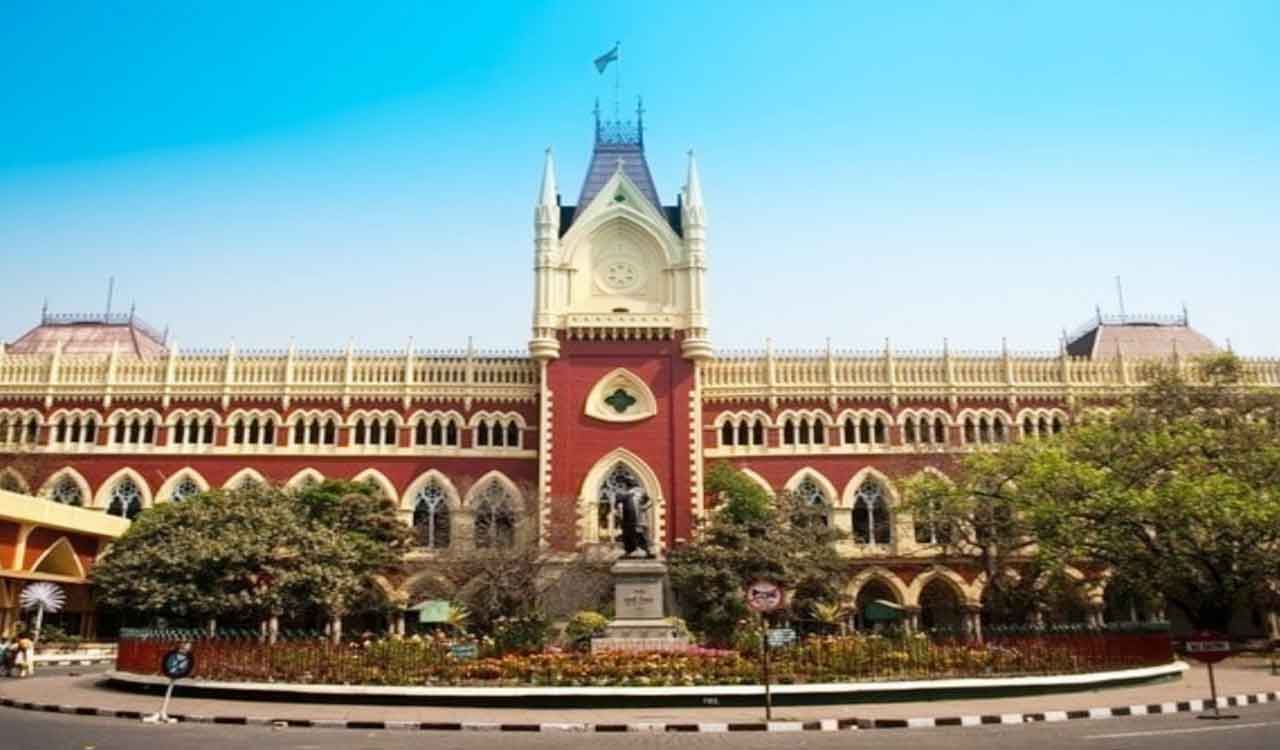


Kolkata: The Calcutta High Court on Tuesday directed the police not to take any coercive steps against TMC MP Abhishek Banerjee in three criminal cases against him till November 30, holding that custodial interrogation is not necessary.
Justice Saugata Bhattacharyya directed the Diamond Harbour MP not to travel abroad without the high court’s permission.
He clarified that the permission granted to Banerjee by the Supreme Court to go abroad for three weeks for medical reasons would not be curtailed by this order.
Holding that custodial interrogation of the TMC leader in connection with the three cases is not necessary, the court directed the police not to take any coercive steps against him till November 30.
Justice Bhattacharyya directed the police to file a progress report on the investigation in the three cases when the matter is taken up for hearing again on November 23.
Banerjee was directed to cooperate with the investigation and comply with notices issued in connection with the three cases. Justice Bhattacharyya directed that at least 48 hours’ prior notice be given to Banerjee for appearance before the investigators in the cases.
He directed that the police authorities concerned may move this court for variation or vacation of the order if Banerjee does not cooperate with the investigations.
After the court directed that the MP would not visit any foreign country without its permission, Banerjee’s lawyer mentioned that the Supreme Court had on August 10 granted him permission to travel abroad for medical reasons.
The state’s lawyer submitted that the apex court order granting permission to Banerjee to travel abroad applies only to the petition that was before it.
Banerjee’s lawyer stated before the court that the MP has not gone abroad yet as he requires a doctor’s appointment and also that his personal account, debit and credit cards were frozen by a private bank.
Another bench of the high court was on Monday informed by the private bank that the freezing of Banerjee’s account and cards was lifted after he provided the required KYC documents.
“The order passed today shall not in any way curtail the right of the petitioner to go abroad for treatment in terms of the order passed by the Hon’ble Supreme Court on August 10, 2026, for treatment, subject to compliance of conditions mentioned in the said order,” Justice Bhattacharyya clarified.
A prayer for a stay on the operation of this order by the additional advocate general was declined by the court.
The high court had on June 30 granted interim protection to Banerjee from coercive steps by the police in connection with three FIRs lodged against him at Bhowanipane, Bishnupur and Kalitala police stations.
Deciding whether multiple FIRs can be questioned in a single writ petition, Justice Bhattacharyya said that it had been earlier held by a coordinate bench that this can be done if similar proceedings against the same persons are in question.
Noting that eight criminal prosecutions were indicated in the petition, Justice Bhattacharyya said that particulars of only three FIRs were available before this court.
“The court finds it is not appropriate to decide the propriety of FIRs/criminal prosecutions where particulars are not furnished,” Justice Bhattacharyya said, holding that this court believes that lack of details will create a hindrance in drawing a just and correct conclusion.
The court stated that it would not be appropriate to rule on FIRs lacking particulars as details for only three FIRs were presented before it.
Justice Bhattacharyya, referring to an earlier Supreme Court judgment, stated that filing a singular FIR-based writ petition is not required when FIRs are drawn up against an identical person, and relief is sought in terms of Article 21 of the Constitution.
“Relegating the petitioner to file different writ petitions questioning separate FIRs would only lead to multiplicity of litigations that is not found to be a prescription of law to administer justice,” the court said.
The court also placed reliance on observations made by a coordinate bench of the high court in an October 2025 judgment over a matter involving Suvendu Adhikari, who was then the Leader of Opposition.
Justice Bhattacharyya noted that in that judgment it was held that if separate applications are filed, in all probability those would have been taken up for hearing analogously as those petitions involve similar issues and questions of law.
The court also noted that Banerjee was informed by the state on July 30 during the hearing of this petition that 16 FIRs are pending against him.
The court said that, owing to the lack of details of the other criminal prosecutions, it was deciding on three FIRs – one at Bhowanipur, another at Kalitala and the third at Bishnupur police station.

Related News
-

Calcutta HC extends interim protection to Mahua Moitra in hate speech case
-
New names and symbols for Mamata and Ritabrata-led Trinamool factions likely to come out today
-
Kolkata Police summons Humayun Kabir in Camac Street scuffle case
-
TMC office ransacked in Kolkata, Abhishek Banerjee blames ‘BJP hooligans’