Cyberabad firms pledge to cut employee commute vehicles by 10 pc by 2027
More than 15 corporate organisations in Cyberabad have pledged to reduce employee commute vehicles by 10 per cent by 2027. Cyberabad Moves 2026 brings together government, industry and civil society stakeholders to explore sustainable mobility solutions.
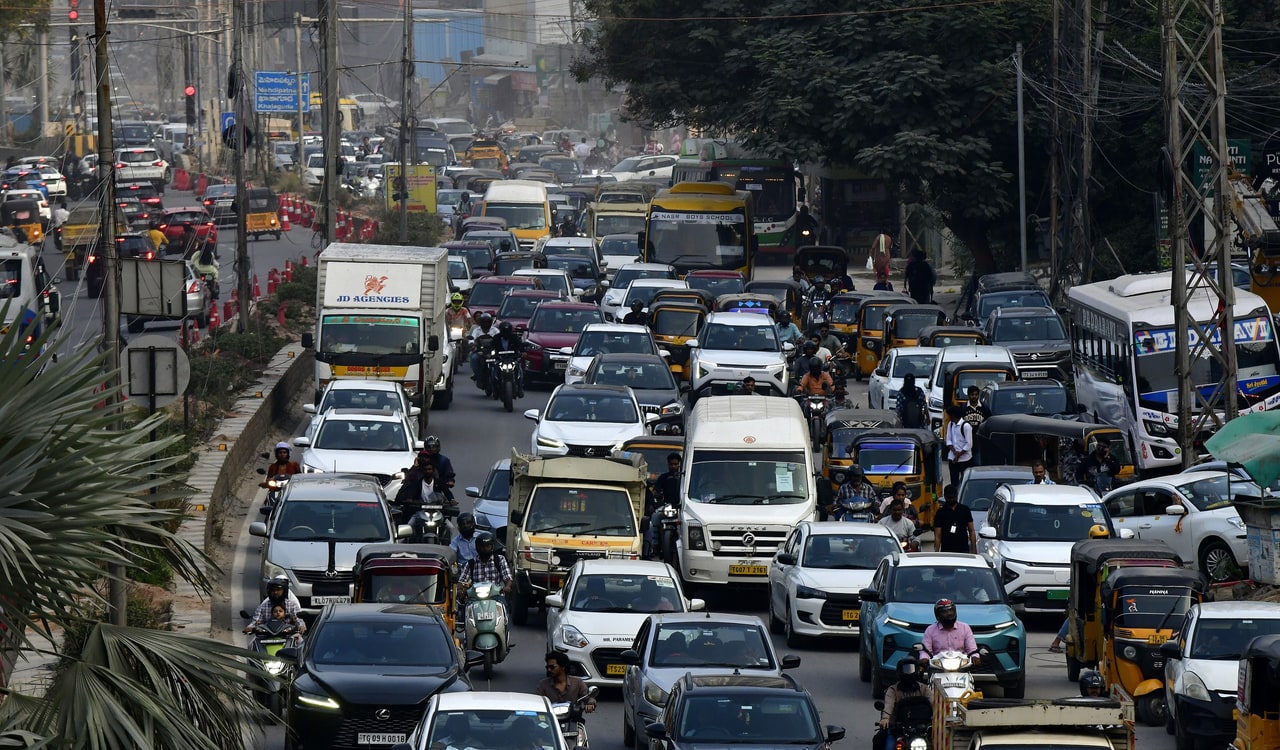


Hyderabad: More than 15 corporate organisations operating in the Cyberabad region have pledged to reduce vehicles used for employee commuting by 10 per cent by 2027 through carpooling, public transport, company shuttles and hybrid working practices. The pledge was made as part of the three-day Cyberabad Moves 2026 initiative, which began at T-Hub on Thursday.
The first-of-its-kind initiative has brought together more than 200 stakeholders from government departments, corporate organisations, urban planning institutions, academia, non-governmental organisations (NGOs) and civil society to develop data-driven and people-centric solutions to Cyberabad's growing mobility challenges.
Organised by the Telangana government, Cyberabad Municipal Corporation, Cyberabad Police, the Society for Cyberabad Security Council (SCSC) and the SHIFT Transport initiative, the November 26-28 event aims to create a safer, inclusive and sustainable urban mobility system.
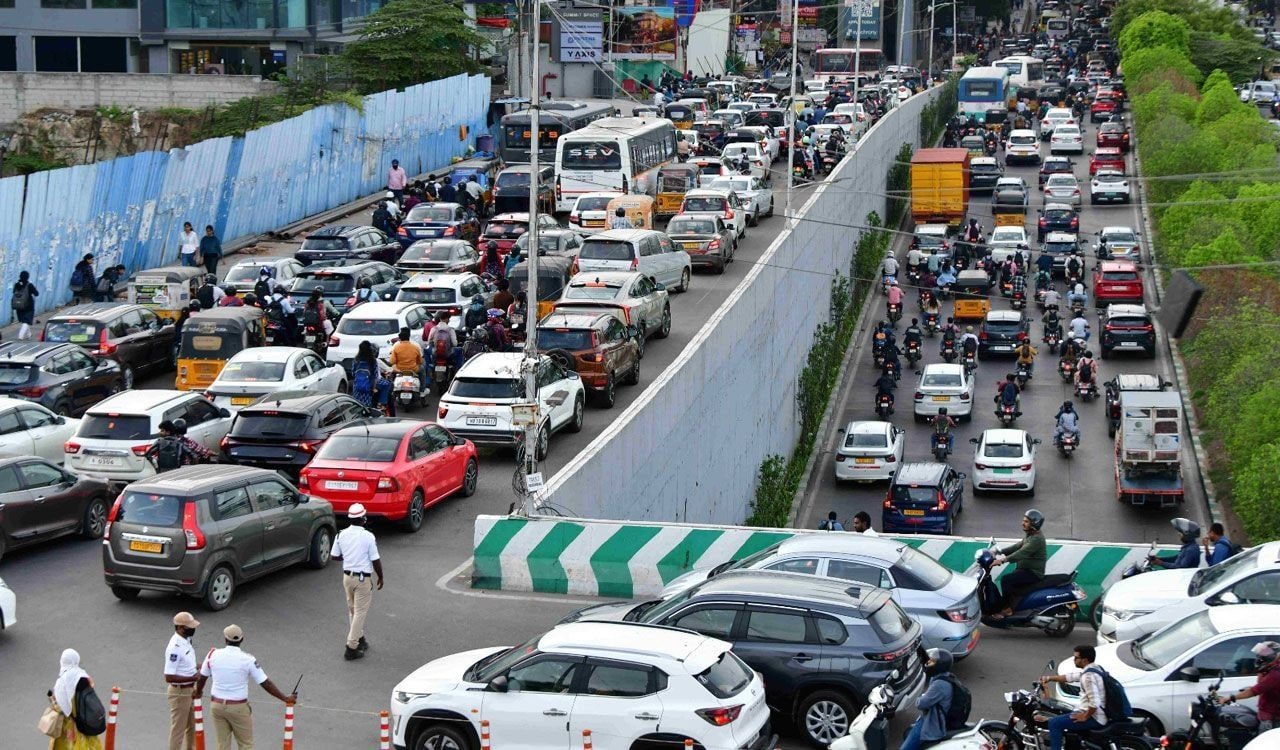
Cyberabad Police Commissioner and SCSC Chairman M. Ramesh said mobility had become a critical priority for Cyberabad, considering that nearly nine lakh people work within just two square kilometres.
He said the event had attracted 113 partner organisations and received over 1,000 registrations. He also said the State government was considering a policy to promote carpooling in the city.
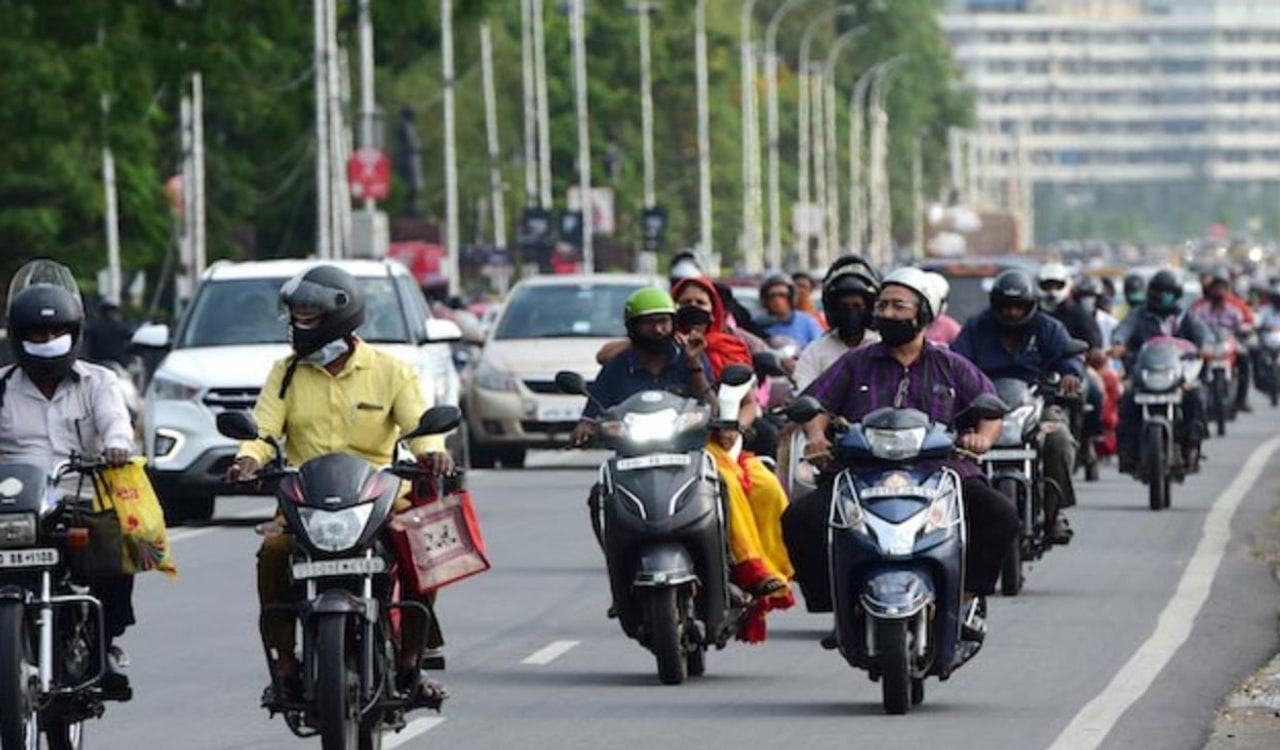
Director General of Police C.V. Anand, addressing the inaugural session, said only around 2 per cent of commuters use public transport, while nearly 82 per cent depend on private vehicles. Inadequate connectivity between residential areas and workplaces, and poor street infrastructure, were among the major reasons for low public transport usage, he said.
He appealed to corporates to support pilot projects aimed at improving traffic management and encouraging sustainable commuting.
C.V. Anand administered the Corporate Mobility and Sustainability Pledge, under which participating organisations committed to promoting carpooling, public transport, last-mile connectivity, company shuttles and hybrid working arrangements.
The campaign is also encouraging employees to share rides under the slogan, “Say hello, open your heart, do not travel alone, travel together.”
The SCSC and WRI India signed a Memorandum of Understanding to establish the Cyberabad Moves Living Lab.
According to SCSC Chief Executive Officer Naved Alam Khan, the lab will bring together traffic experts, academic institutions and researchers to develop and test mobility and road safety interventions under real-world conditions.
Former Bogota Mayor Enrique Penalosa emphasised that cities must prioritise people over vehicles and ensure equitable allocation of road space. He said cyclists had the same right to road space as motorists and stressed that cities needed to recognise this principle to become more inclusive and sustainable.
He highlighted the importance of urban density in making public transport affordable and frequent, while underlining the need for quality footpaths.
Penalosa said pedestrian infrastructure was not merely meant for walking but also enabled people to meet, interact and socialise, adding that city streets should serve people rather than just vehicles.
Shashi Verma, Chief Technology Officer of Transport for London, said Hyderabad needed to accommodate increasing urban density without worsening traffic congestion. He stressed the importance of high-capacity public transport, improved pedestrian infrastructure and a well-connected street network to support economic growth and mobility.
The three-day programme features interactive mobility exhibits, data visualisations, leadership dialogues, panel discussions and innovation showcases covering public transport, road safety, air quality, shared mobility and pedestrian-friendly infrastructure.
Further discussions involving youth, resident associations, educational institutions and the hospitality sector are scheduled for Friday and Saturday.

Related News
-

Cyberabad commuters rely on private vehicles as public transport struggles to meet demand
-
Minimum temps to drop by 2-4 degrees in Telangana as dry spell returns: IMD Hyderabad
-
Telangana needs stronger public transport as 74 pc rely on two-wheelers: Cyberabad CP
-
CMC sets November 30 deadline for trade licence renewal