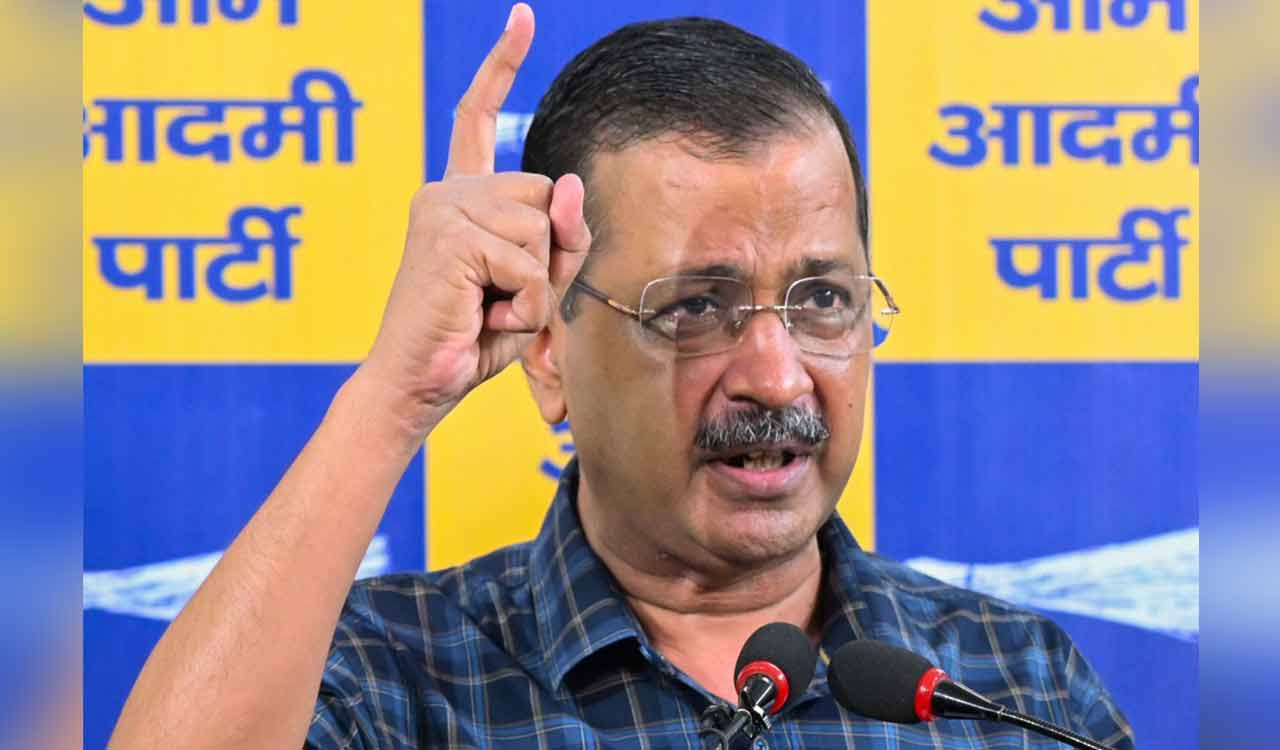
ED to challenge Kejriwal acquittal in summons cases, tells High Court
The Enforcement Directorate has told the Delhi High Court that it will challenge the acquittal of AAP leader Arvind Kejriwal in summons-related cases linked to the excise policy probe. The court dismissed his petition after he withdrew it


New Delhi: The Enforcement Directorate (ED) on Thursday told the Delhi High Court that it will challenge the acquittal of AAP convenor and former Delhi Chief Minister Arvind Kejriwal in cases relating to alleged non-compliance with the federal anti-money laundering agency’s summons in connection with the excise policy case.
The submission was made by Additional Solicitor General (ASG) S.V. Raju before the Delhi High Court after counsel for Kejriwal sought permission to withdraw a petition challenging the summons issued to him.
Kejriwal’s counsel said that the plea was no longer being pressed in view of the acquittal granted by the Rouse Avenue Court in the complaint cases filed by the ED over his alleged failure to appear before the federal anti-money laundering agency despite repeated summons.
Taking note of the submission, a Bench of Chief Justice D.K. Upadhyaya and Justice Tejas Karia allowed the withdrawal of the plea and dismissed the petition as withdrawn.
Earlier, Additional Chief Judicial Magistrate (ACJM) Paras Dalal of the Rouse Avenue Courts had acquitted Kejriwal in two complaints filed by the ED seeking prosecution against him for alleged deliberate non-compliance with summons issued under Section 50 of the Prevention of Money Laundering Act (PMLA).
The ED had alleged that Kejriwal failed to appear before it despite the issuance of five summons on different dates, prompting the ED to initiate prosecution for non-compliance.
The Central agency had said that if a high-ranking public functionary like him disobeyed the law, it would set a wrong example for the common man.
The ED’s complaint said that the then Delhi Chief Minister Kejriwal intentionally did not want to obey the summons and gave “lame excuses”.
In response to the ED’s complaint, the Additional Chief Metropolitan Magistrate (ACMM) of the Rouse Avenue Court had issued summons to Kejriwal. After the sessions court refused to grant a stay on the summons issued by the ACMM, Kejriwal moved the Delhi High Court, challenging the sessions court’s decision rejecting his plea against the summons issued on the ED’s complaint.
In addition, the Aam Aadmi Party (AAP) supremo had filed a separate plea questioning the maintainability of the complaints, contending that when summons were issued by one ED officer of Assistant Director rank, a complaint before a magisterial court could not have been filed by another ED officer of the same rank in view of Section 195 of the CrPC.
The money laundering investigation by the ED stems from a case registered by the Central Bureau of Investigation (CBI) on August 17, 2022, over alleged irregularities in the Delhi Excise Policy for 2021-22. Kejriwal was later arrested in the main money laundering case but was released on interim bail by the Supreme Court, which referred his plea to a larger bench for an authoritative pronouncement on the questions of law arising from his arrest and subsequent remand by the ED.

Related News