Editorial: GDP paradox, a statistical wrangle
Real wages, per capita income, jobs, private investment, and consumption may offer a better measure of broad-based growth
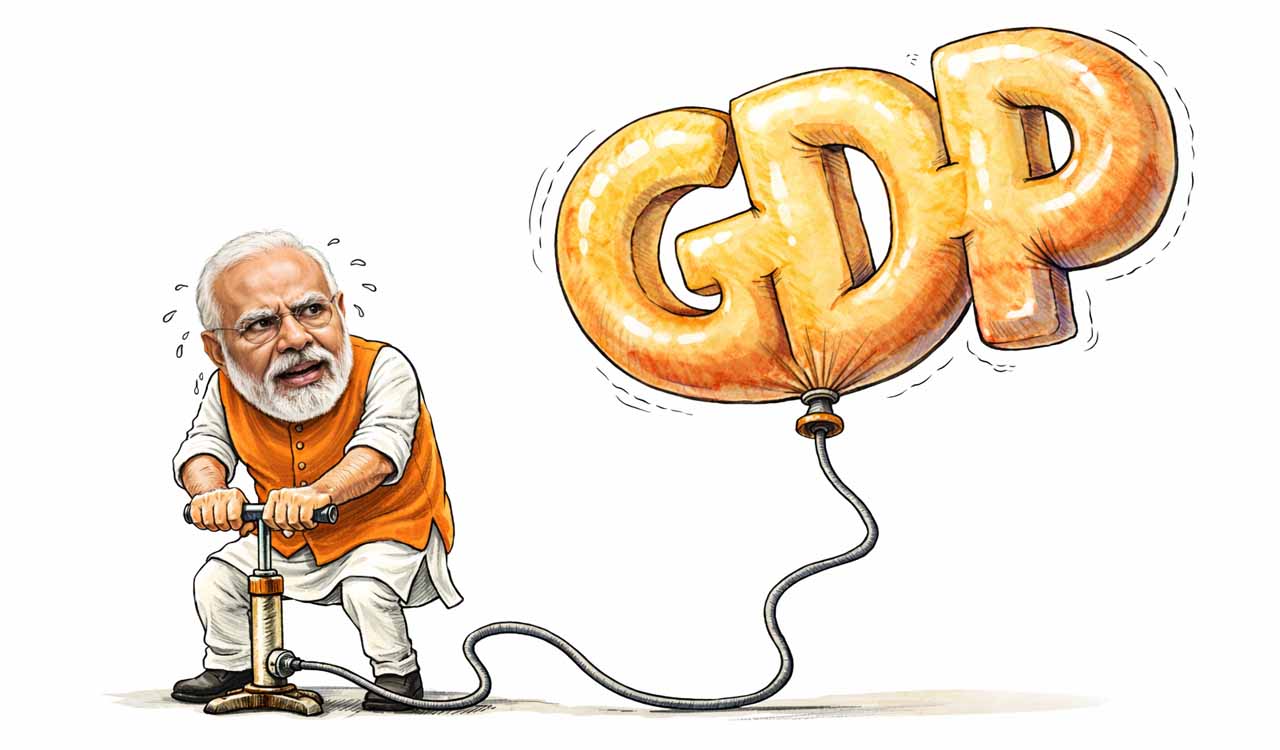


The ongoing controversy over India’s GDP numbers is just a statistical wrangle that sounds hollow to the struggling common man. There are strong arguments on both sides of the divide. While the government has claimed that the 7.8% GDP growth in the first quarter of the current financial year clearly surpassed all expectations and reflected the robustness of the country’s economy despite global uncertainties, the opposition has accused the government of fudging the statistics. Critics argue that the downward revision of the previous year’s GDP has made the current year’s growth rate look substantially better. It must be pointed out that India had changed the GDP series earlier this year, replacing the 2011-12 base year with 2022-23 and substantially modifying the methodology and data sources. The new series was released in February 2026. Changing the base year primarily changes the measurement of real GDP. The Ministry of Statistics and Programme Implementation (MoSPI) says such rebasing is standard international practice and is intended to capture structural changes in the economy and improve measurement. GDP growth is useful to the government as a showcase of economic performance, particularly in the face of global headwinds, while unemployment and household financial stress are much more politically consequential to ordinary citizens. Critics have rightly argued that the official GDP number was inconsistent with the ground realities such as inadequate creation of quality jobs, weak household purchasing power, stagnant or weak real wages, subdued private investment, relatively weak FDI, and household indebtedness.
Supporters of the government cite robust industrial activity, healthy consumption and strong goods exports, alongside accelerating government investment as the key drivers of growth in the first quarter. If this trend continues, the full year’s growth estimate— the RBI had projected at 6.7%— could now be revised upwards. India’s economic challenge is no longer merely achieving a high GDP growth rate but achieving high-quality growth that produces jobs, raises wages, stimulates consumption, encourages private investment and spreads prosperity more widely. In fact, the most useful way to judge the Indian economy over the next few years would be to stop looking at GDP alone and monitor factors like real wages, per capita income, manufacturing jobs, private investment, household consumption, MSME growth and exports. If all these components rise together, it means that India has achieved a genuine broad-based growth. Former RBI Governor Raghuram Rajan raised a valid question: If India has been growing so strongly, why haven’t we seen correspondingly stronger private investment, FDI and decent job creation? GDP measures aggregate economic production, not individual prosperity. If GDP rises rapidly while wages, jobs and household purchasing power lag, then the economy may be growing—but the growth story remains incomplete. And that, ultimately, is the part of the present GDP controversy that matters most to the common Indian.
Also Read

Related News