Editorial: India-EU Free Trade Agreement — ‘Mother of all deals’ to redraw global economic map
The real impact of the India–EU FTA will be shaped by how effectively it is implemented, and how decisively both governments support collaboration beyond tariff reductions and legal frameworks
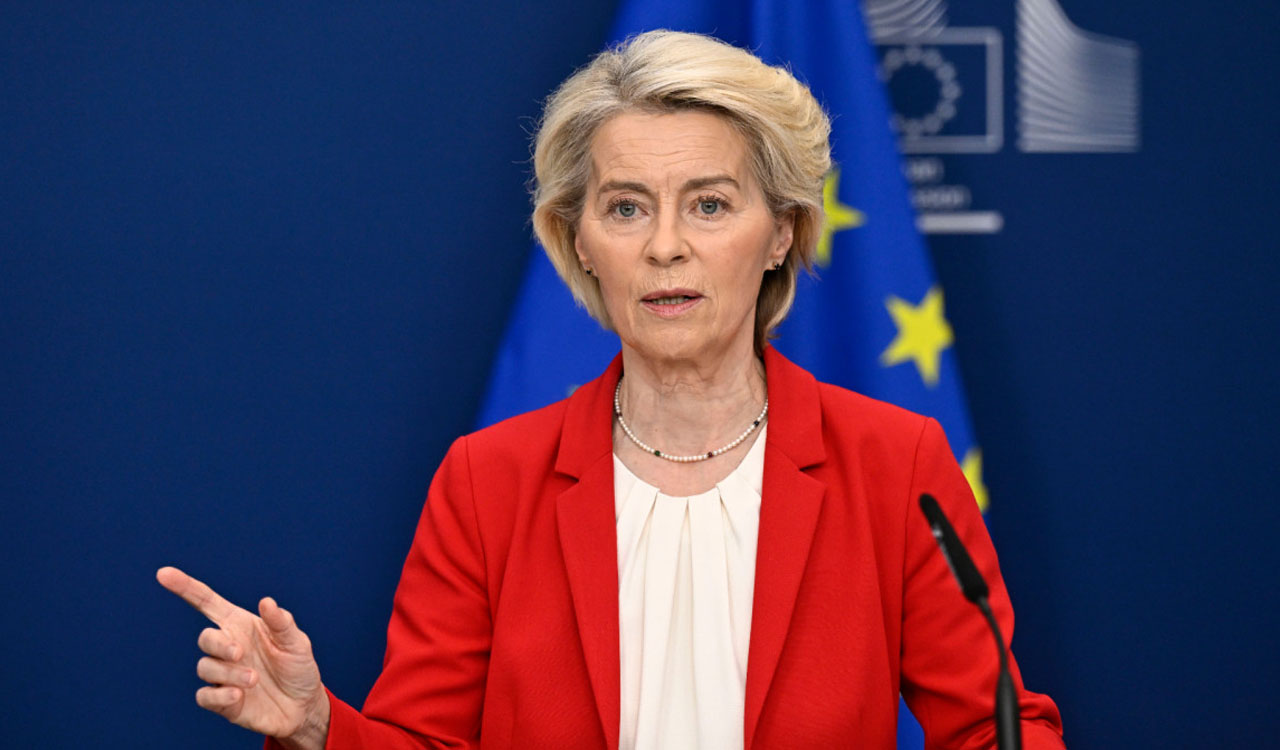


The participation of European Commission President Ursula von der Leyen in the Republic Day celebrations as the Chief Guest carries significance that goes beyond diplomatic optics. It sends a crucial message of realignment of the global economic map at a time when the world is grappling with unpredictable and whimsical tariff policies of the United States. During her recent address at the World Economic Forum (WEF) in Davos, she described the imminent trade agreement with India as the “mother of all deals”, indicating the potential of its impact on global geopolitics. The renewed momentum to finalise the historic Free Trade Agreement was evident during German Chancellor Friedrich Merz’s visit to India earlier this month, which underscored Europe’s growing recognition of India not merely as a market, but as a long-term partner in global growth, technology, and resilience. The signing of the FTA will be just the starting line for businesses on both sides. The real impact of the India–EU FTA will be shaped by how effectively it is implemented, how ambitiously industry engages with it, and how decisively both governments support collaboration beyond tariff reductions and legal frameworks. The deal presents a win-win situation for both. For Europe, struggling with energy shocks, slowing growth, and an uneasy dependence on China, India offers scale, stability, and a democratic counterweight in the Indo-Pacific. For India, it opens privileged access to one of the world’s largest consumer markets, accelerates technology transfers, and strengthens its ambition to become a global manufacturing and services hub.
Europe brings deep expertise in advanced engineering, clean technologies, precision manufacturing, and trusted regulatory systems. India brings scale, cost competitiveness, a large and skilled workforce, and one of the world’s fastest-growing domestic markets. The FTA has the potential to align these strengths far more systematically than has been possible so far. Across India, European companies are increasingly moving beyond sales and assembly operations to establish manufacturing, design, and engineering hubs. When European technology and Indian capability are integrated effectively, the outcome is globally competitive. Today, nearly 6,000 European companies operate in India, supporting millions of jobs across sectors such as clean energy, mobility, digital infrastructure, aerospace, advanced materials, and manufacturing. These are sectors where India and Europe share long-term priorities. At present, India–EU trade and investment are concentrated in a limited number of Indian States and a handful of EU member countries. This leaves large parts of both economies underrepresented. Many European SMEs, particularly from Central and Eastern Europe, are actively seeking reliable global partners. At the same time, several Indian States are positioning themselves as manufacturing and services hubs with global ambitions. An effective FTA can help widen these corridors, connecting new Indian States with new European regions and integrating them into shared value chains. Such diversification is essential if the partnership is to deliver inclusive and sustainable growth.
Also Read

Related News