Editorial: Trump’s tariff tantrums fail to dent India’s exports
Though Washington remains India’s biggest customer, it no longer has to be the only one that matters
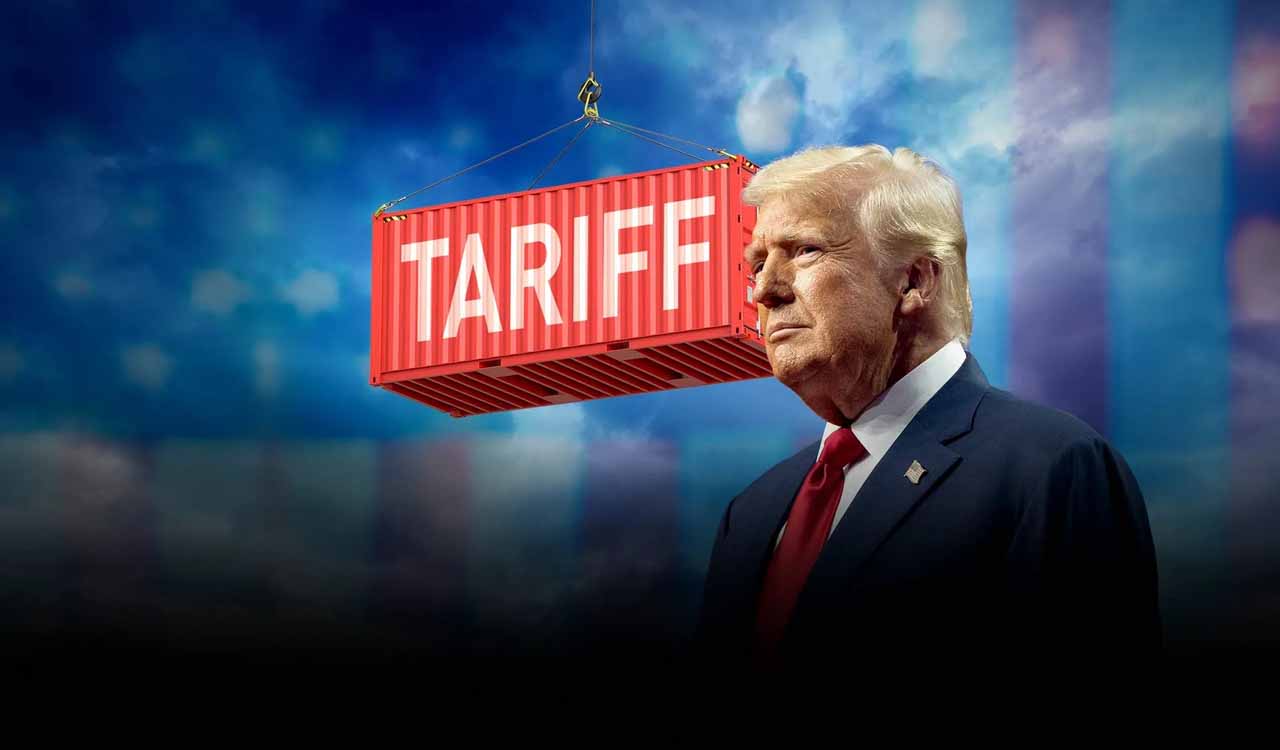


United States President Donald Trump’s tariff tantrums have not dampened the enthusiasm of Indian exporters, who continue to view America as their favoured destination. While new trade agreements with Britain, the European Union, Oman and New Zealand have helped India expand its bouquets of options, the US remains the most important export market. America accounted for around 20% of India’s exports in the 12 months through July, broadly maintaining its share despite tariffs on Indian goods reaching as high as 50% during the period. The tariff rate was later reduced to 18% in February and currently stands at 10%. While India has expedited free-trade negotiations with other major markets and diversified aggressively into Europe, Britain, the Gulf, Oceania and other markets, it is extremely difficult to replace the world’s largest economy. It will take at least two to three years for market diversification to show meaningful results. About one-fifth of India’s merchandise exports still go to America, a remarkable level of dependence given the tariff upheaval. Recent Commerce Ministry data show that the US remains India’s top export market even as overall Indian exports have accelerated. The sheer scale and appetite of the US for a broad range of Indian goods make it a uniquely important market, particularly for electronics, engineering goods, pharmaceuticals, gems and jewellery and textiles. The two countries are yet to finalise a trade deal, despite months of high-level negotiations. The resilience of Indian exports reflects the depth of the India-US commercial relationship and also the limits of tariffs as an instrument for redirecting global supply chains.
The Trump administration’s tariff story has been erratic, unpredictable and extraordinarily complicated. Significantly, America has tariffed India unevenly, and this unevenness has mattered enormously for exporters. The categories it chose to exempt—pharmaceuticals, semiconductors, smartphones, cut diamonds—are also the categories in which India is least substitutable, either because of entrenched supply-chain integration or near-monopoly processing capacity. The categories America chose to tariff most heavily—steel, aluminium, and to a lesser extent, finished jewellery and apparel—are precisely the categories where India is most easily replaced by Vietnam, Bangladesh, Mexico or domestic US production. As a result, the feared structural rupture never happened. India’s merchandise exports to the US were already worth about $86.35 billion in 2024. America’s importance has remained remarkably persistent even as India’s total export machine has expanded. India’s combined merchandise and services exports reached a record $863.1 billion in FY2025-26. The momentum has continued into the current financial year. During April-June 2026, India’s merchandise and services exports together reached $232.73 billion, up 11.37% year on year. This expansion has occurred while American tariffs have been changing almost month by month. The moral of the story so far is that Washington remains the biggest customer, but it no longer has to be the only customer that matters.
Also Read

Related News