Editorial: US Ambassador plays a straight bat on Kashmir
Sergio Gor’s remarks describing Jammu and Kashmir as an important part of India marks a notable departure from Washington’s traditionally cautious Kashmir position
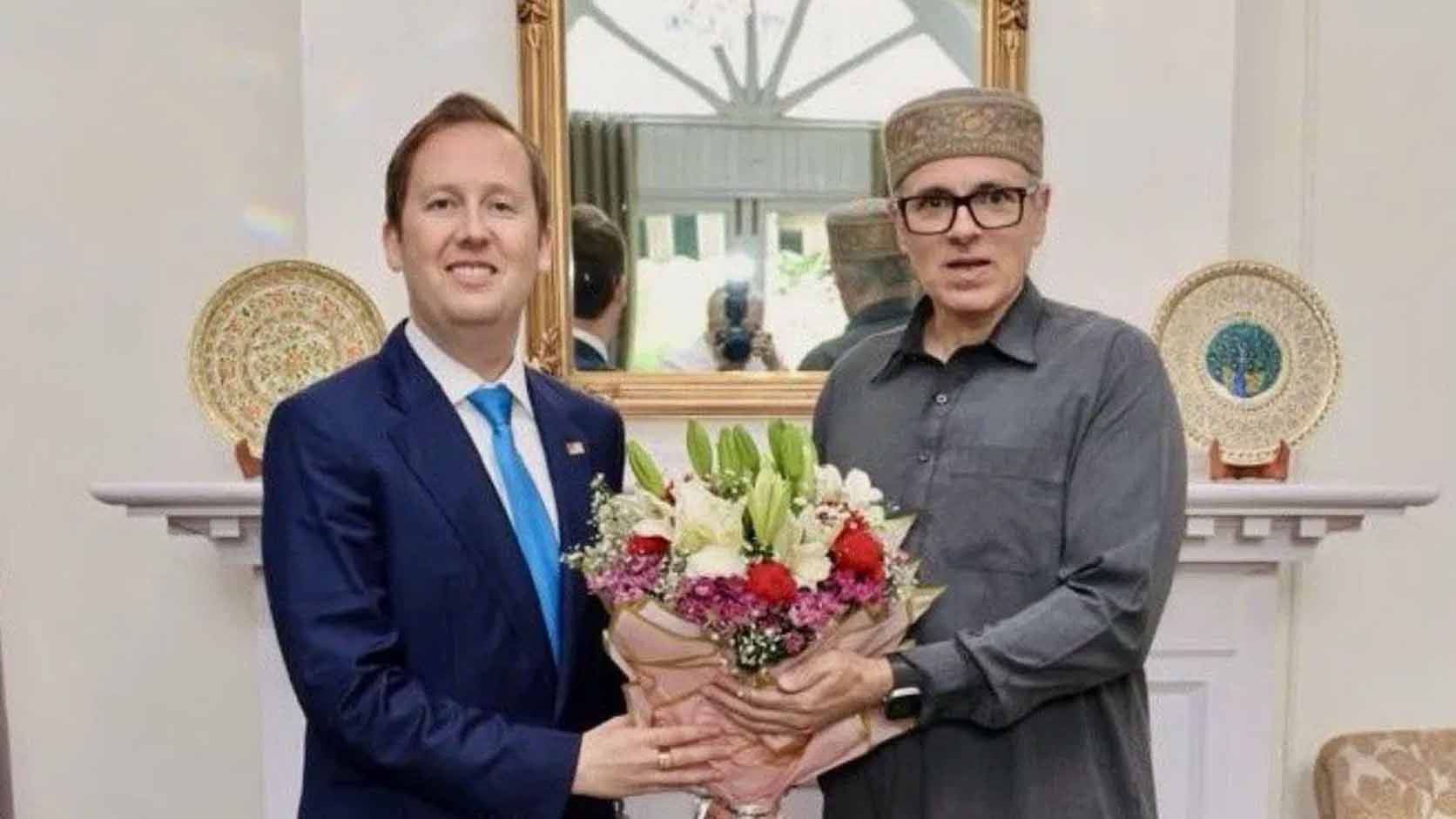


Over the decades, American diplomacy has mastered the art of hyphenation when it comes to taking positions on disputes between India and Pakistan, particularly on the Kashmir issue. In the name of maintaining neutrality, Washington routinely brackets the two South Asian neighbours together with lazy generalisations and patronising sermons. In the process, Pakistan’s brazen role as the sponsor of cross-border terrorism goes largely unnoticed. In a welcome departure from this ambivalent posturing, US Ambassador to India Sergio Gor publicly stated that Jammu & Kashmir was an important part of India and praised the Centre and the J&K government for improving security. He also indicated that Washington could reconsider its travel advisory for the region. The diplomat made these observations during his visit to the Valley, where he met Chief Minister Omar Abdullah. The significance of Gor’s remarks was not lost on the observers of sub-continent politics. More importantly, Gor is not merely an ordinary Ambassador: he also serves as President Donald Trump’s Special Envoy for South and Central Asian Affairs, giving his words greater political weight than those of a conventional diplomatic representative. Traditionally, Washington avoids explicitly endorsing either India’s or Pakistan’s position on Kashmir. Its typical formulation has been that Kashmir’s status should ultimately be addressed through negotiations between India and Pakistan, taking into account the wishes of Kashmiris. The US has also traditionally sought to prevent India-Pakistan tensions from escalating into military conflict.
Pakistan’s longstanding diplomatic strategy has been to portray Kashmir as an unfinished international dispute requiring international attention, particularly through the UN. Gor’s unequivocal language demolishes that narrative and describes the territory he was visiting as part of India. That explains Islamabad’s unusually quick and strong reaction. It summoned the US chargé d’affaires and lodged a formal protest, arguing that Gor’s statement contradicted Washington’s longstanding position that Kashmir’s status remains disputed. India has consistently maintained that the accession of Jammu & Kashmir to India was final and irrevocable and that the issue was essentially a bilateral India-Pakistan matter, and that Pakistan’s occupation of territory belonging to the former princely State is the real unresolved issue. While Gor’s statement does not explicitly endorse every element of this Indian position, it certainly makes it harder for Pakistan to claim that Washington views J&K primarily through the Pakistani lens of an unresolved international dispute. It is noteworthy that the visiting ambassador met an elected Chief Minister, discussed India-US relations and possible engagement with J&K, and spoke about tourism and security. His suggestion that the US might downgrade its travel advisory is also noteworthy because it implicitly recognises the improvement in the security environment. For much of the Cold War and even later, Washington viewed Kashmir primarily through the prism of India-Pakistan rivalry and regional stability. Today, America’s relationship with India is vastly more strategic.
Also Read

Related News