Environmental lead exposure may aggravate Alzheimer’s pathology: ICMR-NIN study
Researchers at ICMR-NIN, Hyderabad, have found that environmental lead exposure can intensify cellular damage when combined with amyloid-β peptides, which are central to Alzheimer’s disease pathology.
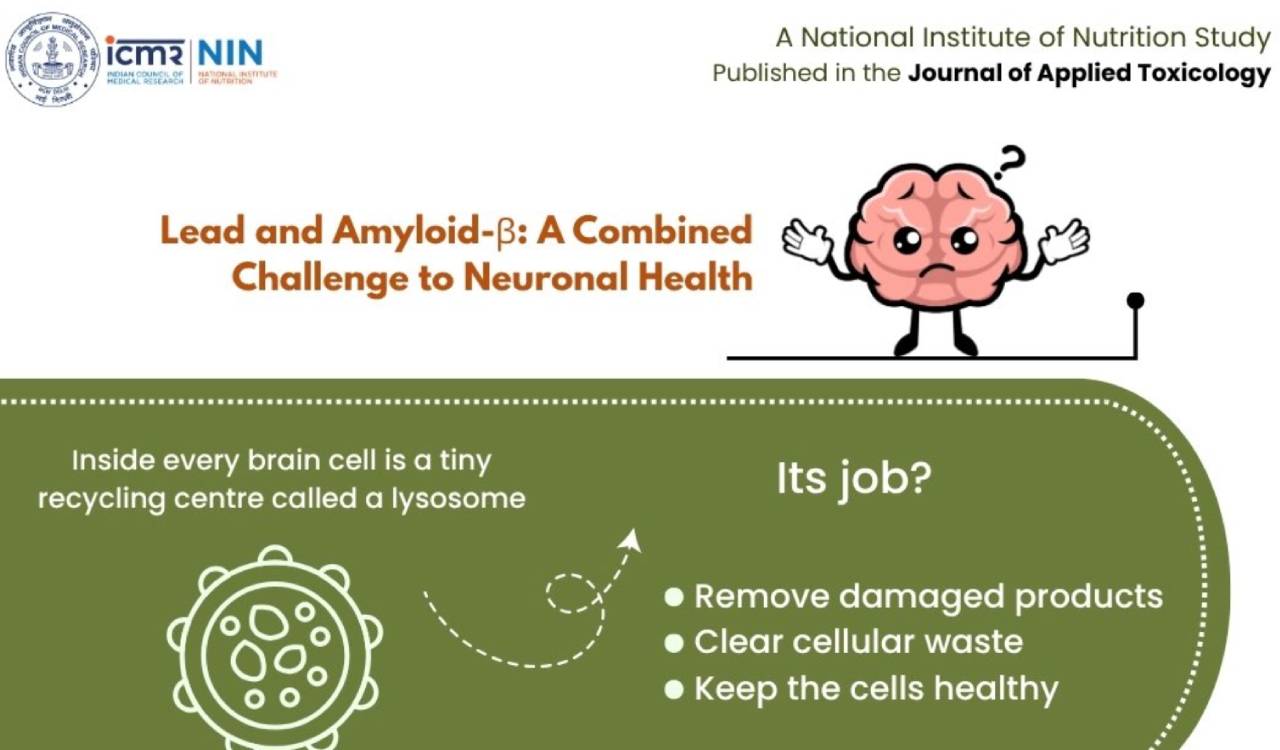


Hyderabad: Researchers from the Hyderabad-based National Institute of Nutrition (ICMR-NIN) found that exposure to environmental lead, particularly in the presence of amyloid-β peptides (which play a central role in Alzheimer’s Disease (AD) pathology), can significantly disrupt the natural waste-clearing system of nerve cells.
The study findings suggest that environmental lead exposure may add to the cellular stress associated with amyloid-β, making nerve cells more vulnerable to damage. The findings provide further insight into how environmental factors may contribute to cellular changes associated with neurodegenerative disorders like AD and dementia.
The study, published in the international journal Journal of Applied Toxicology, examined the effects of lead and two forms of amyloid-β peptides on human neuronal cells in the laboratory.
The researchers found that exposure to lead or amyloid-β peptides individually caused some damage to lysosomal function. However, combined exposure caused much greater disruption. The combined exposure reduced cell survival, disturbed the acidic environment needed for lysosomes to function normally and damaged their structure, NIN researchers said in a press release.
Dr Suresh Challa, Scientist-G and Head of Cell Biology at ICMR-NIN, who led the research team, said, “Our findings show that lead exposure can significantly worsen lysosomal dysfunction in the presence of amyloid-β. Understanding these cellular changes can help us better understand how environmental exposures may influence neuronal health.”
Dr Bharati Kulkarni, Director, ICMR-NIN, said, “The study highlights the importance of understanding the interaction between environmental pollutants and biological factors in maintaining brain health.”

Related News
-

Eisai launches LEQEMBI for early Alzheimer’s disease treatment in India
-
Ultra-processed food triples high BP risk in Hyderabad youth: NIN study
-
US study finds direct link between air pollution and Alzheimer’s disease risk
-
‘Sandhya, Tum Kahaan Ho,’ a play around Alzheimer’s disease to be staged in Hyderabad