From fortress to fall: BJP redraws Bengal map
Bharatiya Janata Party achieved a sweeping victory in West Bengal, overturning All India Trinamool Congress dominance through anti-incumbency, organisational overhaul, and strategic voter consolidation, resulting in a major political realignment in the state
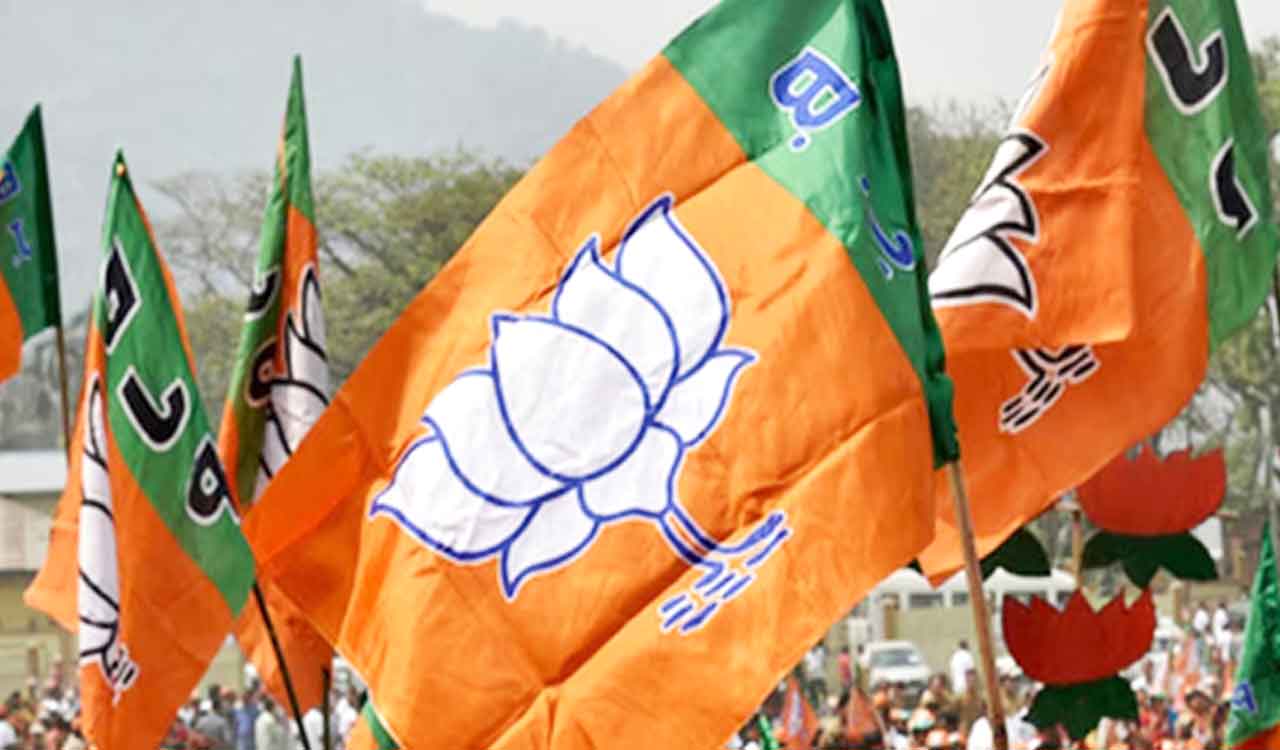


Kolkata: In a verdict as emphatic as it is seismic, the BJP’s landslide victory in West Bengal has not merely redrawn the electoral map but overturned the operating logic of politics in the state, breaching the TMC’s entrenched fortress despite a decade-and-a-half of dominance, minority consolidation, and a sustained “outsider” narrative.
What makes the outcome striking is not just the scale the BJP crossing the 200-seat mark with a vote share of around 45 per cent but the precision with which it converted structural weaknesses in the TMC’s ecosystem into electoral gains.
At least half-a-dozen structural and immediate triggers converged anti-incumbency, corruption fatigue, electoral roll revision, administrative neutrality, organisational overhaul, and targeted social engineering to produce not just a regime change but a systemic reset.
After three consecutive terms, the ruling party faced what insiders describe as institutional fatigue. Localised resentment syndicate raj, patronage networks, and uneven welfare delivery widened into a broader anti-establishment mood.
Unlike in 2016 or 2021, corruption this time was both continuous and visible. From chit fund and Narada to recruitment and ration scams, capped by the arrest of senior ministers, formed a sustained narrative of governance breakdown.
“The anger was cumulative. Every scam reinforced the previous one, and there was no visible course correction,” said political commentator Udayan Bandyopadhyay. Despite returning with a stronger mandate in 2021, the TMC failed to recalibrate, allowing discontent to harden into electoral backlash.
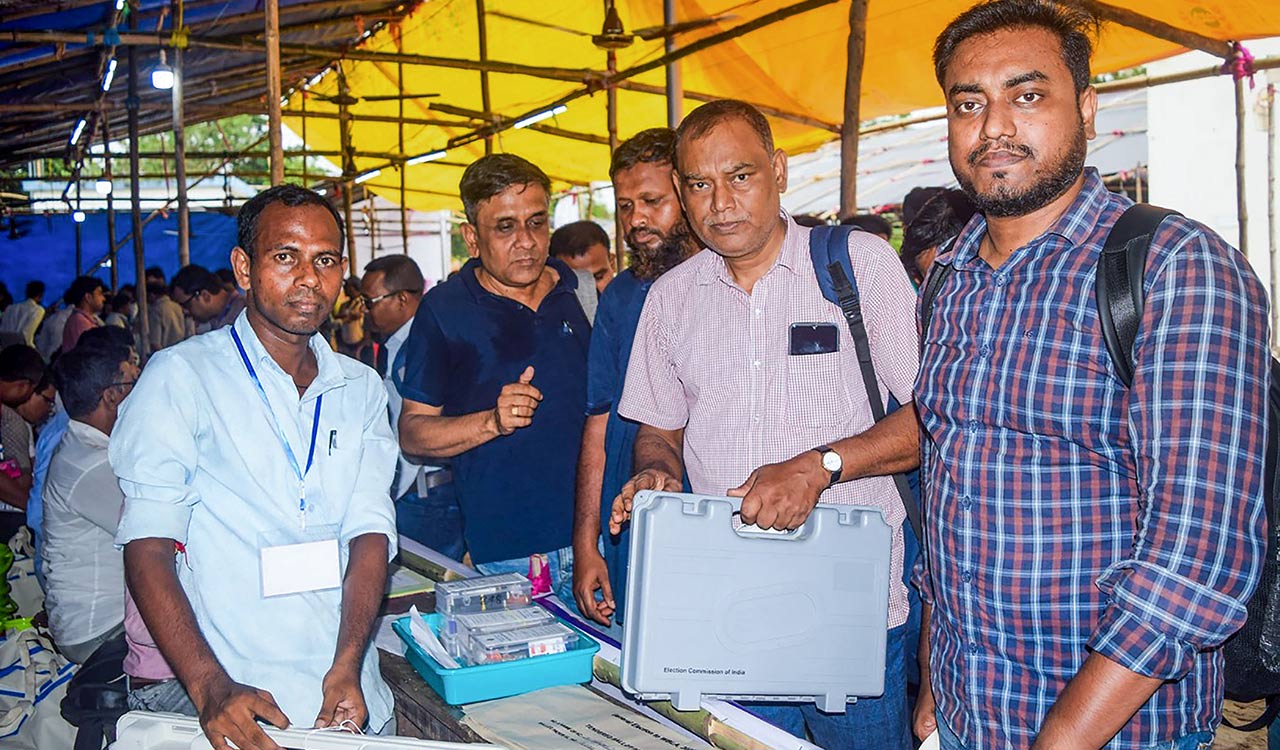
If anti-incumbency shaped sentiment, the Special Intensive Revision (SIR) altered arithmetic. The deletion of lakhs of duplicate, shifted, and undocumented voters did not just clean the rolls, it neutralised a structural advantage the ruling party had long relied upon.
“For years, elections here were about management. This time, it was about mandate,” a senior BJP functionary said. Analysts believe the exercise disproportionately affected segments that formed the TMC’s booth-level cushion, reducing its ability to convert support into votes.
The Election Commission’s intervention compounded this shift. Sweeping bureaucratic reshuffles and the deployment of over 500 companies of central forces transformed the electoral environment in a state long marked by poll violence.
The result was a perception of “fear-free voting”, enabling silent voters to assert their preference and weakening the ruling party’s traditional booth-level advantage. Equally critical was the BJP’s narrative recalibration. Instead of directly countering the “Bengali versus outsider” frame, it foregrounded governance deficits unemployment, women’s safety, and infrastructure gaps while simultaneously recasting the contest through a national security lens.
A key plank was the promise to curb illegal cross-border migration, seal unfenced stretches along the Bangladesh border, and reinforce surveillance in the strategically sensitive Siliguri Corridor, placing these concerns within a broader security discourse.
This was reinforced by ideological signaling, including commitments to fast-track the Citizenship Amendment Act (CAA) and move towards a Uniform Civil Code (UCC), helping consolidate core support while sharpening electoral polarities in select constituencies.
“The fight in Bengal is not about identity, it is about accountability,” Union Home Minister Amit Shah had earlier told party workers. Simultaneously, the party crafted constituency-specific Hindu consolidation strategies, aligning social arithmetic with targeted messaging, even as it projected Bengali faces in organisational roles.
At the organisational level, the BJP executed a disciplined overhaul under national general secretary Sunil Bansal. “Ghost committees” were dismantled, membership rolls cleaned, and booth units rebuilt with active workers. The prolonged membership drive and booth strengthening ensured functional units across a majority of constituencies correcting a key deficit from earlier elections.
Besides, multiple professional agencies conducted ground surveys, feeding into a centralised plan that prioritised local issues over ideological overdrive. Candidate selection, largely insulated from factional lobbying, ensured discipline. “No recommendations, only winnability,” a party insider said.
In contrast, the TMC’s dependence on I-PAC became vulnerability when the consultancy exited the field following enforcement agency action, creating both a tactical vacuum and a perceptual dent.
The BJP’s most decisive breakthrough came in the ‘Junglemahal’, where it won 33 of 35 seats across five Lok Sabha segments. This was driven by calibrated social engineering consolidating Kurmi and tribal votes through representation and targeted mobilisation.
“Representation builds trust, and trust converts into votes,” said BJP MP Jyotirmoy Singh Mahato.
Beyond regional gains, the BJP expanded its social coalition. Party insiders estimate a swing of up to five percentage points among women voters, aided by a narrative around safety and dignity.
Lakhs of government employees and job aspirants responded to promises of pay commission implementation and recruitment drives, while over 1.3 crore young voters were targeted through a hybrid digital-ground campaign. On the governance front, the BJP projected a break from the status quo promising stricter law-and-order enforcement, industrial push, and enhanced women’s safety.
Overlaying these shifts was a consolidation of Hindu votes in closely contested constituencies, amplified by the BJP-RSS narrative around alleged minority appeasement and law-and-order concerns. The party’s superior vote-to-seat conversion magnified the outcome, turning marginal gains into sweeping victories, while the TMC’s vote remained inefficiently distributed.
In the end, this was not just a mandate against a government but against a system and the BJP, by aligning organisation, narrative and arithmetic, turned a breach into a sweep, resetting Bengal’s political axis in one decisive stroke.

Related News
-

17 dead, 25 others injured in stampede at Kolkata Durga puja pandal
-
Rahul Gandhi seeks evidence to file cases over alleged police brutality
-
‘Forgive your enemies once, friends twice, but never traitors’: Kiren Rijiju on ‘regime change’ remark
-
BJP to launch nationwide campaign to counter Cong claims on SIR, ECI