Gaushalas shun toxic veterinary drugs, help revive critically endangered vultures: BNHS
Gaushalas in Rajasthan and Madhya Pradesh have stopped using vulture-toxic veterinary drugs, helping stabilize populations of critically endangered long-billed vultures. Safe carcass disposal and alternative medicines like meloxicam support conservation, public health, and gradual recovery of these essential scavengers
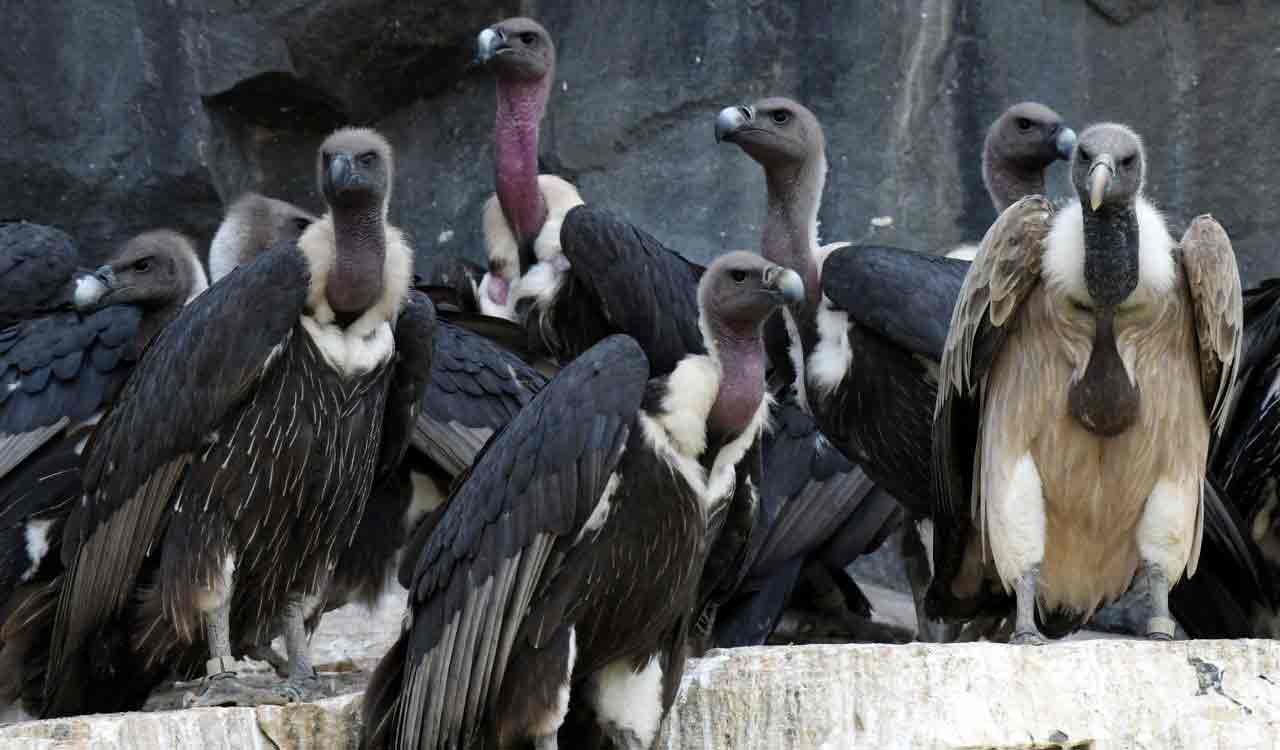


Mumbai: ‘Gaushalas’, or cow shelters, in several parts of Rajasthan and Madhya Pradesh have stopped using veterinary drugs that are toxic to vultures, helping stabilise populations of the critically endangered birds, the Bombay Natural History Society has said.
According to the BNHS, the population of the long-billed vulture (Gyps indicus), popularly known as ‘Jatayu’, had declined by nearly 99 per cent, largely due to the use of certain non-steroidal anti-inflammatory drugs (NSAIDs) given to cattle. When vultures feed on the carcasses of treated cattle, residues of these drugs damage their kidneys, leading to death.
Many gaushalas have discontinued vulture-toxic drugs such as diclofenac, aceclofenac, ketoprofen and nimesulide, and have switched to safer alternatives like meloxicam and tolfenamic acid, said BHNS.
Several cow shelters have also stopped burying dead cattle and are leaving carcasses in designated areas for vultures to feed on, said the wildlife research and conservation organisation.
“These measures have helped arrest the decline in vulture numbers and have contributed to a gradual recovery in some areas,” BNHS director Kishor Rithe said.
He said gaushalas play a critical role in vulture conservation as they manage large cattle populations.
“By avoiding toxic veterinary drugs and following traditional carcass disposal practices, they are providing safe food to vultures and supporting public health by reducing disease transmission,” Rithe said.
BNHS deputy director Dr Sujit Narwade said areas such as the Jorbeer Conservation Reserve near Bikaner have emerged as important habitats for resident and migratory vultures due to nature-friendly carcass disposal practices adopted by gaushalas. BNHS has been monitoring vulture populations in the region for the past several years, he added.
Similar practices have also been observed in Madhya Pradesh, including at the Ramkali Gaushala near Bhopal, BNHS said.
Vultures play a vital role in clearing the environment by feeding on animal carcasses and preventing the spread of disease. India’s vulture populations had witnessed a sharp decline over the past decades, also impacting traditional systems such as Parsi ‘Towers of Silence’, BNHS said.
The organisation is implementing a vulture conservation programme titled ‘Bringing Back the Apex Scavenger’. Earlier this month, 15 vultures bred at a conservation centre in Haryana were released into the Melghat Tiger Reserve in Maharashtra.
The International Union for Conservation of Nature (IUCN) has classified India’s oriental white-backed, long-billed and slender-billed vultures as critically endangered, the category closest to extinction.

Related News
-

‘Unacceptable’: India condemns attack on Saudi airport, calls for immediate cessation
-
After Ranchi run-fest, India and West Indies gear up for another high-scoring T20I
-
India warns of fitting response to any terror attack by Pakistan
-
Shai Hope, Sherfane Rutherford power West Indies to six-wicket win over India