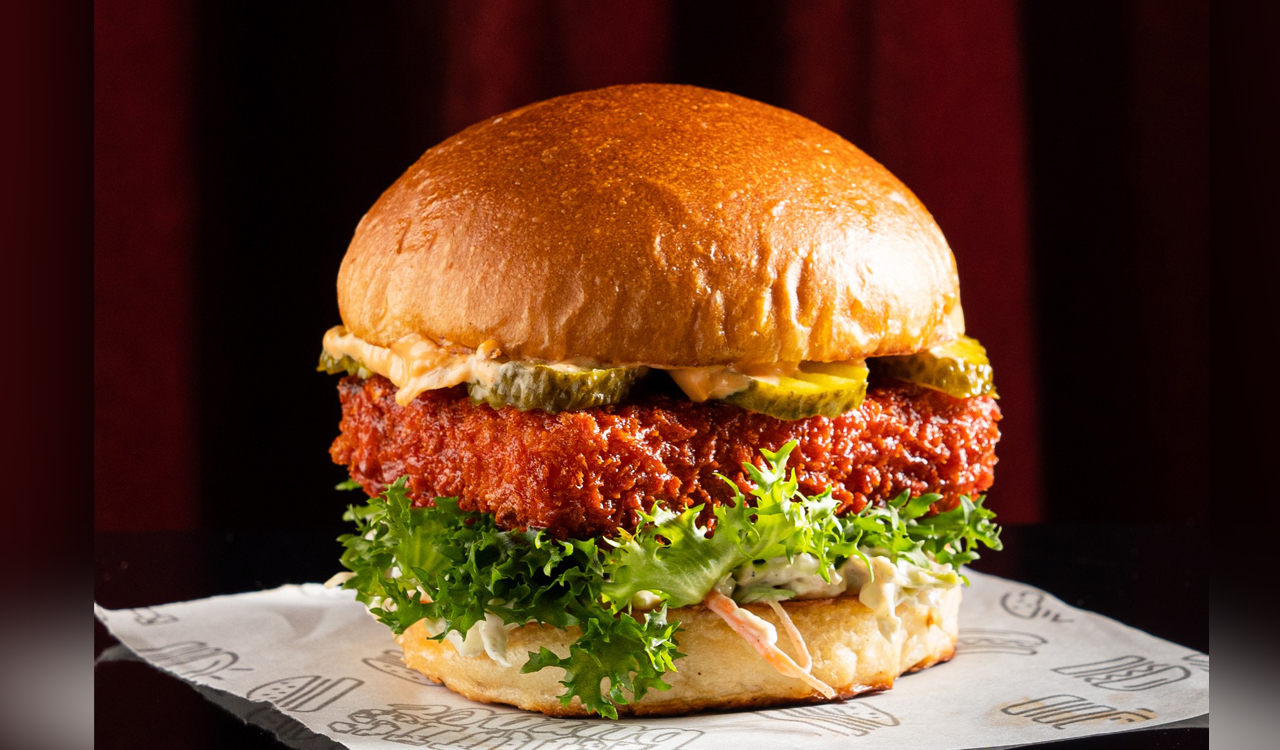
Here’s everything you need to know about lab-grown meat
On 5 August, it will be ten years since the world was introduced to the first lab-grown burger


Melbourne: It’s been around for a decade now — but cultured meat still faces some huge hurdles.
On 5 August, it will be ten years since the world was introduced to the first lab-grown burger.
A decade after its arrival, biotechnologist Professor Paul Wood answers eight key questions about cultured meat.
What is it?
Cultured meat, also colloquially referred to as lab-grown meat, is the concept of taking a biopsy from a living animal, selecting an individual cell type and growing these cells in large scale bioreactors.
Technically, it’s a viable alternative to growing an animal to maturity before harvesting meat from its carcass.
Multiple cell types can be used from animals, such as muscle, fat or fibroblasts.
The initial stage of cell selection requires the creation of a cell line which will grow continuously in a selective culture medium.
How long has it been around?
The technology for the culture of cells in laboratories has been used for many decades to produce drugs like monoclonal antibodies or viral vaccines.
The difference with cultured meat is the cells themselves are used to produce edible products rather than used as production systems for monoclonals or viral antigens.
Cultured meat was first introduced back in 2013 with the unveiling of the world’s first lab-grown burger, which cost a whopping USD$330,000 to produce.
The first commercial cultured meat product was a chicken nugget licensed in Singapore in 2020.
In June 2023, the US Department of Agriculture granted two companies — Upside Foods and Good Meat — licences to sell chicken-based products.
Significant excitement ensued in the food industry with predictions that cultured meat will transform the meat industry by 2030.
Is it commercially viable?
Currently around USD 3 billion has been invested in over 150 companies working on beef, chicken, pork, lamb and exotic cell-based products. Woolly mammoth meatball anyone? Upside Foods has launched its new cell-based chicken product in a Michelin star restaurant, but it is only available one night a month and the price has not been disclosed.
Commercial success will require significant scaling in production, cost reductions and consumer acceptance, or these products will be confined to niche markets for wealthy consumers.
Cultured meat is unlikely to be the solution for the increasing protein needs of developing nations.
The technical challenges involve scaling up cell growth in over 10,000 litre fermentation vessels, while significantly reducing the cost of cell-culture media, the capital cost of equipment and the operating cost of high-quality sterile biocontainment facilities.
It has been estimated that the cost of production of cultured meat must be reduced by over 1,000-fold to match that of conventional meat production.
Proponents of cultured meat like to quote the concept of Moore’s law that predicts that the cost of all new technology will be significantly reduced with time.
However this law has never been applied to a biological system that has innate growth limits.
Is it good for you — and does it taste okay?
Currently all cultured meats are hybrid or blended products, in which the harvested cell paste — the meat component — is combined with plant-based materials, plus vitamins and minerals to produce burgers, meatballs, sausages and dumplings.
Yes, you have to add the vitamins in, and no, you can’t make a steak with it yet.
From a commercial perspective this is important, as cultured meat products will compete in the commodity meat market.
Cultured meat does not produce a three-dimensional steak with multiple cell types and complex taste and texture.
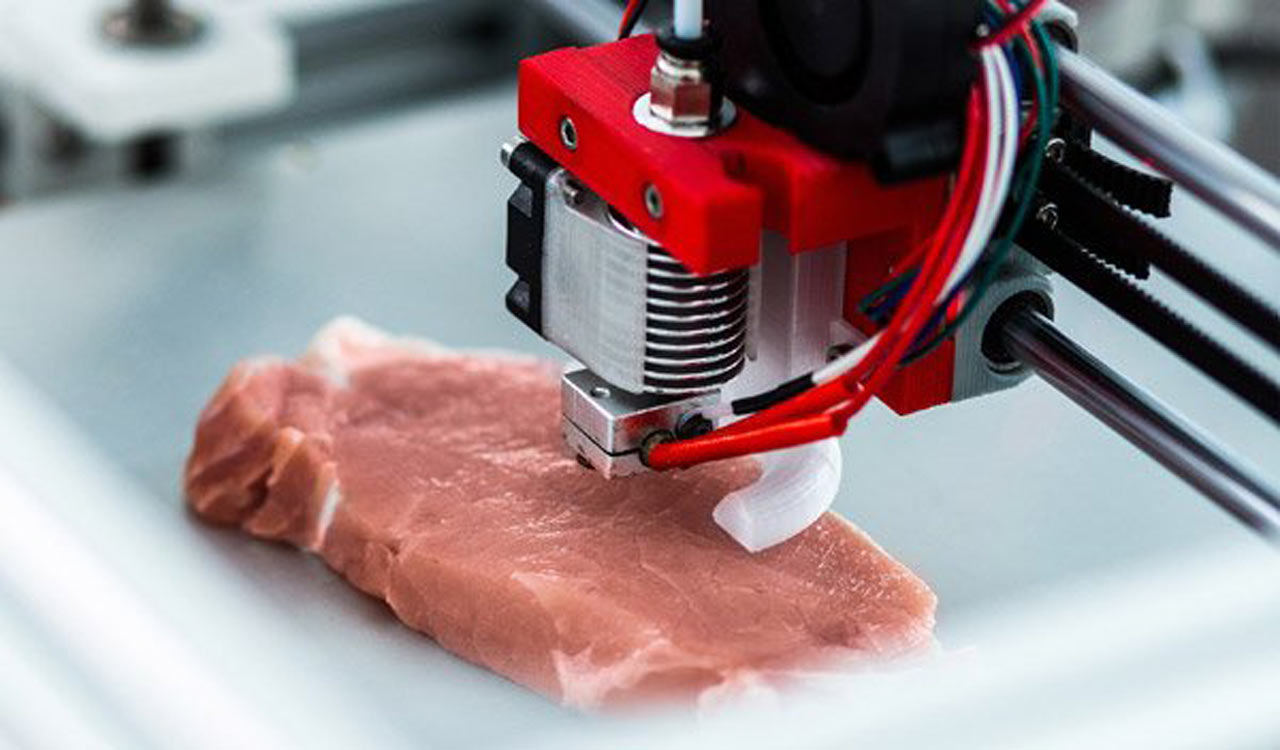
However, there are companies aiming to develop whole cuts of meat using 3D printing and bioengineering technology.
What is the motivation to produce cell-cultured meat?
The drivers for cultured meat are that animals are not slaughtered, there can be less land and water usage and less greenhouse gases are produced than conventional meat production, particularly from ruminants like cattle and sheep.
A lower manufacturing footprint is a terrific plus. And not killing animals is something a lot of people advocate for, but until cultured meat has been scaled significantly, it won’t be known if it’s really better for the planet or for humans.
The largest facility built so far is a pilot plant in the USA that aims to produce around 1,000 pounds (approximately 450 kilograms) of product per week, which is equivalent to the dressed weight of three carcasses — what a single suburban butcher processes in one day.
Will it be expensive to buy?
The taste and texture of food is critical to consumers — but so is value for money. So, it’s not surprising chicken is the dominant choice of meat currently.
With high-end lab-grown meat products, both taste and texture can most likely be matched, and with supplementation with vitamins like B12 it should be possible to make cultured meat nutritionally equivalent to its traditional counterpart too.
However, cost will be a major challenge and sales data indicated that consumers will not pay any significant premium for slaughter-free or more sustainable products.
Who wants to eat meat grown in a factory?
There are also questions around who the consumers will be for cultured meat.
Vegans avoid animal products, vegetarians often reject the taste of meat and this new group of flexitarians, while interested in trying new products, are seldom converted to regular customers.
In the US at least, this is one of the reasons that the many plant-based meat products have only captured 1.3 percent of the meat market.
It is also likely that plant-based products will be a major competitor to these new cultured meat products.
Who will be next to approve cell-cultured meat?
While the first cultured meat products have been licensed in Singapore and the US, it is expected more will follow from other regions.
Even though a recent FAO report identified over 50 potential health risks with cultured meat, it concluded that the overall risk was not greater than that seen with conventional meat products.
There could be delays in Europe due to the conservative regulatory approach taken in the EU. In Australia, products are expected to be approved in 2024.
For now though? Well, the message to Aussie meat producers is … don’t sell the farm.

Related News