HMWSSB tankers waste thousands of litres of water daily
HMWSSB tankers are reportedly wasting thousands of litres of purified water daily due to faulty lids, leaks and overfilling. The board will impose Rs 5,000 fines from November 1 and cancel registrations of repeat offenders to curb wastage.
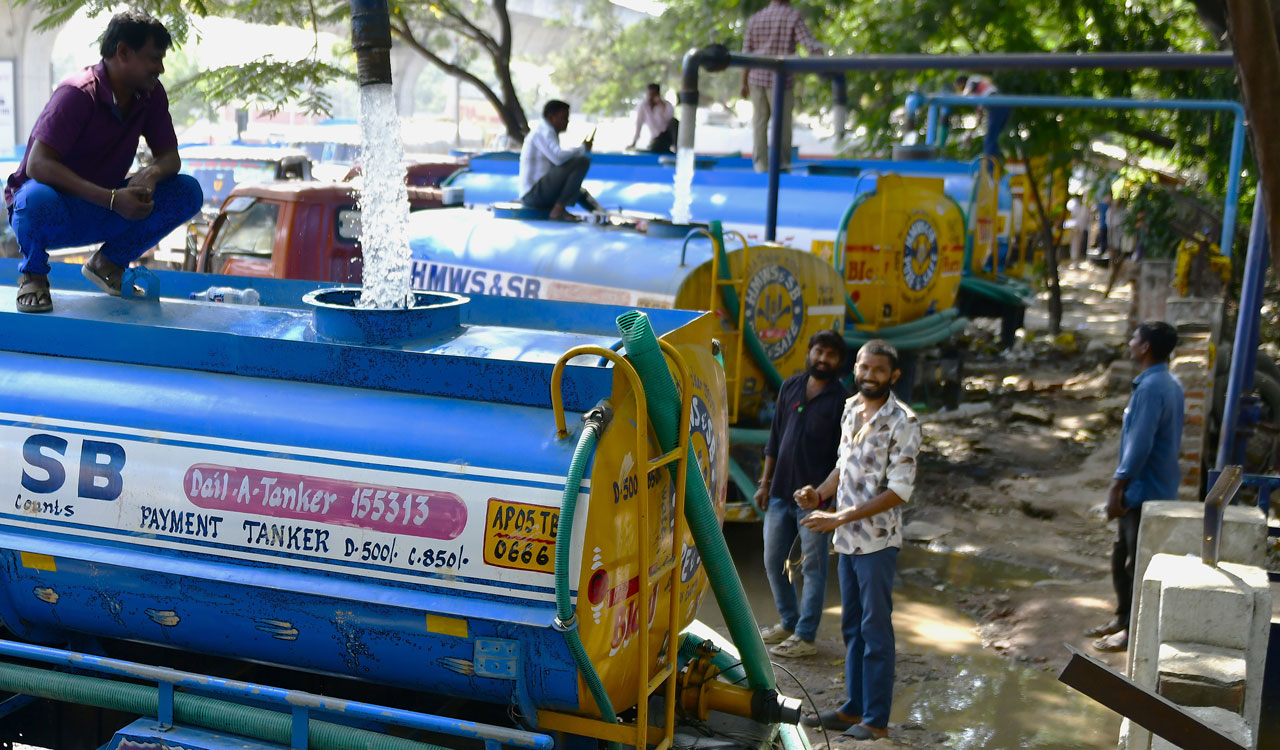


Hyderabad: Tankers hired by the Hyderabad Metropolitan Water Supply and Sewerage Board (HMWSSB) are wasting thousands of litres of water daily due to broken, ill-fitting or open-top lids, even as residents pay premium rates and wait days for deliveries.
Although HMWSSB mandates the use of lids during delivery to prevent wastage when licences are granted or renewed, most operators fail to comply, undermining the board’s “Every drop Counts” tagline. The board deploys 5,000-litre tankers for domestic users, 10,000-litre tankers for commercial and bulk users, and 20,000 to 25,000-litre tankers for heavy commercial supply, based on standard tariffs.
The HMWSSB currently runs a fleet of 1,200 to 1,500 tankers, supplying purified water daily to consumers who book through Metro Customer Care. A senior official noted that the board supplies 2 to 4 million gallons of water daily in the Core Urban Region Economy (CURE) area, alongside regular tap water.
Officials estimate that each tanker loses two to three litres per trip due to unsecured lids, leaks or faulty taps during braking, turns and speed breakers, spilling water onto roads and leaving consumers’ sumps empty. With 1,200 to 1,500 tankers each making 10 to 12 daily trips, thousands of litres are wasted. This occurs despite the board spending Rs 48 per kilolitre and supplying water at subsidised tariffs.
To curb this, HMWSSB will impose a Rs 5,000 fine on water tankers caught wasting purified water from November 1, with registration cancellations for repeat offenders. Investigations revealed that some vehicles were overfilled, leaked or lacked proper seals, creating hazardous road conditions and inconveniencing motorists.
Managing Director K Ashok Reddy recently directed General Managers of Operations and Maintenance divisions to strictly enforce the rules. Filling station managers and in-charges must inspect tankers for leaks and secure lids before permitting water filling. Defective vehicles will be barred from loading until repaired, and tanker associations have been urged to cooperate in preventing wastage.

Related News