Hyderabad air quality improves during Dasara holidays as pollution levels fall
Hyderabad’s air quality improved during the Dasara holidays, with PM2.5, PM10 and several other pollutants declining at multiple monitoring stations. However, AQI readings rose in some areas after October 18 as residents returned, highlighting the need for sustained pollution-control measures
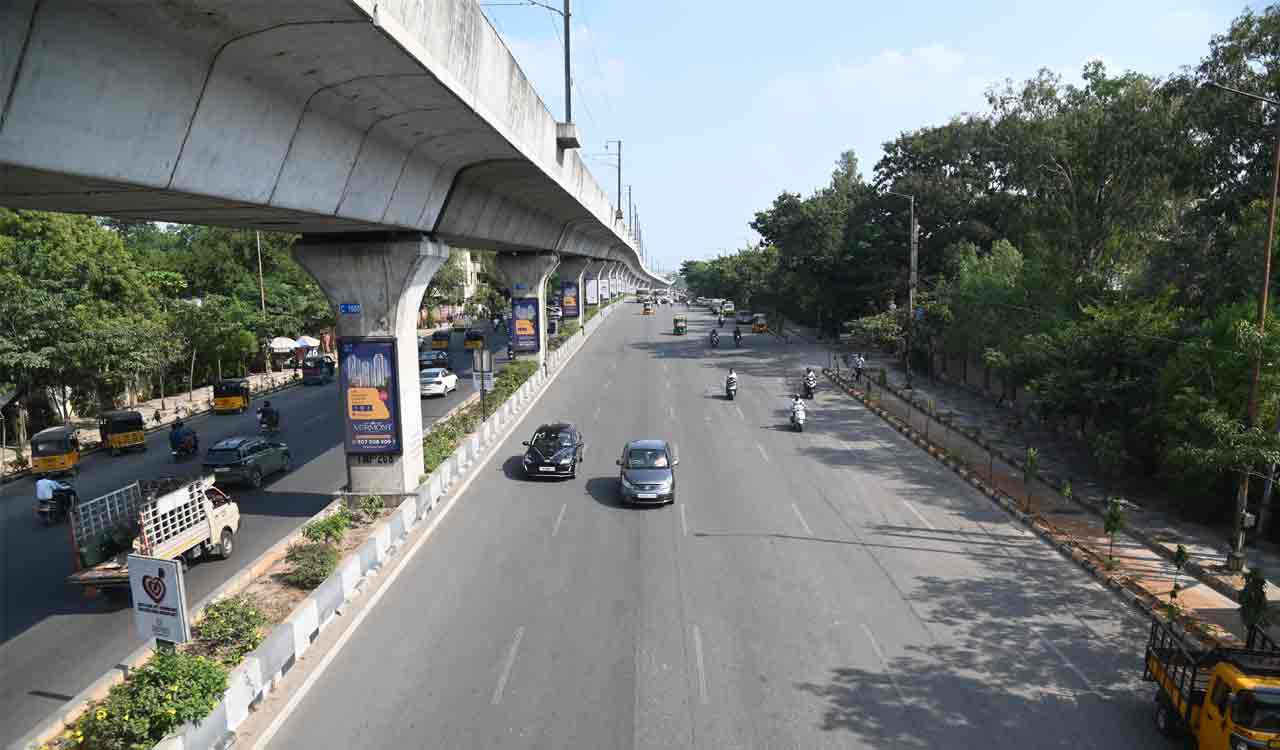


Hyderabad: Hyderabad experienced cleaner air during the Dasara holidays as large numbers of families travelled to their native places for the festival, reducing the usual heavy vehicular movement on city roads.
Data from the Telangana Pollution Control Board’s (TGPCB) continuous ambient air quality monitoring stations showed a considerable decline in pollution levels during the Dasara holidays.
According to the data, PM2.5 levels fell at 11 of the 14 monitoring stations, while PM10 levels declined at eight of the 13 stations between October 9 and 18. The period coincided with the Dasara vacation for schools and colleges.
At Pashamylaram, PM2.5 concentrations fell from 90 to 28 micrograms per cubic metre. PM10 levels in the same area declined from 145 to 61 micrograms per cubic metre.
Vehicular emissions, road dust, construction activities and industrial emissions contribute to PM2.5 and PM10 pollution. Exposure to these particles can affect respiratory health, particularly among older people.
Nitrogen oxide (NOx) levels, which are largely associated with vehicle emissions, declined in nine areas. Bollaram/Nizampet recorded the steepest fall, with concentrations dropping from 27.2 to 16.2 micrograms per cubic metre.
However, Khairatabad RTA recorded an increase in NOx levels from 23.3 to 33.5 micrograms per cubic metre. The rise may be associated with heavy vehicular movement in the area.
Carbon monoxide levels declined in nine areas. At Bollaram/Nizampet, concentrations fell from 1.2 to 0.5 milligrams per cubic metre, while the University of Hyderabad recorded a decline from 0.4 to 0.1 milligrams per cubic

Related News