
Hyderabad seminar highlights role of sports medicine and psychology
A seminar on sports medicine and psychology was held at Rajiv Gandhi Stadium in Hyderabad, bringing together experts to discuss injury prevention, mental health and performance management. Speakers stressed teamwork, scientific methods and a growth mindset for athletes
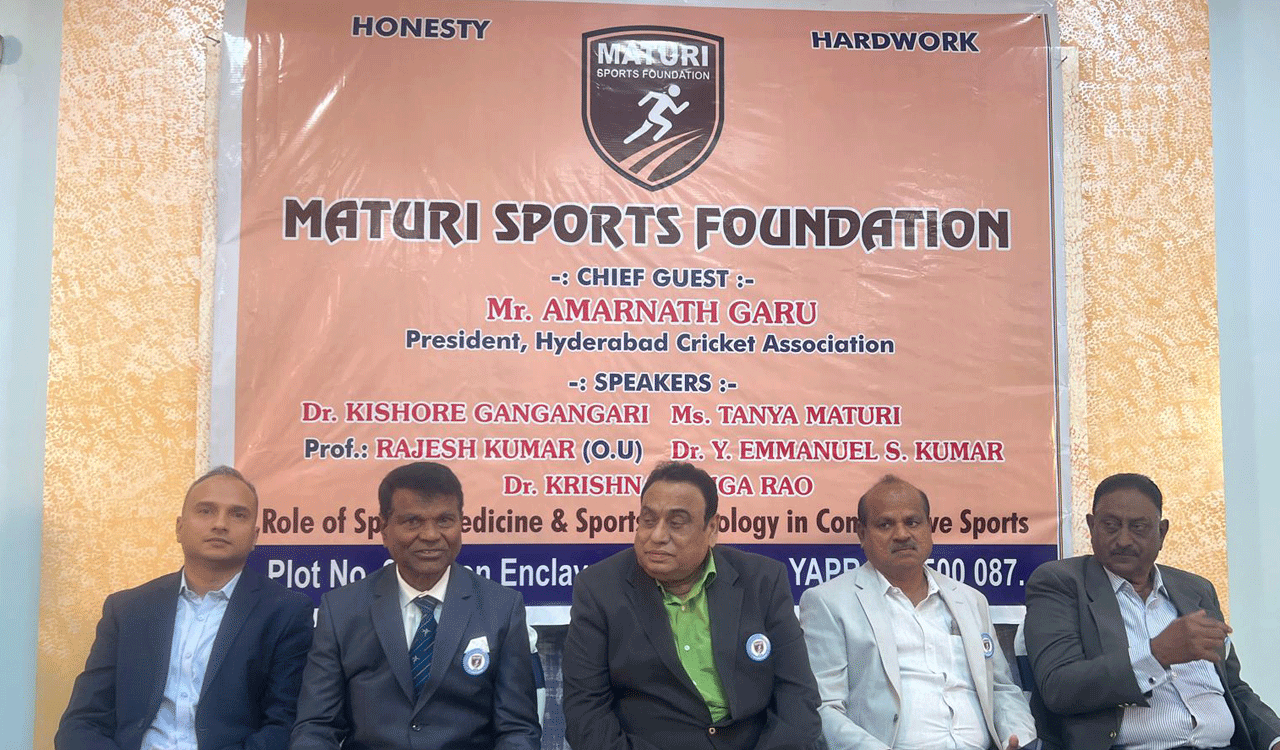


Hyderabad: The future of athletic performance and injury management was in focus at the seminar ‘Role of Sports Medicine and Sports Psychology in Competitive Sports’ organised at the Rajiv Gandhi Stadium here on Friday by the Maturi Sports Foundation, founded by former national boxing champion and retired AIBA international judge and referee M Venkatesham.
Mr Amarnath, President of the Hyderabad Cricket Association, formally inaugurated the programme. He said it was a wonderful gesture on the part of Mr Venkatesham to organise such a conference, which should do a world of good to sport.
“This is exactly the reason why the HCA has instantly accepted the request to host this seminar here at the cricket stadium,” he said.
The speakers included Dr Kishore Gangangari, Ms Tanya Maturi, Prof Rajesh Kumar, Dr Y Emmanuel S Kumar and Dr Krishna Ranga Rao. The event brought together clinicians, trainers and sports scientists to present a modern “playbook” for elite athlete care.
Dr Kishore Gangangari, PhD from the City University of New York, presented the PPR Framework (Performance, Prevention and Recovery). Aligning clinical care, training and return-to-play decisions around these pillars improves outcomes, reduces downtime and sustains athlete availability.
Dr Gangangari urged elite sports organisations to move away from “siloed” departments where doctors and coaches rarely communicate. He also spoke on evidence-based injury prevention and recovery, where screening, load management, biomechanics correction and recovery practices help reduce injury risk.
He reminded the audience that nutrition, hydration, psychological support and anti-doping compliance are vital for sustaining long-term careers. Addressing mental health, diet strategies and ethical standards ensures athletes remain strong both physically and mentally.
Ms Tanya Maturi, a graduate in neuroscience and psychology from Australia and presently working with the Gene Technology in London, stressed the need for a “growth mentality” among sportspersons instead of a “fixed mentality”. She noted that positive thoughts lead to positive emotions, which in turn result in better performance.
Ms Maturi also shared practical tips for developing a “growth mentality” through cognitive behavioural therapy, which includes three steps. Step one is to catch the thought. Step two is to change the thought. Step three is to release the thought and move on.

