
India unveils first national counter-terrorism policy ‘Prahaar’
India unveiled Prahaar, its first counter-terrorism policy, outlining a multi-layered strategy based on zero tolerance, intelligence-led prevention, disruption of terror funding, cyber monitoring, and international cooperation
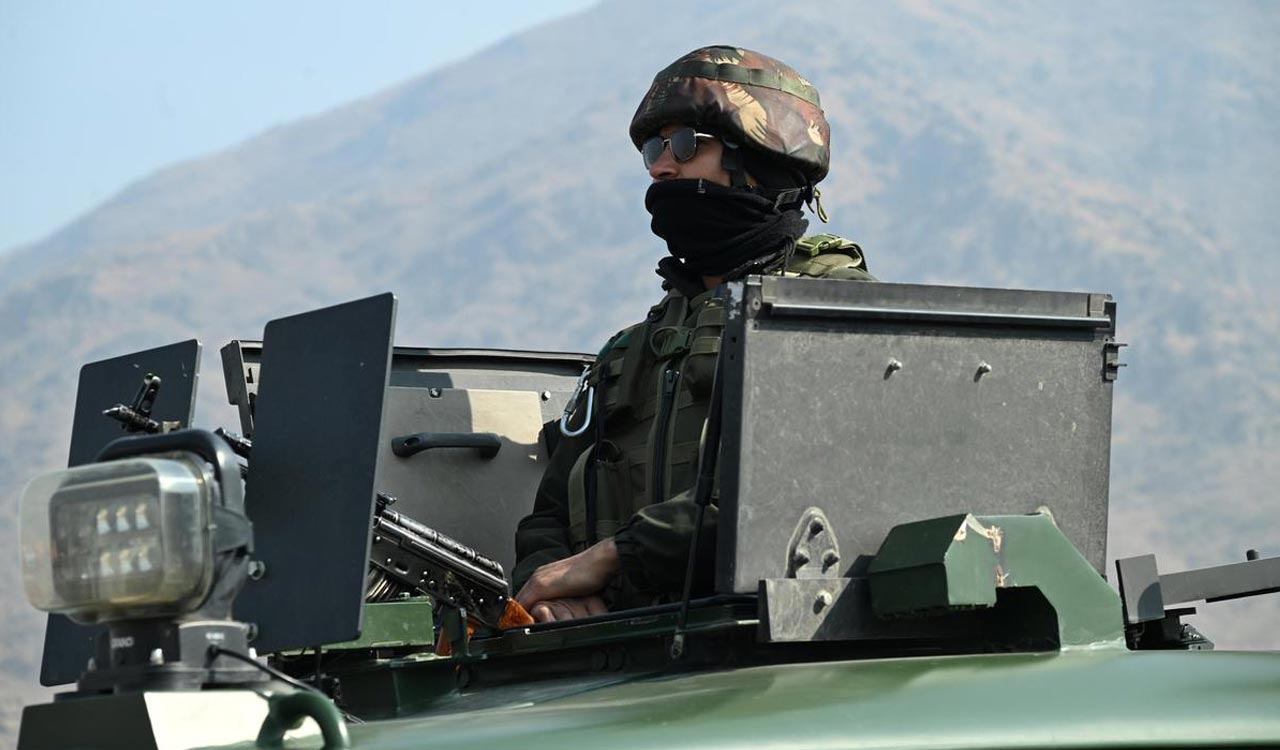


New Delhi: The government on Monday unveiled the country’s first counter-terrorism policy, “Prahaar”, setting out a multi-layered strategy based on “zero tolerance”, intelligence-led prevention and disruption of extremist violence. It aims to deny terrorists, their financiers and supporters access to funds, weapons and safe havens.
The policy, unveiled by the Home Ministry, is based on seven key pillars to counter terror threats emanating from India or abroad — prevention, response, aggregating internal capacities, human rights and “Rule of Law”-based processes, reducing the conditions enabling terrorism, including radicalisation, aligning and shaping international efforts to counter terrorism, and recovery and resilience through a whole-of-society approach.
“There has been a history of sporadic instability in the immediate neighbourhood of India, which has often given rise to ungoverned spaces. Besides, a few countries in the region have sometimes used terrorism as an instrument of State policy,” the document said, without naming Pakistan.
“Notwithstanding this, India does not link terrorism to any specific religion, ethnicity, nationality or civilisation. India has always denounced terrorism and its use by any actor for achieving any stated or unstated ends unambiguously and unequivocally,” it added.
Stating that India has consistently stood by the victims of terrorism and has been firm in its belief that there can be no justification for violence in the world, the document said it is this principled approach that informs New Delhi’s policy of “zero tolerance” against terrorism.
“India has long been affected by sponsored terrorism from across the border, with jihadi terror outfits as well as their frontal organisations continuing to plan, coordinate, facilitate and execute terror attacks in India. India has been the target of global terrorist groups such as Al-Qaeda and the Islamic State of Iraq and Syria (ISIS), which have been trying to incite violence in the country through sleeper cells,” it said.
Operating from foreign soil, terrorists have hatched conspiracies to promote violence in India, with handlers using the latest technologies, including drones, to facilitate terror-related activities and attacks in Punjab and Jammu and Kashmir, the policy said.
“Increasingly, terrorist groups are engaging organised criminal networks for logistics and recruitment to execute and facilitate terror strikes in India. For propaganda, communication, funding and guiding terror attacks, these terror groups use social media platforms as well as instant messaging applications,” it added.
The policy lists technological evolution, which offers terrorists anonymity, making it difficult to track their activities or funds.
“Technological advancements like encryption, dark web and crypto wallets have allowed these groups to operate anonymously. Disrupting or intercepting terrorist efforts to access and use CBRNED (Chemical, Biological, Radiological, Nuclear, Explosive, Digital) material remains a challenge for counter-terrorism agencies. The threat of state and non-state actors misusing drones and robotics for lethal purposes remains another area of concern, even as criminal hackers and nation states continue to target India through cyber attacks,” the document read.
It described India’s approach in preventing and countering threats as “proactive” and “intelligence-guided”, noting that the country faces risks across air, land and water.
Under its prevention strategy, primacy is given to intelligence gathering and dissemination to executive agencies to neutralise threats, with special emphasis on disrupting terror funding networks through the legal framework under Indian laws.
Close partnerships have been established between central agencies and state police forces through the Multi-Agency Centre and the Joint Task Force on Intelligence in the Intelligence Bureau (IB), the document said.
“Operationalisation of Multi Agency Centre (MAC), along with the Joint Task Force on Intelligence (JTFI) in the Intelligence Bureau (IB), remains the nodal platform for efficient and real-time sharing of counter-terrorism-related inputs across the country and subsequent prevention of disruptions,” it said.
The document highlighted the misuse of the internet for communication, recruitment, glorification of jihad and other terror-related activities, which are countered through proactive disruption of such cyber activities, online networks of terrorist groups, and their propaganda and recruitment efforts by intelligence and counter-terror agencies.
“Law enforcement agencies also regularly disrupt the overground workers (OGW) modules, through which terrorists are extended logistic, material and financial support. In recent times, a nexus between illegal arms syndicates and terrorist groups has emerged, and to combat it, coordinated interventions are being made by intelligence agencies along with the respective law enforcement agencies in various Indian states. Special emphasis is given to disrupting terror funding networks through the legal framework under Indian laws,” it said.
Responding to a terror attack is a multi-stakeholder exercise involving various agencies at the central, state and district levels, with a standard operating procedure (SOP) issued by the Ministry of Home Affairs (MHA) for coordination at the apex level, including intelligence dissemination, analysis and follow-up action through the MAC platform.
The overall capacities of various law enforcement and counter-terrorism agencies have been enhanced by identifying resource gaps and suggesting necessary counter measures.
“Indian laws, including anti-terrorism laws, give due importance to human rights. India adheres to the ‘Rule of Law’, where laws are just, applied evenly and protect fundamental rights,” it said, highlighting that “multiple levels of legal redress are available to any accused through an elaborate infrastructure of justice from the districts, through states, right up to the higher judiciary at the central level”.
The policy said issues of poverty and unemployment among vulnerable communities are addressed through various government schemes and initiatives to prevent inimical elements from misusing these conditions.
International cooperation, ranging from bilateral and multilateral treaties, has resulted in the disruption and indictment of many terrorist and radical entities in India and abroad, the deportation of wanted fugitives and support in the pursuit of designating wanted terrorists at the United Nations.
“The government engages a team of doctors, psychologists, lawyers and other members of civil society, including NGOs, religious and community leaders, to sensitise and reintegrate the affected community,” the policy said.
Besides capacity building of counter-terrorism agencies, the document also highlighted that the domestic counter-terrorism legal regime needs to be amended from time to time to respond to emerging challenges and associate legal experts at every stage of investigation, right from the registration of an FIR to its culmination in prosecution, to strengthen cases against perpetrators.
“Terrorist groups based outside now use the infrastructure, logistics and terrain knowledge of local outfits for launching attacks. National actions, coupled with international and regional cooperation, are key elements in addressing the trans-national terrorism challenge,” the policy said.
Expressing its commitment to continue efforts with the international community and counter the global challenge of misuse of Information and Communications Technology (ICT) for terrorist purposes, the document said investments in technology and partnerships with private enterprises have been included to mitigate future terror threats.

