Indian researchers find new method to detect Monkeypox virus
The new findings can help develop diagnostic tools for the deadly infection, declared a global health emergency twice by the World Health Organization (WHO) in the last three years.
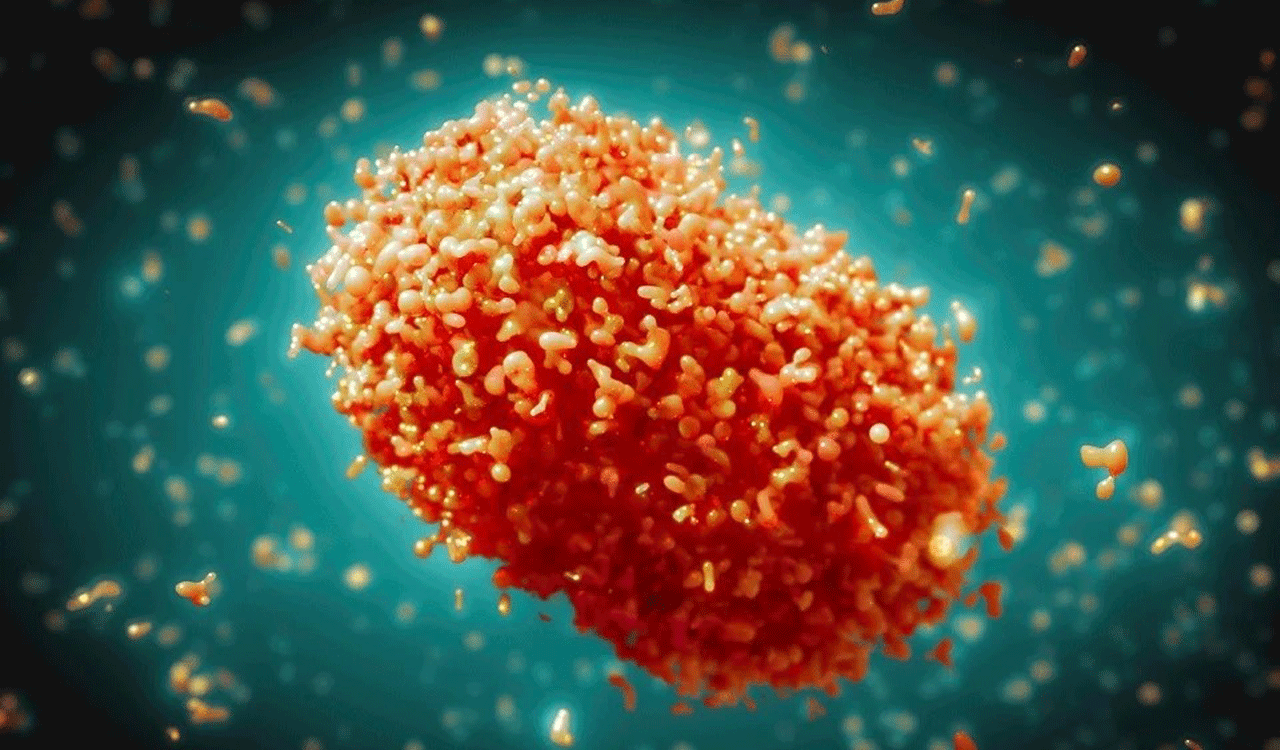


New Delhi :Researchers from JNCASR, an autonomous institution of the Department of Science and Technology (DST), have identified a new method to understand the virology of monkeypox virus (MPV).
The new findings can help develop diagnostic tools for the deadly infection, declared a global health emergency twice by the World Health Organization (WHO) in the last three years. The 2024 global outbreak saw the disease spread to about 15 countries in Africa, and three out of Africa.
The outbreak has raised serious concern about its unanticipated spread across the globe, as the modes of transmission and symptoms are not well understood. A comprehensive understanding of virology, alongside the rapid development of effective diagnostic and therapeutic strategies, is of paramount importance.
“MPV is a double-stranded DNA (dsDNA) virus. The detection of the extracellular viral protein gene through polymerase chain reaction (PCR) is a widely established technique for identifying MPV in clinical specimens,” said the researchers.
Currently, the disease is detected via PCR, relying on the amplification of double-stranded DNA (dsDNA), which also employs fluorescent probes for quantifying amplification.
The team identified and characterised highly conserved GQ — a four-stranded unusual and characteristic DNA structure within the MPV genome. They specifically detected a specific GQ sequence using a tailored fluorescent small-molecule probe, enabling precise detection of MPV.
“These GQ sequences are stable under physiological conditions, highly conserved, and are not present in other pox viruses, other pathogens, and the human genome. These characteristics make the GQ sequences valuable targets for the development of diagnostic tools and therapeutic intervention,” explained the team.
Their fluorogenic molecular probe (BBJL) delivered “more than 250-fold enhancement in fluorescence output upon binding with MPV GQs (MP2). The ability of BBJL to selectively detect this highly conserved sequence in the MPV genome sets a precedent for the development of detection techniques targeting noncanonical nucleic acids”.
Additional mapping of the MPV genome is being performed to identify potential GQ targets for future therapeutics. Consequently, this study augments the development of potential detection platforms based on GQ, and the GQs identified can be further investigated for their anti-viral properties.
Such molecular probes with superior conformation or sequence-specific recognition of nucleic acids could alleviate the challenge in existing amplification-based techniques, in discriminating false-positive results arising from non-specific amplification.
The identification and characterisation of new GQ sequences in the MPV could help the broader scientific community seeking to understand the virology of MPV or develop diagnostic and therapeutic interventions, said researchers.

Related News
-

Good food can beat bad genes: CCMB, NIN, MDRF studies show heredity is not destiny
-
‘Telomeres’, genes, chromosomes impact ageing and cancer: Nobel Laureate Jack Szostak
-
Bodies of mother and daughter identified after Kurnool bus accident
-
Movie Review: ‘DNA’ a gripping thriller rooted in emotion and redemption