Inside ISI’s regional terror strategy: Underworld cash modules in North India versus digital radicalization in South India
Intelligence agencies have exposed a regional divide in ISI's India operations: utilizing underworld cash pipelines to recruit vulnerable, drug-dependent youth for targeted attacks in the North, while deploying encrypted digital networks for deep ideological radicalization across the South


New Delhi: Terror groups operating in India have adopted a two-pronged strategy, using both radicalisation and financial incentives to recruit and lure young people into their networks.
Officials say there is a clear regional divide in the way these groups operate. While Pakistan’s Inter Services Intelligence (ISI) has largely focused on facilitating terror operations in northern India, the southern states have increasingly emerged as centres for radicalisation, where recruitment and ideological indoctrination take precedence.
In North India, the primary focus has been on executing terror attacks. In the southern states, however, the emphasis is largely on radicalisation and recruitment. Recent investigations by the Maharashtra Anti-Terrorism Squad (ATS) and the Special Cell of the Delhi Police indicate that many recruits were drawn into terror networks with the promise of financial rewards.
The ISI has even deployed the underworld to oversee this process, and recruitment has not been based on religion. Instead, almost all those inducted into the ISI’s terror-underworld module were lured with financial incentives.
An Intelligence Bureau official says that the focus in South India remains radicalisation. There have been no major attempts made to carry out terror attacks in this part of the country.
“The youth are more susceptible to radicalisation and are more interested in changing the mindset of society rather than carrying out attacks. The focus has been more on the implementation of the Sharia law and preaching violent Islam so that this mindset can be imbibed in society,” the official added.
Further, the ISI-backed elements have been using the close links that some southern states have with the Gulf nations to make the radicalisation push. This was made possible when scores of Wahhabi preachers visited states such as Kerala and Tamil Nadu over the years and attempted to radicalise people, officials claim.
Various Central security agencies are now probing a major radicalisation case involving a dozen individuals based in Vijayawada in Andhra Pradesh. Interestingly, these persons are not linked to any terror group. The agencies have learnt that during their online radicalisation sessions, they have preached the ideology of both the Islamic State and Al-Qaeda.
The National Investigation Agency (NIA) has learnt that this module was solely focused on radicalisation. All 13 persons named in the case were recruited through social media after being radicalised. They were then assigned the task of radicalising more people using encrypted online channels, with the focus largely being on South India, the agencies say.
Meanwhile, in northern India, security agencies continue to bust underworld-linked terror modules. Investigations into these recent cases have revealed a striking pattern, with nearly 99 per cent of the recruits allegedly enticed by financial incentives.
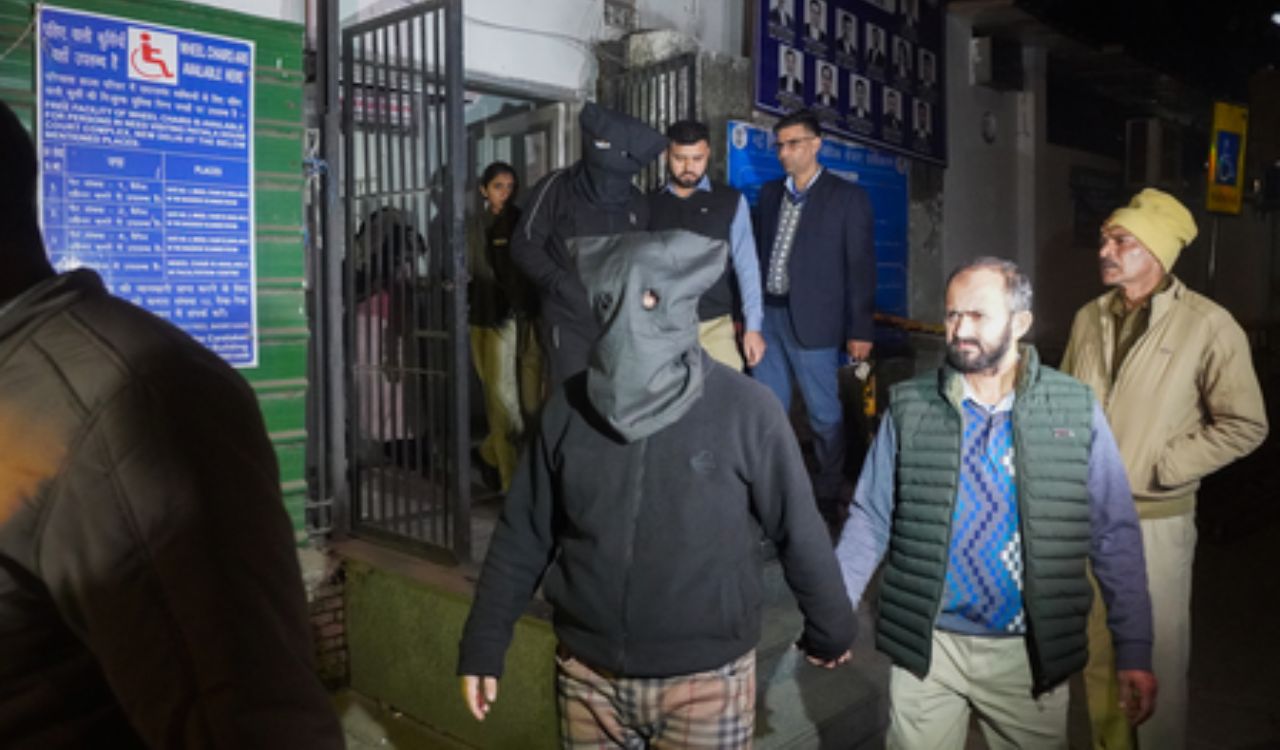
The underworld tasked with overseeing this module has not relied on radicalisation and instead only used money as the main recruitment tool, an official said. More details relating to the recruitment strategy for North India came up following the arrest of one Hufaiza Farooq Ahmed Hashmi. He was arrested in Bhayandar near Mumbai in a joint operation by the Maharashtra ATS and the Special Cell of the Delhi Police. He was tasked with putting up a team of youth, who were ready to go to Delhi for allegedly carrying out targeted killings.
The youths recruited by Hashmi told investigators that they had been instructed to travel to Delhi, where they would be given the identity and location of the intended target upon arrival. Like the other underworld-linked terror modules busted, the one being run by Hashmi also relied only on money for recruitment. He identified youth who were drug addicts and offered them money to join the module, the investigations have found.
An official said this modus operandi clearly shows how the vulnerabilities of young people are being exploited by these elements and how they are being recruited through financial inducements.

Related News
-

NIA begins tracking Bengal youths brainwashed by arrested JMB associates
-
Former Maoist leaders seek revocation of death sentence in Jeeram Ghati case
-
APTH condemns death sentence to 10 Maoists in Jhiram Valley attack case
-
India to establish unified intelligence grid to counter multi-front security threats