Maruti Suzuki launches first Made-in-India e-Vitara SUV
Maruti Suzuki has rolled out its first Made-in-India electric SUV, the e-Vitara, from its Gujarat plant, now a global EV hub. Backed by government schemes, India targets 30 per cent EV penetration by 2030 and reduced carbon emissions by one billion tonnes
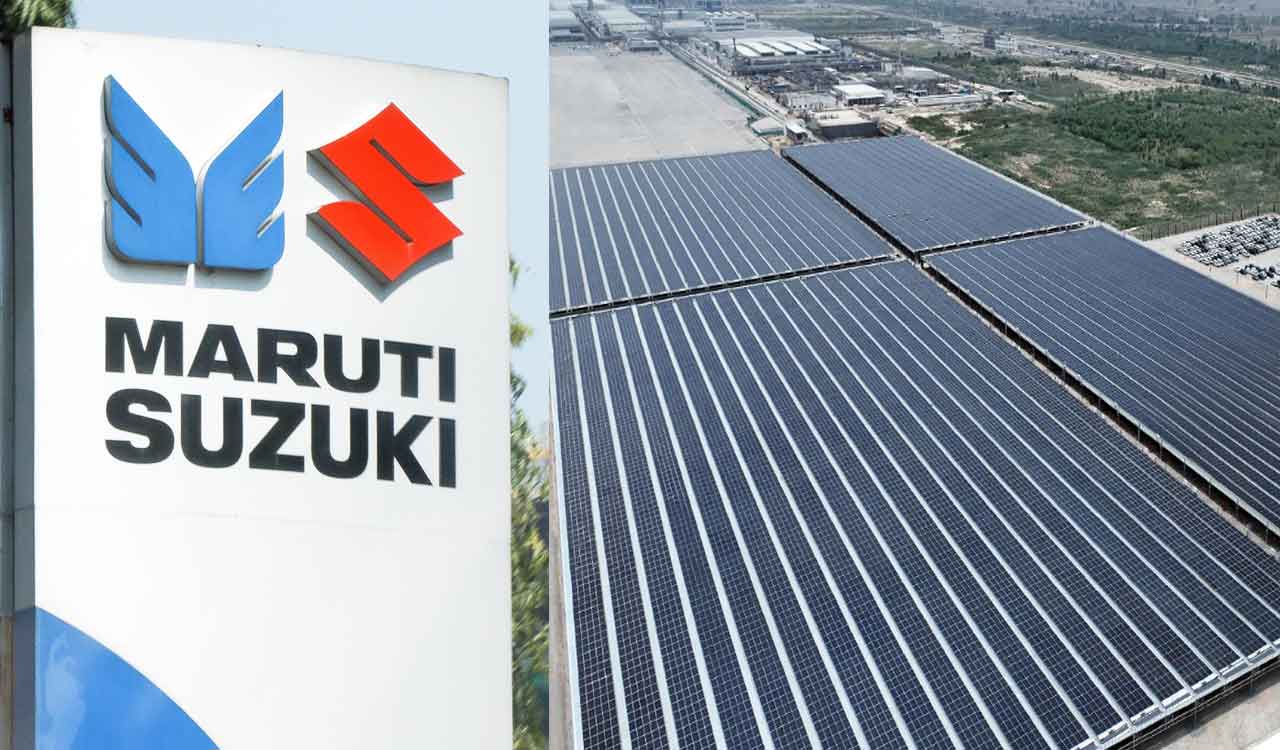


New Delhi: The country’s largest carmaker Maruti Suzuki has announced the rollout of its first made-in-India electric vehicle – the e-Vitara SUV – in a major boost to the green segment from its upgraded Gujarat plant, which is now set to become one of the world’s largest automotive manufacturing hubs with a projected annual capacity of one million units.
Crucially, this facility will serve as Suzuki’s global production base for electric vehicles (EVs), exporting to over 100 countries, including advanced markets in Japan and Europe, which is aligned with India’s vision of becoming a global auto manufacturing hub.
Suzuki’s decision to double down on India comes as global EV sales slow and competitive pressures rise in established markets, particularly China. For multinational automakers, India’s combination of affordability, scale, and rising technological sophistication, ranging from 5G-enabled smart vehicles to indigenous battery manufacturing, offers not just growth potential but an opportunity for leadership in the global value chain, according to an article in India Narrative.
While EVs are currently a small slice of India’s passenger vehicle market – penetration is still in single digits – government policies are rapidly changing the landscape. These targeted policies are steadily narrowing the technology and cost gap between India and global leaders like China.
Schemes introduced by the Centre like FAME-II (Faster Adoption and Manufacturing of Hybrid and Electric Vehicles), with a budget of Rs 11,500 crore, have already supported over 16 lakh EVs as of June 2025, including e-buses, e-two-wheelers, and e-three-wheelers. The government has also sanctioned Rs 912.5 crore for installing 9,332 public charging stations, with nearly 8,900 already operational.
These efforts are backed by the Production Linked Incentive (PLI) schemes – Rs 25,938 crore for advanced automotive technologies and Rs 18,100 crore for Advanced Chemistry Cell battery storage – designed to localise EV components and reduce dependency on imports. As of early 2025, the ACC scheme had allocated capacity for 40 GWh of battery production, targeting up to 60 per cent domestic value addition within five years.
The push extends beyond personal vehicles. The PM e-Bus Sewa Scheme, with a Rs 20,000 crore outlay, aims to deploy 10,000 electric buses via a Public-Private Partnership model, 7,293 of which have already been approved across 18 states and UTs. Meanwhile, the PM E-Drive initiative is India’s first direct incentive programme for electric trucks, also covering e-two-wheelers, e-three-wheelers, and ambulances, with subsidies exceeding Rs 7,500 crore to date.
In the EV segment, momentum is already visible: electric two-wheeler sales in FY 2024–25 surged to 11.49 lakh units, up 21 per cent year-on-year. The government has set an ambitious target of 30 per cent EV penetration by 2030, aligning with the global EV30@30 initiative, and aims to cut projected carbon emissions by one billion tonnes by the same year.
Prime Minister Narendra Modi’s inauguration of the e-Vitara at Suzuki’s Hansalpur plant was as much a symbolic milestone as it was a strategic statement.
Alongside vehicle production, the plant is now manufacturing hybrid battery electrodes domestically, ensuring over 80 per cent localisation in battery value, a critical step toward Aatmanirbhar Bharat, the article added.

Related News