Material suggests involvement of Khalid, Imam in Delhi riots: SC
SC says it finds that there are reasonable grounds for believing that the accusation against Umar Khalid and Sharjeel Imam is prima facie true
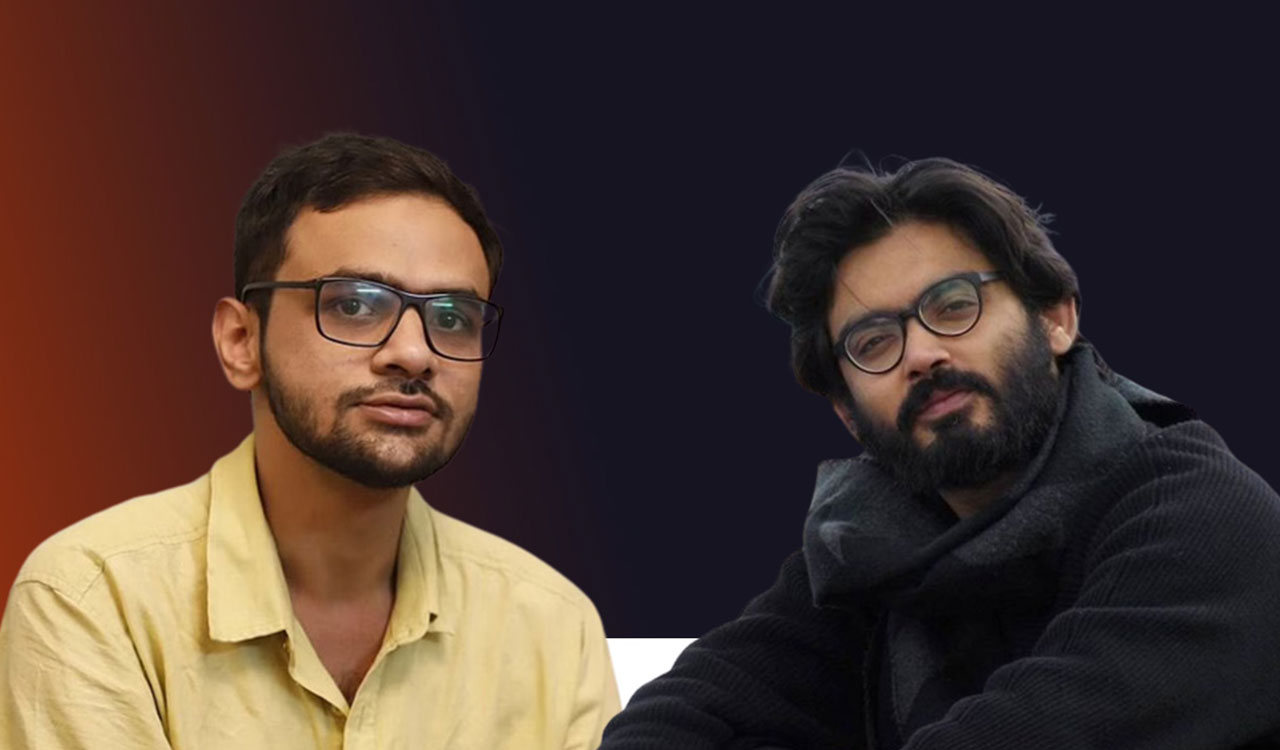


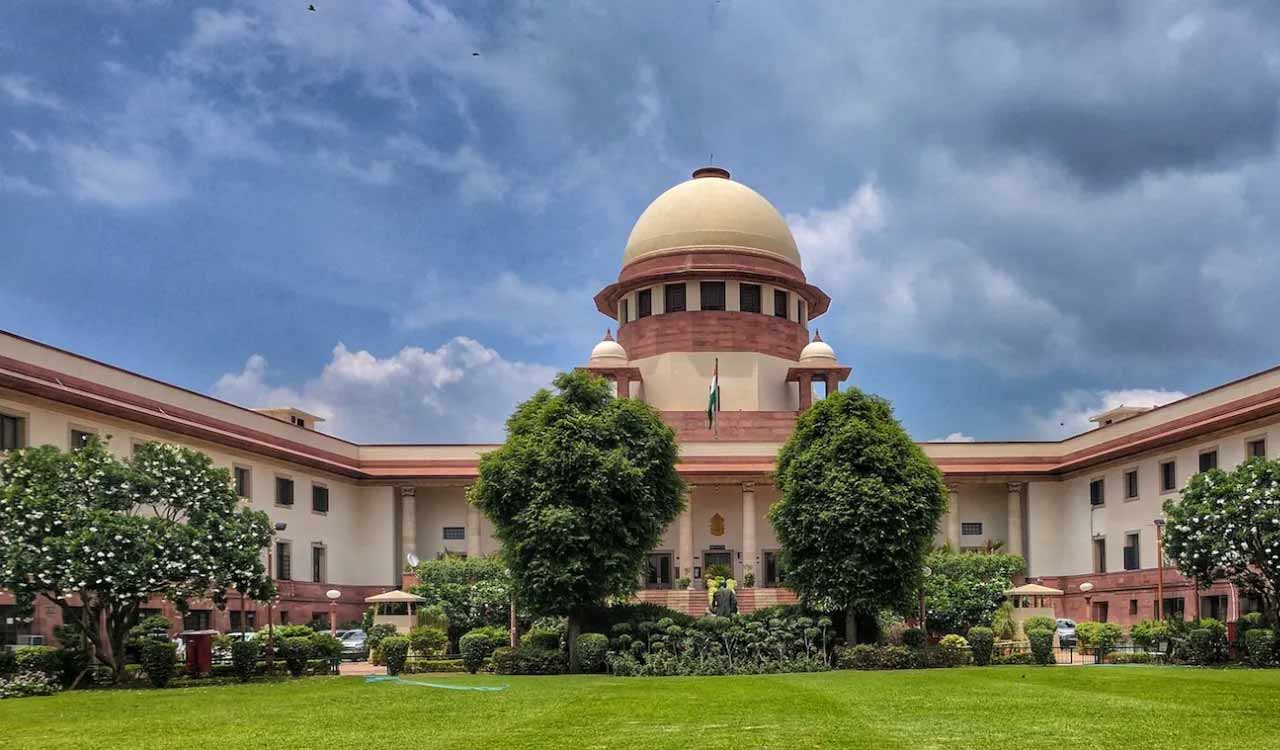
New Delhi: The Supreme Court on Monday said prosecution material suggests that activists Umar Khalid and Sharjeel Imam were involved in “planning, mobilisation and strategic direction” of the 2020 Delhi riots, as it denied them bail in the conspiracy case.
The apex court cited Section 43D (5) of the UAPA, which requires the court to deny bail if, on perusal of a case diary or chargesheet, it finds that there are reasonable grounds for believing that the accusation against such a person is prima facie true.
“This court is satisfied that the prosecution material taken at face value as required at this stage discloses a prima facie attribution of essential and formative role by the appearance in appeals… of Umar Khalid and Sharjeel Imam in the alleged conspiracy,” a bench of Justices Aravind Kumar and NV Anjaria said.
The material suggests “involvement at the level of planning, mobilisation and strategic direction, extending beyond episodic or localised acts”, the Bench said, adding “this statutory threshold under 43D (5)of UAPA therefore stands attracted qua these appellants”.
According to the Unlawful Activities (Prevention) Act (UAPA) provision, “Notwithstanding anything contained in the Code, no person accused of an offence punishable under Chapters IV and VI of this Act shall, if in custody, be released on bail or on his own bond unless the Public Prosecutor has been given an opportunity of being heard on the application for such release.
“Provided that such accused person shall not be released on bail or on his own bond if the Court, on a perusal of the case diary or the report made under Section 173 of the Code, is of the opinion that there are reasonable grounds for believing that the accusation against such person is prima facie true.”
The top court said that when prosecution material prima facie discloses offence, statutory restriction must prevail, and if not, liberty must prevail.
The apex court, however, granted bail to activists Gulfisha Fatima, Meeran Haider, Shifa Ur Rehman, Mohd. Saleem Khan and Shadab Ahmad, saying it does not reflect a dilution of the seriousness of allegations or findings of guilt against them.
With regard to Fatima’s case, the top court said she did not exercise independent command, resource control, or strategic oversight over multiple protest sites during the agitation against the Citizenship (Amendment) Act.
“The allegation that Gulfisha Fatima mobilised local women and coordinated protest-site logistics, though relevant to the prosecution’s case, does not presently disclose that she exercised independent command, resource control, or strategic oversight over multiple protest sites.
“The prosecution itself asserts that directions were conveyed to her by others higher in the asserted hierarchy. In these circumstances, this Court finds that the level of attributed agency and control does not justify continued incarceration once the investigative purpose stands substantially fulfilled,” the bench said.
Imam was arrested on January 28, 2020, for speeches made during anti-CAA protests. He was later arrested in the larger riots conspiracy case in August 2020. Khalid was arrested on September 13, 2020.
Delhi Police had told the top court that Khalid, Imam and others conspired to strike at the sovereignty and integrity of the country by a “regime change operation” executed under the guise of “peaceful protest”.
Arguing that the alleged offences involved a deliberate attempt to destabilise the State which warrants “jail and not bail”, the Delhi Police had said it has collected ocular, documentary and technical evidence against the accused showing their intrinsic, deep-rooted and fervent complicity in engineering nationwide riots on communal lines.
The riots were not spontaneous but part of a “deep-rooted, premeditated and pre-planned” conspiracy, it claimed.
“The evidence gathered from the period preceding the execution of the conspiracy; documented communications, coordinated plans, and alignments between actors, establishes a clear meeting of minds,” it said.
The material demonstrates not only knowledge but intention, revealing a deliberate design to bring the country into disrepute through targeted and strategic actions, it alleged.
The petitioners, it alleged, “for malafide and mischievous reasons have delayed the commencement of trial to come and play the victim card and seek bail on the ground of prolonged incarceration”.
“It is submitted that the conduct of the accused, apart from the irrefutable and ocular evidence available against them, disentitles them from seeking any relief of bail from this court,” the law enforcement agency said in an affidavit filed in the top court.
Rebutting the argument that the trial is not likely to be completed due to 900 witnesses, the police said the statement was not only premature but also a “red herring” manufactured to obtain bail.
The police claimed that Khalid and Imam broke the “secular fabric” of JNU and created a communal WhatsApp group, ‘Muslim Students of JNU’, and also used students of Jamia Milia Islamia to instigate and mobilise them.
“They started instigating students at Jamia and Shaheen Bagh. They adopted a model of Chakka-Jaam in the name of protest and planned to convert it into disruptive Chakka-Jaam at an appropriate time, disruption of supplies and services essential to normal life and attempting to dismember constituent provinces of India from the Union of India,” it said.
The motive behind the ‘Chakka-Jaam’ was killing and injuring police and “non-Muslims” on a mass scale through a communal riot, they claimed.
“Imam under the tutelage of Umar Khalid and other top conspirators conspired and engineered the first phase of the Delhi riots from December 13 to December 20, 2019.
“Sharjeel Imam was instrumental in orchestrating the first phase of the Delhi riots and the same could be established from Sharjeel Imam’s chat,” the police alleged.
They said that in January 2020, Khalid held a “secret meeting” in Seelampur with Gulfisha Fatima, Natasha Narwal, Devangana Kalita, and others, where he purportedly instructed them to induce local women of Seelampur to stockpile knives, bottles, acid, stones, chilli powder, and other dangerous articles to engineer a riot.
Fatima was accused in the affidavit of acting as a key coordinator who helped turn peaceful sit-ins into violent demonstrations, the police said.
Meeran Haider, a member of the Jamia Coordination Committee, was alleged to have overseen multiple all-day protest sites, collected funds, and encouraged protesters to attack police and non-Muslims, they said.
Khalid, Imam, Gulfisha Fatima, and Meeran Haider were booked under the Unlawful Activities (Prevention) Act (UAPA) and provisions of the erstwhile IPC for allegedly being the “masterminds” of the 2020 Delhi riots, which left 53 people dead and over 700 injured.
The violence erupted during the protests against the Citizenship (Amendment) Act (CAA) and the National Register of Citizens (NRC).
The activists have moved the apex court challenging a Delhi High Court order passed on September 2. The top court had on September 22 issued notice to the Delhi Police and sought its response.
The High Court denied bail to nine people, including Khalid and Imam, saying “conspiratorial” violence under the garb of demonstrations or protests by citizens could not be allowed.

Related News
-

Supreme Court clarifies legal route for complaints against elected candidates
-
NEET-PG 2026: Plea seeks permanent copies of question papers and response sheets
-
SC issues notice to ECI on Rahul Gandhi-led plea against Special Intensive Revision exercise
-
Internet shutdown during October 10 CJP protest was necessary: Centre to SC