Megalithic dolmens unearthed in Mulugu shed light on prehistoric burial practices in Telangana
Archaeologists have discovered a vast cluster of megalithic dolmens in Mulugu district, Telangana, shedding light on Stone Age burial traditions. Spread across nearly 100 acres in the Kappalayi Gutta region, these structures, locally known as “Rakasi Bandalu” and “Rakasi Guhalu”, demonstrate the engineering skill of ancient humans.


Hyderabad: A large number of ancient megalithic dolmens has been discovered in Mulugu district, shedding a new light on prehistoric (Stone Age) burial practices in the State.
Located about 120 kilometres from Warangal city, the human-made burial structures, which are locally referred to as “Rakasi Bandalu” (giant stones) and “Rakasi Guhalu” (giant caves) were found around Motlagudem village of Tadvai Mandal in Mulugu district.
Based on information provided by local residents, a technical team led by Heritage department director Prof. K Arjun Rao, deputy director Dr. P Nagaraju, and OSD A Raju inspected the site on Thursday.
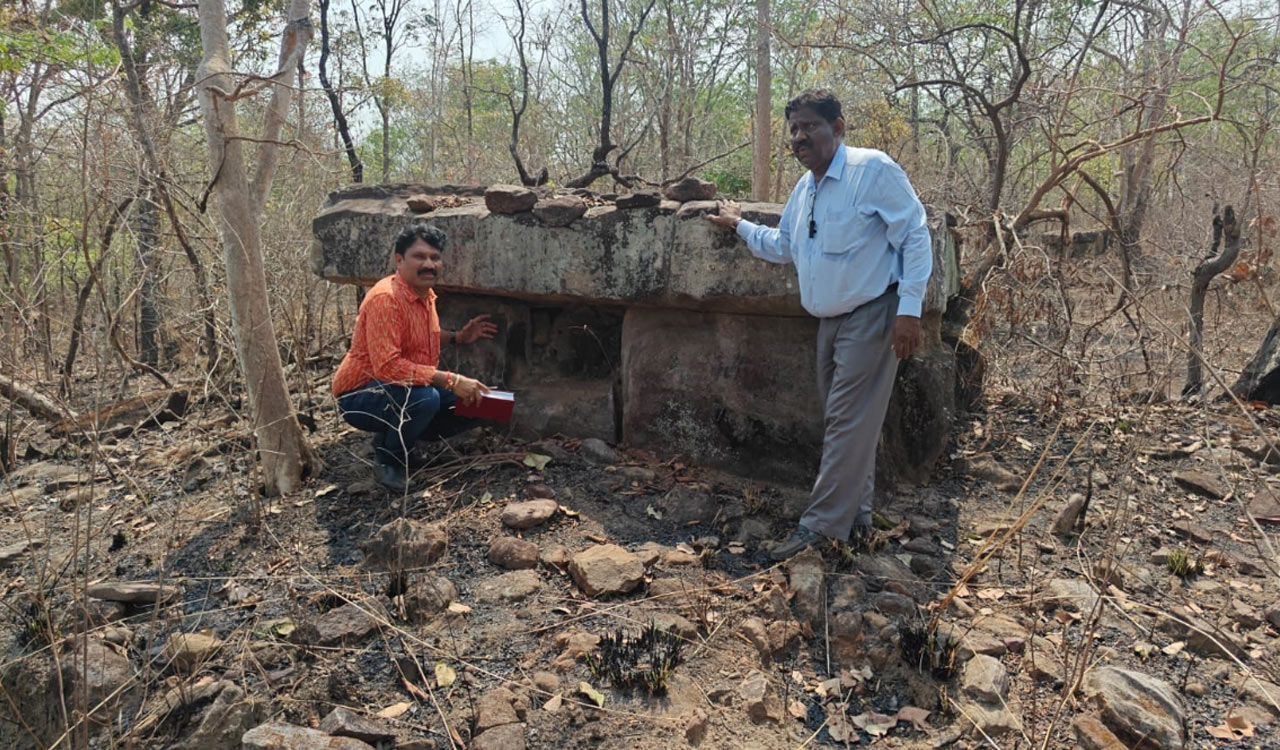
According to the team, the burial structures, spreading across nearly 100 acres in the Kappalayi Gutta region, demonstrate the remarkable skill and craftsmanship of ancient humans. These dolmen burials, constructed using roughly hewn sandstone slabs, extend across areas ranging from 4 to 25 meters.
Each structure consists of four large vertical stone slabs with a massive capstone placed on top. Inside each burial, a small stone trough resembling a sarcophagus can be found. Additionally, a vacant space was left in one corner, and the entire structure was enclosed within a circular stone boundary wall of approximately 10 feet in radius, the team said.
The distance between individual burial structures ranges from 5 to 100 feet. The layout suggests a well-planned settlement, resembling an organised ancient township. The capstones used for these burials weigh approximately 10 to 20 tons each. “This may be one of the largest clusters of dolmen burials in India,” it said.
“These structures, much like the pyramids of Egypt, are believed to reflect a strong belief in life after death and rebirth. Similar burial traditions are widely found across South India, including in Tamil Nadu, Karnataka, Andhra Pradesh, Kerala, and Telangana,” the team added.

Related News