Nirmohi Akhara seeks ‘public trust’ status for Ram Janmabhoomi body
The Nirmohi Akhara has moved the Supreme Court seeking reconstitution of the Shri Ram Janmabhoomi Teerth Kshetra Trust as a public trust, arguing that its current private structure violates the spirit of the 2019 Ayodhya verdict. The matter will be heard on July 20.
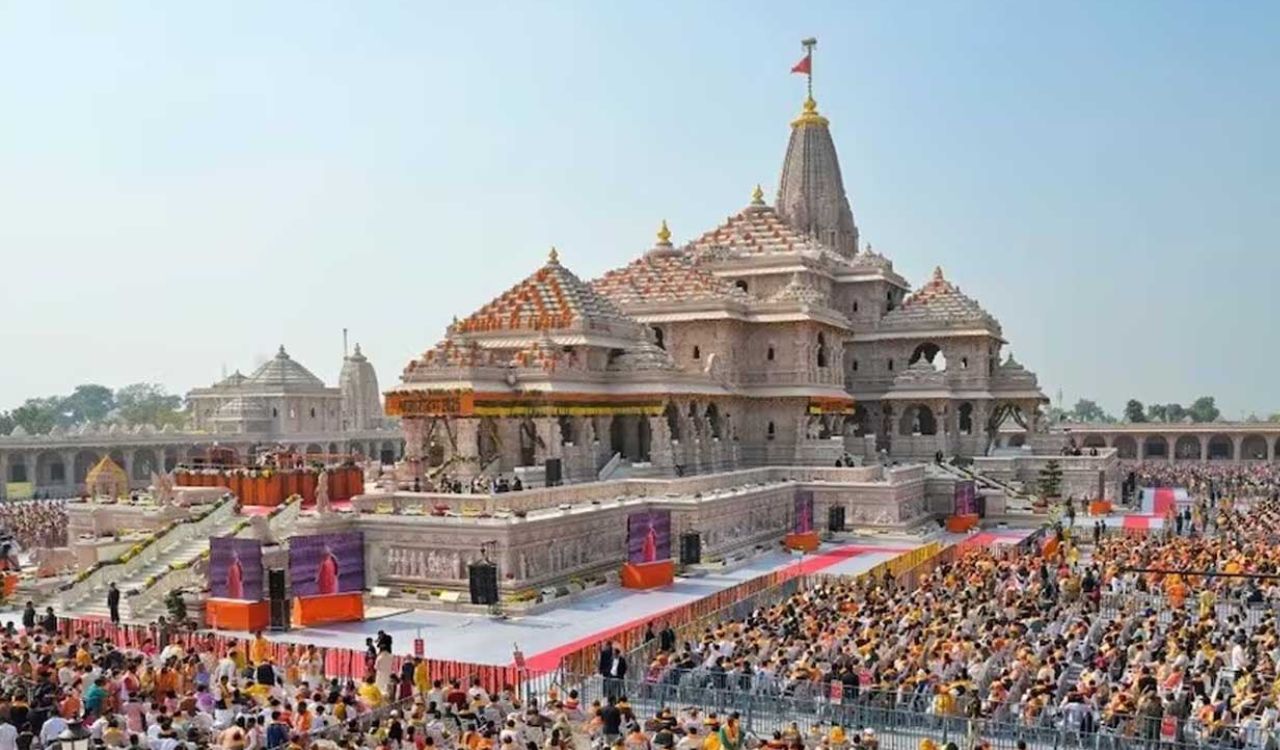


New Delhi: The Nirmohi Akhara has approached the Supreme Court seeking a direction to the Centre to reconstitute the Shri Ram Janmabhoomi Theerth Kshetra Trust, which manages the affairs of the Ram temple in Ayodhya, as a “public trust”.
In its application filed before the apex court, Nirmohi Akhara has sought directions declaring that the existing structure and composition of the trust as a “private trust” was inconsistent with the spirit and intent of the top court’s November 2019 verdict in the Ram Janmbhoomi-Babri Masjid land dispute case.
The application has been filed in the disposed of matter in which the apex court on November 9, 2019, delivered a landmark verdict that paved the way for the construction of the Ram temple in Ayodhya.
The 2019 verdict also directed the Centre to allot a five-acre plot to the Sunni Waqf Board for building a mosque.
The Nirmohi Akhara filed the application through Mahant Raja Ramchandracharya Ateet Guru Raghunath Das.
It has sought a direction to the Centre “to suitably recast the scheme and reconstitute the trust as a public trust and include therein structural safeguards for appropriate oversight of the decisions of the board of trustees by the seers of Ramanandi Bairagi Sampradaya with supervisory powers over the decisions of the board”.
The application has also sought to lay down the guiding principles for the appointment of trustees by the Centre.
“Direct that all rituals, sewa, bhog, puja and religious ceremonies in the Ram temple be conducted strictly according to the Ramanandi Sampradaya and the long-established customs and usages historically followed by the Nirmohi Akhara before the acquisition of the disputed site,” it said.
The application has also sought a direction for the “restoration of the original deities of Shri Ram Lalla Virajman attached on January 5, 1950, and February 16, 1982, to the sanctum sanctorum, holding that the Trust had no authority in law to substitute or replace the original idols or in the alternative to restore the said deities to the applicant who can ensure that they are duly cared for appropriately”.
It has sought the appointment of an independent committee to examine whether the directions contained in the November 2019 judgement were “faithfully” implemented by the Trust.
The application also sought the appointment of a forensic auditor to carry out an audit of all the financial transactions and property-related transactions effected by the existing board of trustees.
It said the Nirmohi Akhara, which was one of the parties in the Ram Janmbhoomi-Babri Masjid land dispute case, is a panchayati mutt and all its decisions are taken by a democratic process at a meeting of the panchayat, which is chaired by its ‘sarpanch’ and attended by the ‘panchs’.
The application said that recently, serious allegations of large-scale embezzlement of cash and valuables offered by devotees at the Ram temple emerged, following which the Uttar Pradesh government formed a Special Investigation Team to probe the matter.
“It is respectfully submitted that these events starkly illustrate that the composition and functioning of the Trust – unaccountable to, and without any meaningful oversight of anyone – has resulted in a serious failure of custodial responsibility over a public religious endowment,” it said.
The apex court is set to hear on July 20 a batch of separate pleas seeking a fair and time-bound probe into the alleged embezzlement of donations at the Ram temple in Ayodhya.

Related News
-

Supreme Court contempt plea targets Delhi Police chief over Metro restrictions
-
Supreme Court Bar bodies seek details, safety of lawyers detained during protest
-
Supreme Court orders probe into illegal factories along Rajasthan rivers
-
Andhra CM Naidu vows 34 per-cent of NDA local poll tickets for BC candidates