No monetary relief to Telangana farmers in Congress govt’s delayed El Nino contingency plan
Nearly two months into the Kharif season, Telangana farmers continue to await an immediate relief package despite the looming El Nino threat. The State expert committee's recommendations focus on long-term mitigation, while farmers face uncertainty over rainfall, irrigation, power supply and crop planning
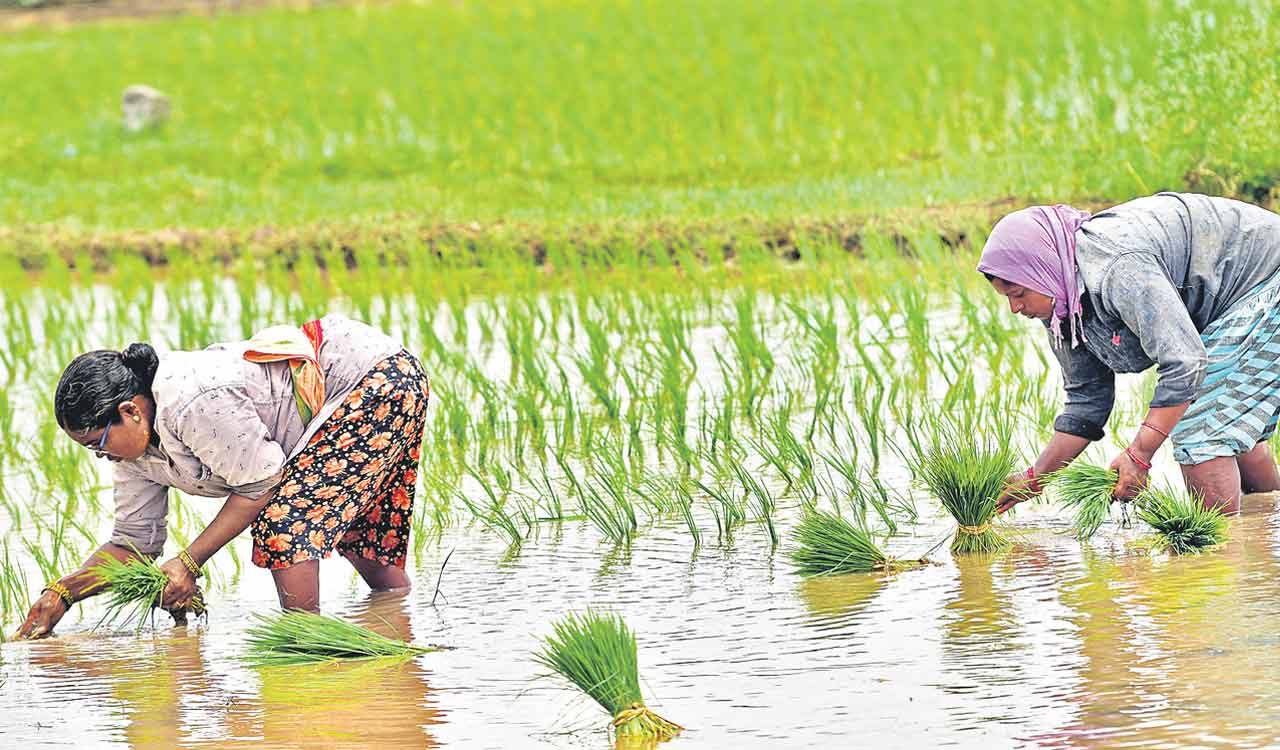


Hyderabad: Nearly two months after the onset of the 2026-27 Vaanakalam (Kharif) season, the Congress government is yet to roll out a practical relief package for farmers confronting the looming impact of El Nino. While the State-level expert committee headed by Planning Board Vice-Chairman G Chinna Reddy is expected to submit its report to the government on Monday, sources confirmed that it offers no immediate compensation or relief mechanism for farmers.
The Kharif season commenced on June 1, but the State government’s contingency plan was released only on July 16, by which time sowing had already progressed across large parts of Telangana. The State-level expert committee was also constituted last week to assess the impact of El Nino and submit its recommendations to Chief Minister A Revanth Reddy.
Even as the India Meteorological Department (IMD) and climate experts had flagged the possibility of El Nino-induced rainfall deficiency well in advance, the State government’s preparedness was not aligned with the agricultural calendar. As a result, the majority of farmers had either commenced agricultural operations as per schedule for timely harvesting or opted for a crop holiday.
Official sources said the expert committee’s recommendations focus on crop diversification, cultivation of alternative crops, expansion of micro-irrigation, groundwater recharge, climate-resilient farming, village-level awareness programmes and better coordination among departments. It is also expected to recommend the subsidised supply of pulse and cereal seeds, and drip irrigation units.
“Due to a fund crunch, the government is unlikely to approve any recommendations that would impose an immediate burden on the State exchequer. However, the government has been asked to ensure timely crop loans and a moratorium on repayment of existing agricultural loans, besides certain subsidies that are within the purview of the Centre,” said one of the expert panel members.
The committee’s recommendations are aimed primarily at mitigating the long-term impact of El Nino. What is absent, however, is any immediate relief package for farmers already facing moisture stress. The recommendations do not propose direct compensation for potential crop losses or any comprehensive financial assistance beyond subsidised inputs. The government’s argument is that it has already disbursed Rythu Bharosa financial assistance to a majority of farmers, and they are unlikely to incur any additional burden as farming operations are still in the initial stage.
Further, these measures remain largely at the recommendation stage. On the ground, farmers said they were advised to shift from water-intensive crops to alternatives without corresponding arrangements for the timely supply of suitable seeds, fertilisers and other essential inputs. The absence of advance logistical support has left many farmers uncertain about what to cultivate and how.
Equally significant is the lack of clarity over water availability. With rainfall remaining erratic, farmers said they had received little official guidance on reservoir storage levels, irrigation schedules or the likely availability of water during the remainder of the crop season. In several regions, uncertainty over irrigation prospects has complicated decisions on crop selection and acreage.
Power supply has emerged as another concern. Farmers across several areas have reported frequent disruptions to agricultural electricity connections, affecting irrigation at a time when they are increasingly dependent on borewells to compensate for deficient rainfall.
With the cropping cycle already underway, much of the government’s contingency plan remains confined to paper. However, farmers confronting delayed rains, uncertain irrigation and unreliable power supply continue to await immediate field-level interventions.

Related News