Non-violation complaints under WTO’s TRIPS agreement: An explainer
World Trade Organization members failed to extend the TRIPS moratorium on non-violation complaints at MC14, ending a safeguard in place since 1995. The lapse raises uncertainty, risking disputes over intellectual property policies, especially for developing nations like India
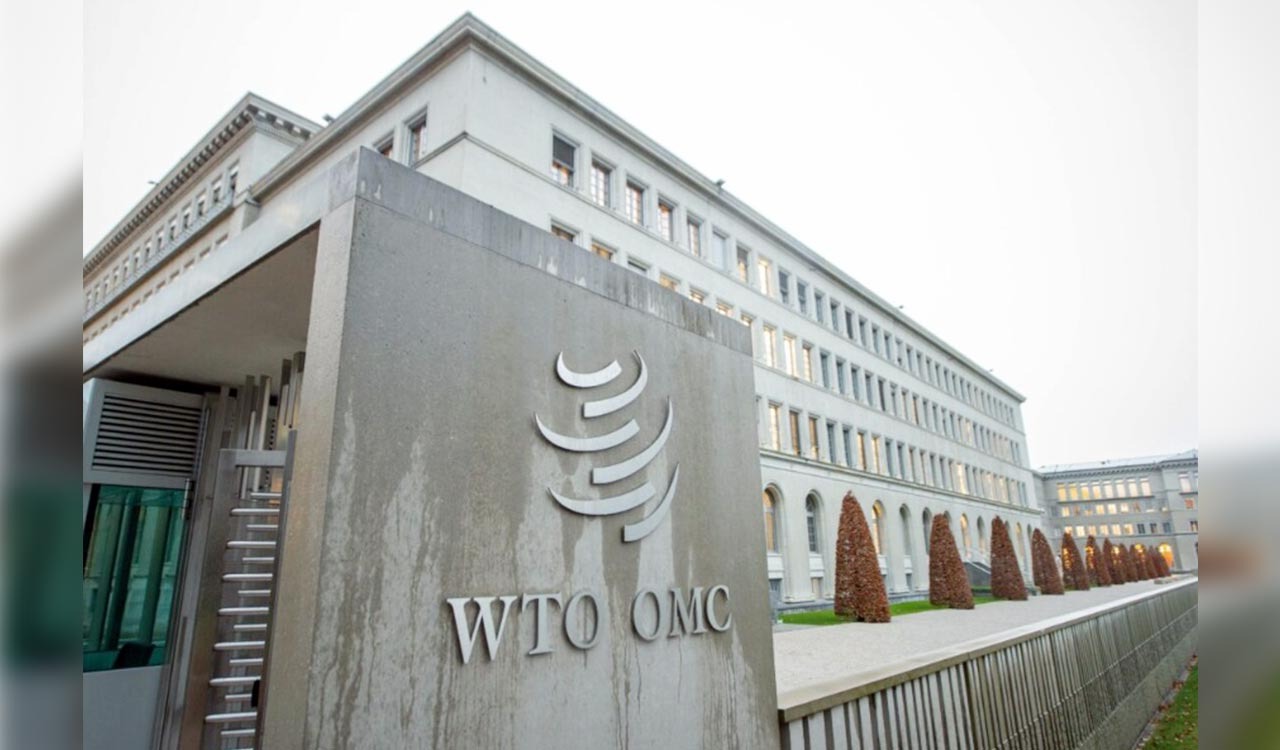


New Delhi: The member countries of the World Trade Organisation failed to reach a consensus on the issue of a moratorium on non-violation complaints under the Agreement on Trade-related Aspects of Intellectual Property Rights (TRIPS).
It was discussed during the 14th ministerial conference (MC14), which concluded early morning on Monday.
Here are a few questions and answers to understand the issue.
THE ISSUE:
In the WTO’s MC14, countries could not agree to extend an important safeguard under the WTO intellectual property rules.
As a result, the moratorium on “non-violation complaints” (NVCs) under the TRIPS Agreement has expired for the first time since 1995.
The issue will now be discussed in Geneva, but its lapse creates immediate uncertainty and the risk of new disputes.
At the World Trade Organisation (WTO), disputes are normally filed when a country breaks a rule. But, in some situations, a government can go to the Dispute Settlement Body even when an agreement has not been violated. This is called a non-violation complaint.
It is allowed if one government can show that it has been deprived of an expected benefit because of another government’s action, or because of any other situation that exists.
To avoid misuse of this in intellectual property, WTO members had put in place a moratorium.
This prevented such complaints and protected countries from being challenged for policies that fully comply with WTO rules. In simple terms, it allowed nations to safely use the policy flexibilities available under global IP (intellectual property) rules.
TRIPS AGREEMENT:
It came into effect on January 1, 1995. It covers copyright, trademarks, geographical indications, industrial designs, patents, and undisclosed information, including trade secrets.
There is a policy flexibility under this pact. For example, a country can use compulsory licensing to allow a firm to produce a patented product without the owner’s consent, usually to make it cheaper.
Governments can also apply strict rules for granting patents and take steps to protect public health. These are not loopholes, and they are part of the agreement.
Without the moratorium, however, even these legal actions could be challenged, according to think tank GTRI.
“A country issuing a compulsory licence or rejecting a weak patent could be accused of reducing the expected profits of foreign firms. This creates uncertainty and may discourage governments from using these tools,” GTRI founder Ajay Srivastava said.
VIEWS OF DEVELOPED AND DEVELOPING COUNTRIES:
Developed countries, such as the US and the European Union, say allowing such complaints would strengthen intellectual property protection and give more certainty to companies.
“Developing countries like India and Brazil disagree. They argue these complaints are vague and can be misused, reducing their ability to protect public health and access to technology,” Srivastava said, adding that at its core, the debate is between protecting business interests and preserving policy space for governments.
RISK TO INDIA:
Srivastava said that a key provision is Section 3(d) of the Indian Patents Act, which stops patents on minor changes to existing drugs to prevent ever-greening.
Without the moratorium, he said, even such WTO-compliant rules could be challenged at the WTO for reducing expected profits.
He also said that while the focus is often on medicines, the impact goes much wider.
“TRIPS non-violation complaints could also challenge policies on seeds, agriculture, biotechnology, and industrial technologies. In all these areas, governments use TRIPS flexibilities to balance innovation with public interest. Without the moratorium, these policies could come under pressure,” he added.
For years, he said, developing countries accepted no tariffs on digital trade in return for protection from TRIPS disputes.
“The issue will now be taken up in Geneva. But even a temporary gap changes the situation. Countries may start filing new complaints, and even if a few cases arise, the uncertainty could discourage governments from using key policy tools under TRIPS,” Srivastava cautioned.

Related News