Opinion: A soil living on steroids
The success of PM-PRANAM hinges on farmers’ adoption of natural fertilizers but will they do it if they see no benefits in it?


By Arun Sinha
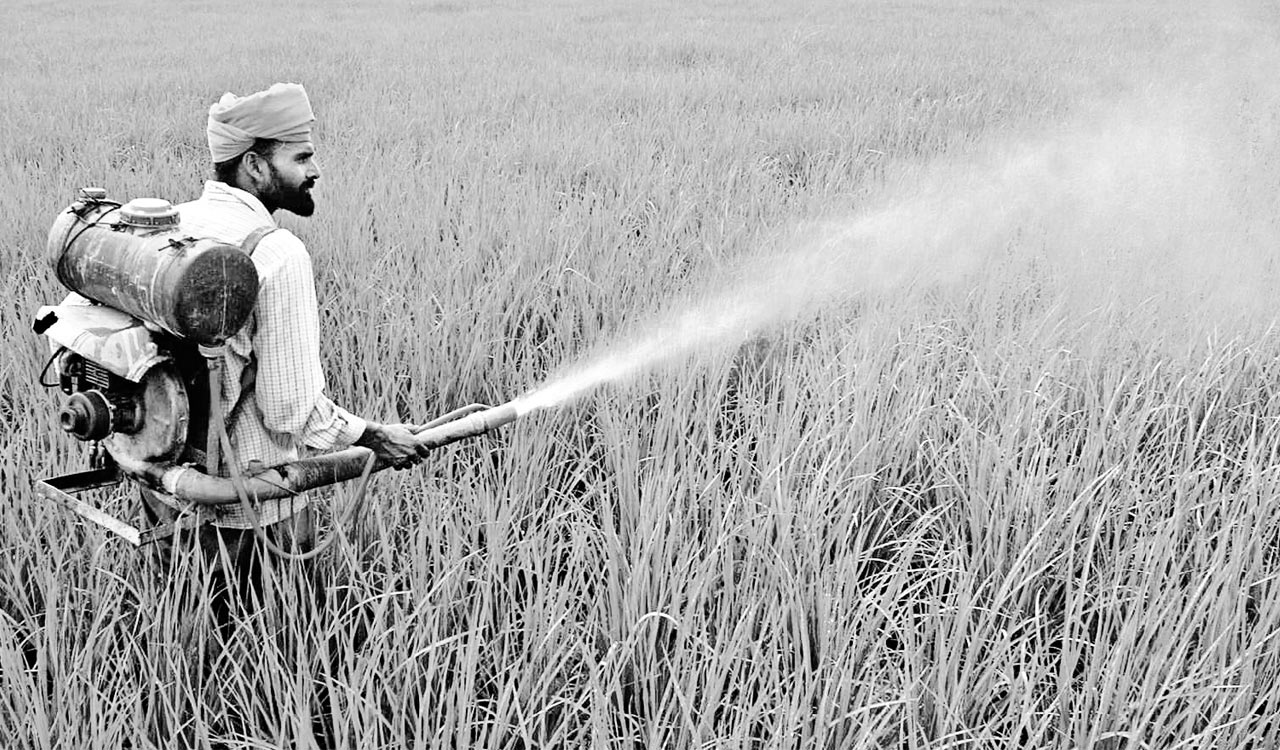
The idea behind the recently announced PM-PRANAM (Prime Minister-Programme for Alternative Nutrients for Agricultural Management) is very progressive. It aims to replace chemical fertilizers with natural (organic and bio) fertilizers. Overdoses of chemical fertilizers to increase yields have exterminated the natural nutrients of the soil.
Also Read
The soil in large parts of the three green revolution States — Punjab, Haryana and UP — today is like an ageing man living on steroids. He can still work, but inside, he is hollowing. His efficiency and output are dropping. The soil in other States is headed for the same destiny.
However, the road to PM-PRANAM’s implementation is foggy. First of all, no special money has been allocated for it in the union budget. The money for it is to be generated by reducing the quantum of the central government’s chemical fertilizer subsidy to the farmers. The State governments are expected to motivate farmers to switch to natural fertilizers to reduce the subsidy amount. The central government is going to give 50% of the saved subsidy amount to the State governments for promoting the production of natural fertilizers and raising awareness among farmers about using them.
Unutilised Capacity, Funds
Do the State governments have the capability to engineer a switch to natural fertilizers on a large scale? Their record has so far been poor. A study by the Centre for Science and Environment (CSE), a leading ecological think tank, released last year found that the natural fertilizer sector was neglected, unorganised and unregulated. The State governments were not utilising most of the funds allocated by the central government to promote the production of organic and bio-fertilizers.
Production of natural fertilizers is low. And even their quality goes largely uncertified. The quality control infrastructure is poor. Most States do not have their own testing laboratories. Eight States have their laboratories, but their capacities are not properly utilised. Less than a third of the capacity of seven Regional Centre of Organic Farming laboratories was utilised in 2019-20.
The number of bio-fertilizer samples tested in the laboratories, instead of increasing, dropped from 654 in 2013-14 to 483 in 2019-20. The proportion of bio-fertilizer samples failing quality tests increased from 1 per cent in 2013–14 to 44 per cent in 2019–20. Fake ‘natural’ fertilizers are being sold to farmers. That is eroding their trust in natural fertilisers.
The success of PM-PRANAM hinges on farmers’ adoption of natural fertilizers. How will they do it unless they see benefits in it? First, natural fertilisers must improve their soil’s health. Two, they must reduce their cost of production. Three, they must bring them as good a yield and as good an income as they are getting from use of chemical fertilizers.
After being used to a certain level of living standards, farmers will not be willing to switch to natural fertilizers unless they are able to maintain them. The government will need to work hard to promote adequate production of natural fertilizers which are not only of high quality but also of as much potency as chemical fertilizers to give high yields.
Cropping System
But PM-PRANAM would not be enough to regenerate the soil and motivate them. Because the soil’s health has degenerated not only because of the use of chemical fertilizers. Over-irrigation is also a major cause of it. The farmers of green revolution States gave up their age-old multiple cropping system, which was based on a balanced use of soil, water and manure, to adopt the rice-wheat cropping system. The government needed adequate rice and wheat to feed the nation. It encouraged farmers to grow more and more rice and wheat. Both crops demand several times more water than other crops such as maize or millets. Over-production of rice and wheat meant over-use of river water and groundwater. The result was high salinity in the soil and greater loss of natural nutrients.
At the root of the problem, therefore, was the rice-wheat cropping system. It was causing the loss of the natural nutrients — nitrogen, phosphorus, potassium, organic carbon, zinc, iron and manganese. It has been chewing the soil like a demon and it is still not satisfied. Unless farmers give up the rice-wheat system and adopt a diverse cropping system to reduce their dependence on chemical fertilizers and water, the soil cannot be restored to its normal health.
Guaranteed MSP
And they will not adopt a diverse cropping system unless they get a guaranteed minimum support price (MSP) for 23 major crops (7 cereals, 5 pulses, 7 oilseeds, 4 commercial crops) for which the central government fixes a base price every year. The government need not procure all the major crops. It has to only fix a minimum price that even private buyers will have to pay.
The government will have to do that in order to promote crop diversification. It is clear from the recent agitation by sunflower growers in Haryana. Although the central government fixed sunflower seed MSP at Rs 6,400 a quintal, private traders were willing to pay not more than 4,200. The State government was not buying it at all. After the farmers mounted protests, the State government agreed to buy them at the rate of Rs 4,800 a quintal plus Rs 1,000 a quintal by way of compensation for the difference between the MSP and the average market price. The amount of Rs 5,800 (Rs 4800 Rs 1000) still fell Rs 600 short of the MSP. The farmers blocked Chandigarh-Delhi roads. Eventually, the State government agreed to pay them Rs 5,000 a quintal, raising the effective price to Rs 6,000.
You cannot blame farmers. They are willing to diversify to save their lands. Sunflower cultivation in Haryana rose from 9,440 hectares in 2018-19 to 12,290 hectares in 2020-21, 13,020 hectares in 2021-22 and 14,160 hectares in 2022-23. If the government guarantees an attractive MSP for the produce, sunflower acreage will progressively increase. The acreage of maize, millets and other crops will also increase.

Related News