Opinion: Iran stalemate and Europe’s search for security beyond NATO
NATO remains central to European defence, but growing doubts about long-term US commitment are driving the search for additional security frameworks


By Brig Advitya Madan
The prolonged confrontation with Iran is producing consequences that extend far beyond the Middle East. While much attention remains focused on negotiations, sanctions, and regional tensions, a more significant development is unfolding in Europe.
Also Read
The inability of the United States to secure a decisive outcome is raising fresh doubts about American strategic leadership and accelerating Europe’s search for security arrangements that can complement, and potentially compensate for, a less dependable NATO.
Gain from Escalation
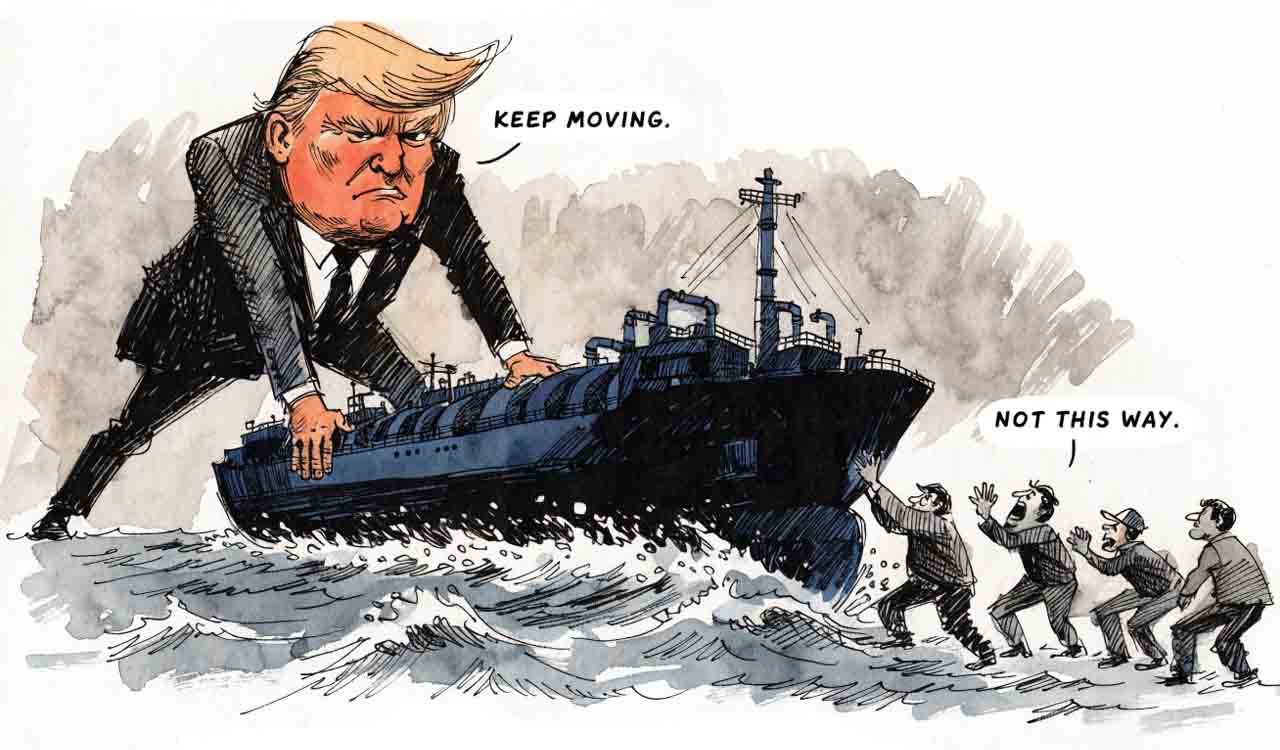
The central lesson emerging from the Iran crisis is that military pressure alone cannot guarantee political success. Despite months of confrontation, Washington has struggled to translate military and economic leverage into a durable settlement on its preferred terms. Instead, discussions continue to revolve around familiar issues such as sanctions relief, maritime security, access to frozen assets, and restrictions on nuclear activity.
This raises an uncomfortable question for American policymakers. If the eventual outcome requires negotiated compromises, what has been gained through prolonged escalation? History offers numerous examples of the limits of coercive power. Air strikes can degrade capabilities and sanctions can impose economic costs, but neither necessarily compels a determined state to abandon core national interests.
Iran’s conduct during the crisis has reinforced this reality. Despite sustained pressure, Tehran has avoided the kind of strategic collapse that many observers predicted. It has preserved room for negotiation while retaining leverage through its regional relationships and geographic position. Whether one agrees with Iranian policies or not, the expectation that pressure alone would produce a quick resolution has clearly not materialised.
Consistency of Purpose
Equally important is the perception created among America’s allies. International credibility rests not only on military strength but also on consistency of purpose. Allies seek reassurance that commitments are predictable, objectives are clearly defined, and policies remain stable over time. Any perception of strategic drift inevitably encourages partners to reassess their assumptions. For Europe, this reassessment is becoming increasingly visible.
For more than seven decades, NATO has served as the cornerstone of European security. The alliance’s strength has depended not merely on the combined military capabilities of its members but on confidence in American leadership. The United States has provided strategic direction, intelligence integration, logistical depth, advanced capabilities, and the political commitment that has held the alliance together.
Yet Europe is entering a period of growing uncertainty. Concerns over burden sharing, debates about future American military commitments, and Washington’s increasing focus on domestic priorities have already prompted discussions about strategic autonomy. The Iran crisis has added a new dimension by highlighting the limits of American bandwidth in an increasingly complex international environment.
European policymakers are, therefore, asking difficult but necessary questions. How should the continent respond if future US administrations become less willing to assume the costs of global security leadership? Can NATO function effectively if American engagement becomes more selective? What institutional arrangements are required if Europe must shoulder a greater share of its own defence responsibilities?
JEE Model
These questions are contributing to the growing relevance of the Joint Expeditionary Force (JEF), a British-led security grouping established in 2014 that brings together ten Nordic and Baltic nations. Designed for rapid deployment and operational flexibility, the JEF offers a model that differs from NATO’s larger and often slower consensus-based structure.
The JEF is not a replacement for NATO, nor does it possess the alliance’s scale or resources. Major European powers such as France, Germany, and Poland remain outside the framework. Nevertheless, its significance lies in what it represents. It reflects a broader European effort to develop security mechanisms that are less dependent on Washington and more responsive to regional requirements.
The rise of initiatives such as the Joint Expeditionary Force reflects Europe’s determination to strengthen regional security as questions mount over the future reliability of US leadership and NATO
The challenge facing Europe is not simply one of increasing defence expenditure. Buying more weapons is relatively straightforward. Building command structures, intelligence networks, logistics systems, and political cohesion is considerably more difficult. NATO’s architecture remains deeply intertwined with American leadership. Any long- term reduction in that role would require Europe to rethink fundamental aspects of its security framework.
The Iran stalemate may ultimately be remembered not only as a Middle Eastern crisis but also as a catalyst for strategic change in Europe. Every prolonged conflict that fails to achieve its stated objectives raises questions about the effectiveness of existing approaches. Every sign of uncertainty encourages allies to hedge against future risks.
For European governments, the lesson is increasingly clear. NATO remains indispensable, but reliance on a single guarantor can no longer be viewed as sufficient. The growing attention being paid to arrangements such as the Joint Expeditionary Force reflects an emerging recognition that Europe must prepare for a future in which American leadership, while still important, may no longer be as certain as it once appeared.
The road from Tehran to Brussels may seem indirect, but it is already reshaping debates about the future of Western security. In that sense, the consequences of the Iran crisis may extend far beyond the Middle East, influencing not only regional stability but also the very foundations of Europe’s defence architecture.

(The author is a retired military officer and strategic affairs analyst. Views are personal)

Related News