Opinion: Keep corporates out of private banks
By Seela Subba Rao Recently, former chairman of SBI, Rajnish Kumar, opined that in a country like India, allowing corporate houses to own banks is fraught with great risks. He advocated that the banks should be rightly owned and professionally managed. Similar views were echoed by former RBI Governor Raghuram Rajan as well as former […]



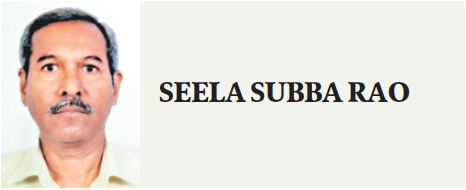
By Seela Subba Rao
Recently, former chairman of SBI, Rajnish Kumar, opined that in a country like India, allowing corporate houses to own banks is fraught with great risks. He advocated that the banks should be rightly owned and professionally managed. Similar views were echoed by former RBI Governor Raghuram Rajan as well as former RBI Deputy Governor Viral Acharya.
On 20 June 2020, an Internal Working Group (IWG) consisting of five members was constituted by the Reserve Bank of India to review extant ownership guidelines and corporate structure for Indian private sector banks. The IWG had two members of RBI’s Central Board and three officials from the RBI. It submitted its report comprising 33 recommendations in November 2020 to the central bank for allowing large corporate houses as promoters of banks.
Recommendations
On 26 November 2021, the RBI is reported to have accepted 21 out of 33 recommendations and the remaining, including a contentious suggestion to allow corporate houses to operate private banks, were “under examination”. The RBI has accepted the recommendation to allow raising the cap on promoters’ stakes in the long run of 15 years to 26% from the current 15% giving relief to private sector banks like Kotak Mahindra Bank, IndusInd Bank, Bandhan Bank and CSB Bank. It has also accepted the proposal to keep the non-promotors shareholding capped at 10% for individuals or non-financial institutions.
The cap will be at 15% in the case of all categories of financial institutions, supranational institutions, public sector undertakings or government entities. However, the central bank has clarified that the extant instructions on the requirement of prior approval of the RBI to acquire shareholding or voting rights of 5% or more will continue.
The regulator has accepted the proposal that allowed for an increase in the minimum initial capital requirement for licensing new banks. It also accepted the proposal to tighten the rules controlling huge NBFCs making them as strict as the banking laws. Payments banks must operate for at least five years before applying to become small finance banks, going against the Working Group’s recommendation of three years of operations. The central bank has also doubled the initial paid-up voting share capital/net worth required to set up a new universal bank, to Rs 1,000 crore from the Rs 500-crore now.
Corporate houses may be allowed as promotors of banks only after necessary amendments to the Banking Regulation Act, 1949. This would enable the central bank to have the power to do consolidated supervision of conglomerates, ie, financial and non-financial group entities. Industry circles speculate that Bajaj Finserv, L&T Finance, Piramal and others might be some of the large corporate houses still interested in pursuing banking licences.
A Few Apprehensions
Allowing corporate houses to own banks has both advantages and disadvantages. The main advantage is that it will enable promoters to infuse more funds/capital, which is critical for the growth of banks and to function as a cushion during a cyclical downturn. The disadvantage is that the banks owned by corporate houses would engage in extending connected loans to their entities/outfits leading to over concentration. Hence, allowing corporate houses to own private sector banks remains a billion-dollar question.
It is a well-known fact that if a bank lends too much to only one company, then it risks losing that money if the company sinks. Keeping this in mind, a set of new guidelines, ie, cap on single exposure norms were issued by the RBI in 2016 on the limit of lending to single company. It is also accepted that banking regulators/supervisors in India are not strong enough to prevent connected lending and so the move to bring private players in was not devoid of risk. The recent lapses in private banks like Yes Bank are a glaring example. Mixing industry houses and finance will set us on a dangerous path, which will push us to the era of pre-nationalisation, ie, prior to 1969.
Due Diligence
Banks owned by large industry houses have resulted in a large concentration of resources in the hands of a few business families. To check this, the then dispensation/government had resorted to the nationalisation of banks in 1969 (14 banks) and again in 1980 (6 banks). It resulted in a larger volume of credit flow to priority sectors. No doubt it has proved to be an effective instrument of economic development and inclusive growth in the country. This trend that has set in for so many years should not be distorted.
According to RBI guidelines issued in August 2016, for “on tap” licensing of universal banks in the private sector, individuals and companies directly or indirectly connected with large industrial houses are permitted to participate in the equity of a new private sector bank up to a limit of 10%. This arrangement to some extent seems reasonable as this shall not have controlling interest in the bank. Exceeding this limit may tantamount to ringing alarm bells.
Strengthening of supervisory mechanisms in banking regulators/supervisors for large conglomerates is the need of the hour. To prevent connected lending and exposures between banks and other financial & non-financial entities, consolidated supervision needs to be undertaken periodically and diligently. To facilitate this, necessary amendments to the Banking Regulation Act, 1949, may be taken up at the earliest.
It is pertinent to mention here that the cardinal principle that the proposed new banks in the private sector should maintain an arm’s length relationship with business entities in the promotor group and the individual company/ies is to be followed in letter and spirit at any cost.
Given the instances of violation of exposure norms, deviations from Foreign Exchange Management Act (FEMA) regulations, occurrence of high NPAs and other irregularities coming to light in certain private banks, there is a need to be more cautious while granting licences to new banks.
Now you can get handpicked stories from Telangana Today on Telegram everyday.
Click the link to subscribe. Click to follow Telangana Today Facebook page and Twitter .

Related News