Opinion: Prashant Kishor — the kingmaker who could not crown himself
Kishor’s failure shows the limits of treating elections as a technical task rather than a political practice


By Devendra Poola
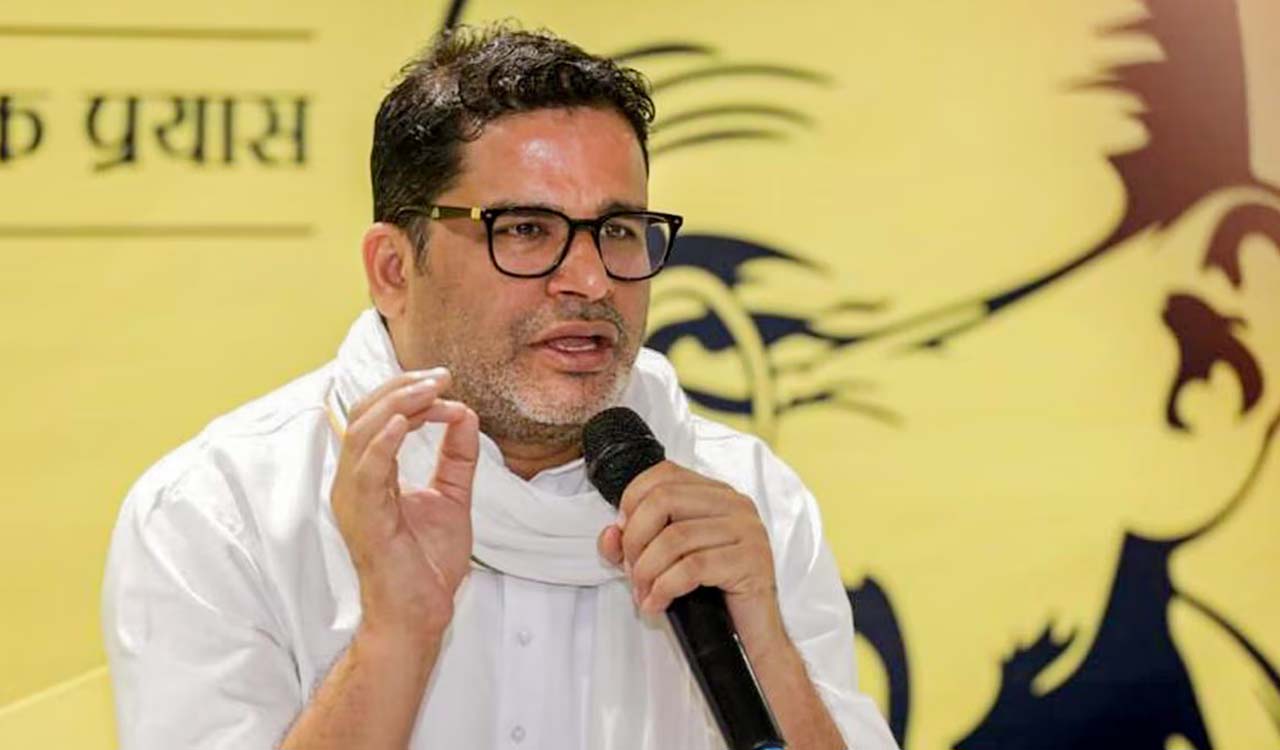
Prashant Kishor, popularly known as strategist PK, occupies an intriguing place in contemporary campaign politics. Before entering electoral contestation, he transformed the grammar of campaigning itself. His pioneering work in data-driven messaging, targeted mobilisation, brand-centric communication, and professional organisation-building helped produce decisive victories in Bihar, Uttar Pradesh, Punjab, Andhra Pradesh, West Bengal, and Tamil Nadu at different moments. This track record gave him the reputation of a “kingmaker”, a strategist who could reshape the fortunes of diverse political actors irrespective of ideology.
Also Read
It was precisely this stature that generated substantial expectations when Kishor founded the Jan Suraaj Party in Bihar. The shift from architect of others’ victories to claimant of his own mandate created a critical test case. Could technocratic political competence translate into mass legitimacy?
PK’s first electoral test reveals a mixed outcome. In 35 constituencies, the Jan Suraaj vote exceeded the victory margin, shaping outcomes without securing wins and functioning more as a spoiler than a serious contender. But Jan Suraaj party lost its deposit in 236 out of the 238 seats it contested. Ironically, an attempt to disrupt the establishment ended up reinforcing it, leaving Nitish Kumar better positioned than anticipated. Yet, a 3.4% statewide vote share, higher than that of the Left and AIMIM combined, along with third place finishes in more than half the seats contested, signals that Jan Suraaj has carved out a noticeable foothold for a new entrant.
Basis of High Expectations
Three interrelated factors raised public anticipation for PK. First, Kishor framed his entry as a corrective to Bihar’s stagnant political competition, which had long been dominated by familiar players and identity-based alignments. This narrative resonated with sections of voters frustrated by entrenched governance deficits.
While India values technocratic expertise, voters ultimately seek recognition of identity, economic insecurity, and cultural belonging
Second, his professional reputation promised a modernised campaign, efficient mobilising and an alternative to personality-based or caste-mediated politics. Many middle-class and youth constituencies projected their aspirations onto him.
Third, through the Jan Suraaj padyatra, he attempted to cultivate direct social presence at the village level. This gave the impression of building a grassroots structure rather than relying solely on elite-driven branding. The symbolic distinction between old politics and governance-oriented new politics seemed possible.
What Went Wrong
The electoral results, however, revealed five key limitations. First, despite padyatras and consultative platforms, Jan Suraaj did not develop sufficiently embedded cadre networks capable of mobilising votes at scale. Bihar’s political society remains largely structured by local brokerage and caste authority. Technocratic messaging could not compensate for the absence of durable community intermediaries.
Second, the promise of development and governance, though attractive, struggled to override caste-rooted solidarities. Political behaviour in Bihar continues to be mediated by identity and social protection concerns. Kishor underestimated the embedded nature of these cleavages.
Third, strategic efficiency is not a substitute for political meaning. Kishor’s critique of all major parties did not translate into a compelling ideological or redistributive story. Voters did not receive a clear sense of “why” beyond dissatisfaction.
Fourth, his earlier associations with several different parties made it difficult to sustain a purist outsider identity. Opponents successfully portrayed him as a strategist with shifting loyalties rather than a principled reformer.
Last, political consultants often underestimate the long duration required to cultivate legitimacy. Transitioning from influence without accountability to representation with accountability demands sustained engagement that cannot be compressed into one or two election cycles.
Structural Truths
The Bihar results show broader structural truths. India may be welcoming of technocratic expertise, but voters still demand recognition of identity-based vulnerabilities, economic precarity and cultural belonging. Administrative competence is necessary but not sufficient. In a context where politics continues to be the primary route for asserting social dignity, leaders who do not embody collective historical anxieties struggle to acquire trust.
Moreover, while citizens express discontent with the existing political class, their preference for stability often leads them back to familiar faces. Disruption requires not only criticism of the status quo but construction of alternative institutions and durable solidarities.
Finally, Kishor’s failure is not simply personal. It reflects the limits of a model where electoralism is treated as a technical problem rather than a relational and ideological practice. The very skills that elevated him as a strategist, data literacy, message crafting and technological rationality, become insufficient when faced with the emotional, identity-rooted, slow-moving infrastructures of democratic legitimacy.
(The author is Senior Research Fellow, Centre for Economic and Social Studies [CESS], Hyderabad)

Related News