Opinion: Protecting Human Rights
Human Rights are not a monopoly of any privileged class and cannot be taken away by any power or authority


By KSS Seshan
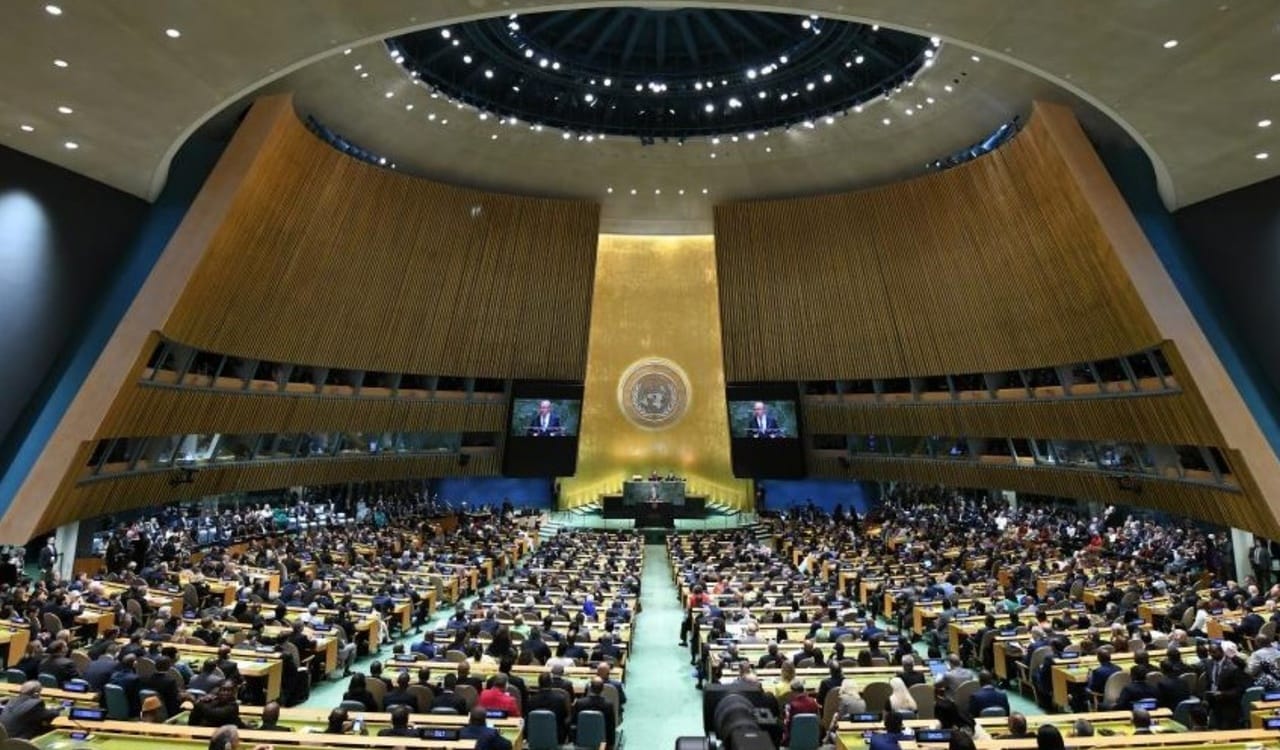
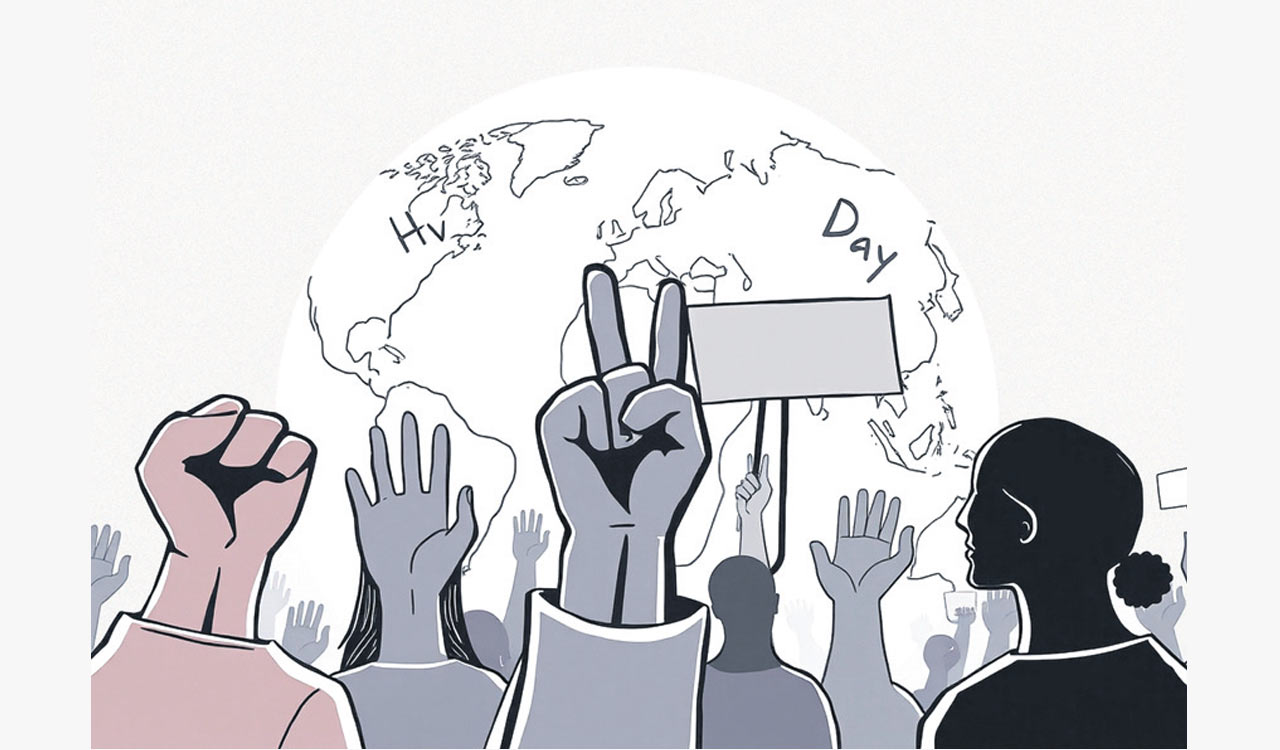
December 10 every year is celebrated as Human Rights Day the world over as it was on this day, 75 years ago in 1948, that the UNO General Assembly passed the Universal Declaration of Human Rights (UDHR) to preserve, protect and nurture Human Rights.
Human Rights are commonly defined as certain moral principles that set certain standards in human behaviour and are protected as legal rights by local, national and international law. Human Rights are inalienable — they cannot be transferred. They are fundamental rights and are egalitarian — same for everyone. Human Rights are inherent to all human beings regardless of nationality, residence, gender, ethnicity, colour, creed, religion, region, language or status. If the public discourse of peacetime global society can be said to have a common universal language that language is Human Rights.
Modern Concept
Human Rights is a modern concept; it is Euro-centric. The writings of modern political thinkers like John Locke, John Jaques, JS Mill, Thomas Paine and Hegel contributed to the idea of Human Rights. In Europe, during the Renaissance and Reformation movements, painters, artistes, sculptors and even musicians besides writers and poets extolled the importance of humanism and the value of individual liberties. The Dutch, when they won freedom from Spanish colonial rule in the 16th century, proclaimed: “The Dutch declaration of the rights of man.” The Puritan Revolution in England (17th C) and the American War of Independence (18th C) were for the assertion of such rights and freedom.
On the eve of the French Revolution (1789), several writers like Montesquieu, Voltaire, Rousseau, Diderot and D’Alembert championed the cause of Human Rights. However, many of the basic ideas of the Human Rights movement were developed after World War II which witnessed the great holocaust at Hiroshima and Nagasaki.
Universal Declaration
When the United Nations (UN) came to be established at the conclusion of World War II, its Charter established six principal bodies namely, the General Assembly, Security Council, the International Court of Justice, Economic and Social Council, the Secretariat and the Trusteeship Council. The Charter empowered the Economic and Social Council to establish “Commissions for the promotion of Human Rights….”. One such was the United Nations Human Rights Commission under the Chairmanship of Eleanor Roosevelt, the widow of former US President Franklin D Roosevelt, which undertook the task of identifying and redefining basic rights and freedoms. As a result of the work done by this Commission, the UN General Assembly adopted the UDHR on 10 December 1948 in Paris.
The UDHR is a living document that comprises a preamble and 30 Articles which cover civil, political, economic, social and cultural rights for all men, women and children.
Human Rights are not a monopoly of any privileged class of people. They are universal in nature, without any exception. They cannot be taken away by any power or authority because these rights originate with the social nature of individuals in the society of human beings. They belong to a person simply because s/he is a human being. In that, Human Rights have similarities to moral rights. Human Rights are not static. They expand with socioeconomic and political developments within the state with time. Human Rights imply that every individual has legitimate claims upon society for certain freedoms and benefits. In that sense, Human Rights limit the state’s power.
Classification
Human Rights are classified into several categories. Of the 30 Articles in the Universal Declaration, Articles 3 to 21 set forth civil and political rights which make it clear that every individual is equal before the law. It secures the right to life, liberty and security of the person. It professes the right against slavery, torture or cruel treatment and provides right to freedom of thought, right to freedom of expression, freedom of assembly, right to equal access to public services, right to vote and right to seek asylum in other countries to escape persecution, etc.
On the 75th year of UDHR, we must recall the struggles of the people of the bygone period so that these rights are nurtured by the present and future generations
On the economic front, the Universal Declaration envisages the right to own properties, right to work, right to join any trade union and right to rest and leisure. Other rights like access to food, clothing, housing and proper medical facilities too are assured as minimum Human Rights. Among the social rights are that everyone has the right to marry on free will and raise a family, right to social security, and right to education and employment. Of the cultural rights, the Declaration specifies the right to participate in the cultural life of the community and possess the right to the protection of the moral and material interests of literary and artistic pursuits.
Of the 30 Articles, the first two are very significant as they exhibit the quintessence of the entire exercise. Article 1 says: “All human beings are born free and equal in dignity and rights. They are endowed with reason and conscience and should act towards one another in a spirit of brotherhood.” Similarly, Article 2 makes it clear that “everyone is entitled to all the rights and freedoms without distinction of any form such as race, colour, sex, language, religion, political or other opinion, national or social origin, property, birth or other status.”
All the rights indicated in the UDHR are important. However, they are of special significance to the weaker sections of society such as the aged, women, children and the poor. In a larger perspective, the impact of Human Rights has transformed the face of the world by influencing the very nature of governance of several countries.
Its Legacy
The main objectives included in the Declaration are now found enshrined in the constitutions of most member states which became free during post WW-II. Countries such as Indonesia, Haiti, Sri Lanka, Costa Rica, Nigeria, Cameroon, Togo, Pakistan and Bangladesh have their constitutions shaped and influenced by the UDHR. Several clauses in the Declaration such as the right to equality, right to freedom, right to constitutional remedies, right against exploitation and right to freedom of religion are incorporated in our own Constitution.
These Rights and liberties which we enjoy today were hard-won due to the sufferings and sacrifices of millions. Eleanora Roosevelt termed the document as the “Magna Carta of the Modern period”.
On the diamond jubilee of the UDHR, it is imperative for us to remember, recall and commemorate those struggles and sufferings of the people of the bygone period so that these rights and liberties are preserved, protected and nurtured by the present and future generations.
(The author is retired Professor of History, University of Hyderabad)

Related News