Piyush Goyal urges industry to use global crisis as growth opportunity
Piyush Goyal urged Indian industry to treat global disruptions as a wake-up call for self-reliance, productivity and innovation. He emphasised reducing import dependence, accelerating EV adoption, leveraging AI, and boosting exports to strengthen India’s economy amid global uncertainty
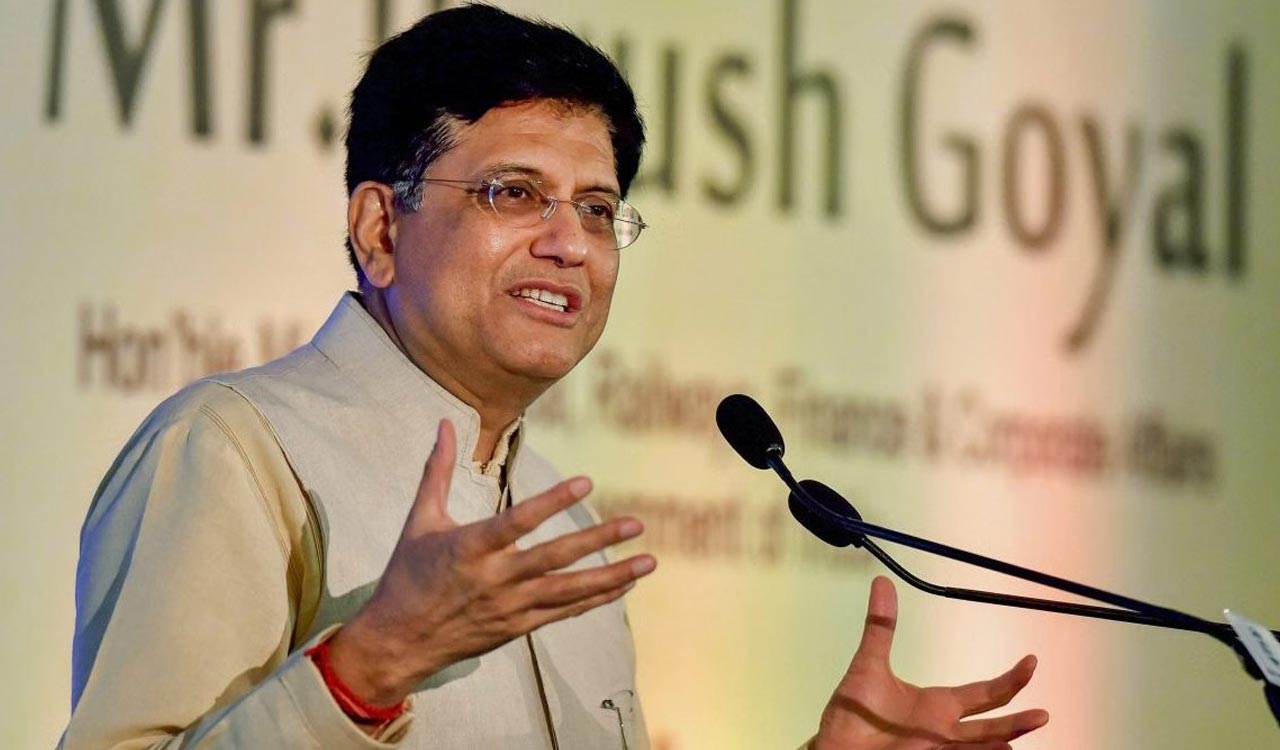


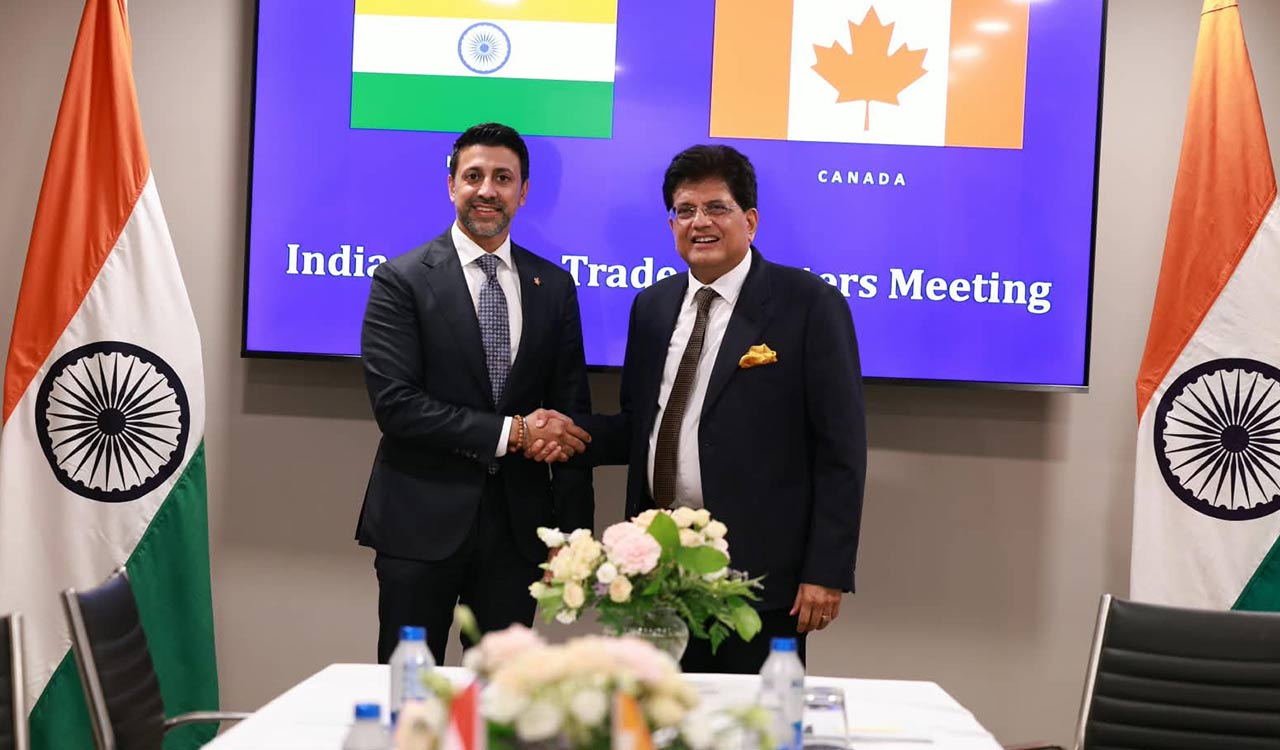
New Delhi: Commerce and Industry Minister Piyush Goyal on Tuesday said the ongoing global challenges should act as a wake-up call for the domestic industry to become self-efficient and productive, make better use of free trade agreements, and reduce dependence on imports to strengthen the economy.
He said the world is going through a challenging time as the war in West Asia has certainly disrupted global trade and investment flows, but in these “trying times”, India has a great opportunity to outshine others. “Prime Minister (Narendra Modi) has given a clarion call to countrymen and women and it is time for a collective action,” he said here at CII’s annual business meeting.
He added that India has consistently turned crises into opportunities and has always emerged stronger during periods of adversity. The current global situation should be viewed as a “wake-up call” for India to become more efficient, productive and self-reliant”, Goyal said.
He called for faster adoption of electric vehicles as it will help cut the country’s oil bills massively. The government’s huge investments in infrastructure and mobility and the industry’s effort to bring down import bills “in whatever form it may be” will make the country stronger, the minister said, adding, “I do not see any reason to be concerned. I think we need to be empowered”.
These remarks came in the backdrop of Modi’s suggestions to reduce petrol and diesel consumption, using Metro rail services in cities, carpooling, increased use of electric vehicles, utilising railway services for parcel movement, and working from home to conserve foreign exchange amid the ongoing crisis in West Asia. He also said the prime minister has not asked people to stop business travel and has, instead, called for curbing consumption and leisure expenditure.
“Please go to the world for business, spend money to get more money, get more forex into the country, get export orders, lead delegations to the world. You have to achieve the USD 2 trillion exports target,” Goyal said.
If there are any plans to squeeze demand for gold in the country, he said, “I am not aware of the subject because it does not relate to me”. He further said the Indian industry must learn to support one another, similar to the way businesses operate in Japan and South Korea.
“Focus on supporting each other, focus on faster indigenisation, make sure that your businesses are resilient to supply chain shocks, make sure you are not overtly dependent on any one or two geographies in your business. This is a good wake up call in your interest and this will hold you in good stead for many many years to come,” he said.
The minister added that supporting each other now has become an imperative. “It’s the time to grab all the opportunities. I do not see any problem, I see huge potential… Problem is there only in the mind,” Goyal said.
The minister urged industry to leverage artificial intelligence, robotics and quantum computing as force multipliers for growth and competitiveness. He said AI should not be viewed merely as a cost-cutting tool but as an instrument for business expansion, efficiency and market growth.
Goyal called upon industry bodies to deeply reflect on the transformative potential of artificial intelligence and examine areas where AI can make businesses smarter, more productive and globally competitive.
He added that while some sectors may face technological disruption, companies need to run dedicated programmes for employees to train them in smarter uses of AI. Highlighting the rapid growth of global capability centres (GCCs), Goyal said nearly 1,800 GCCs are already operating in India and another 500 are expected in the coming years.
Exports from GCCs are growing nearly 40-50 per cent annually and stand around USD 50 billion, employing nearly two million people directly. Further, he urged businesses to move from “assembled in India” to “designed, engineered and manufactured in India”.

Related News