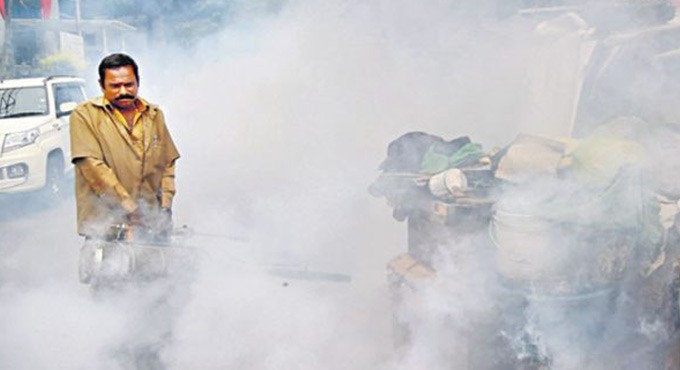
Residents demand regular fogging after Uppal mosquito swarm video goes viral
A viral video from Uppal showing massive mosquito swarms resembling smoke has sparked public concern over mosquito control in Hyderabad. Residents are urging civic authorities to step up fogging and anti-larval measures near water bodies and colonies.
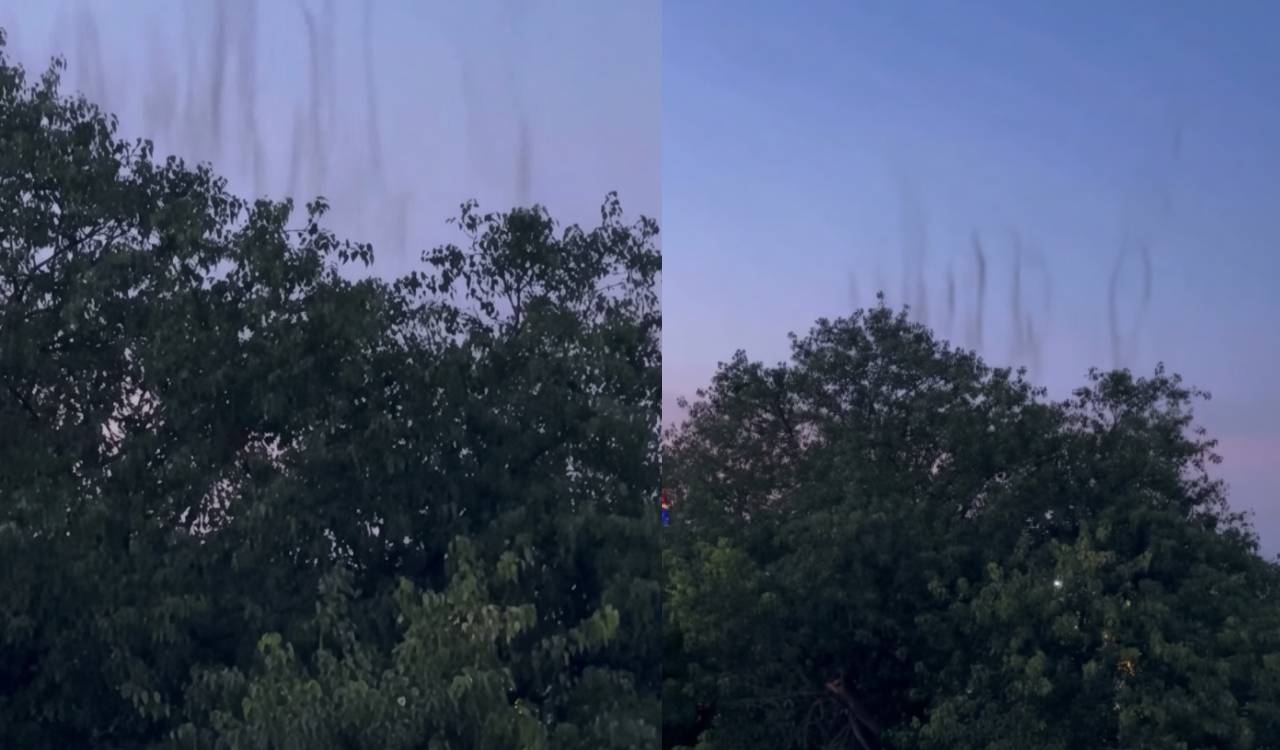


Hyderabad: A routine evening video recording by a resident in Uppal went viral on social media when it captured what initially appeared to be a thick plume of smoke billowing from behind a line of trees. On closer inspection, however, it became clear that the eerie columns were swarms of mosquitoes, triggering widespread online discussion regarding public health and the present state of mosquito control measures in Hyderabad.
A few days ago, a local resident from Uppal, Monica Juyal, captured footage of dense, wave-like columns hovering tightly over trees during twilight. The phenomenon, which appeared like smoke or rising steam, turned out to be a massive aggregation of flying insects.
Such formations are typically seasonal mating swarms, where male insects gather around distinct vertical visual markers like tall trees. Residents in Uppal have pointed to nearby water bodies and local construction work as potential contributors to localised breeding.
Following the widespread sharing of the footage, local residential welfare associations and apartment owners reiterated their demands for municipal authorities to intensify fogging, anti-larval measures and insecticide spraying near vulnerable open spaces like Uppal Nalla Cheruvu and its surrounding colonies.
GHMC Role:
In regions with high mosquito density, the GHMC entomology team identifies the source of the infestation, stagnant drains and construction sites, to roll out anti-larval operations and fogging drives.
Typical anti-larval measures include spraying ‘oil balls’ into polluted water bodies and introducing Gambusia fish into freshwater ponds and baby ponds to naturally consume mosquito larvae.
Oil Balls:
Oil balls are a low-cost, anti-larval tool used to curb mosquito breeding in lakes, ponds, and stagnant water bodies. Small pieces of gunny material or cloth are packed or stuffed with sawdust, formed into compact balls, and then heavily soaked in mosquito larvicidal oil (MLO) or used motor engine oil.
When the oil balls are released into water bodies, they spread a thin layer of oil across the water’s surface. Mosquito larvae need to reach the water’s surface to breathe, but the thin layer of oil does not allow oxygen to get in, killing the larvae.
Drones:
A few months ago, the GHMC entomology wing utilised drones to spray larvicides and pyrethroid oils on the surface of water bodies where manual or ground-based spraying is difficult to reach.
Biological Control (Larvivorous Fish & Oil Balls):
Sometimes Gambusia fish are introduced into freshwater ponds that naturally consume mosquito larvae.
Pyrethrum Spraying:
Localised indoor space spraying (using pyrethrum) is carried out within a targeted radius to eliminate adult disease-carrying mosquitoes.
Health Wing:
The district medical and health authorities (DM&HO) and GHMC usually coordinate to launch public outreach and IEC campaigns. The surveillance teams undertake community outreach efforts, including door-to-door awareness drives in the colonies.
Role of General Public:
The Director of Public Health (DPH), Telangana, Dr B Ravinder Nayak, had earlier issued an advisory urging people to take preventive measures and keep their doors and windows, mosquito nets and screens closed.
• Beds and cribs must be covered with mosquito nets
• Use mosquito repellents as a precaution
• Maintain domestic drains to prevent water stagnation
• Domestic septic tanks should be covered with a mesh to prevent mosquito breeding
• Families must observe ‘Friday Dry Day’ every week to get rid of stagnant water around the house
Watch the video below:

Related News