Rewind: Crocs are crawling back
The future of India’s crocodiles, however, hinges on sustainable coexistence strategies as challenges — rising human-wildlife conflict, climate change altering riverine ecosystems and pollution degrading habitats — persist
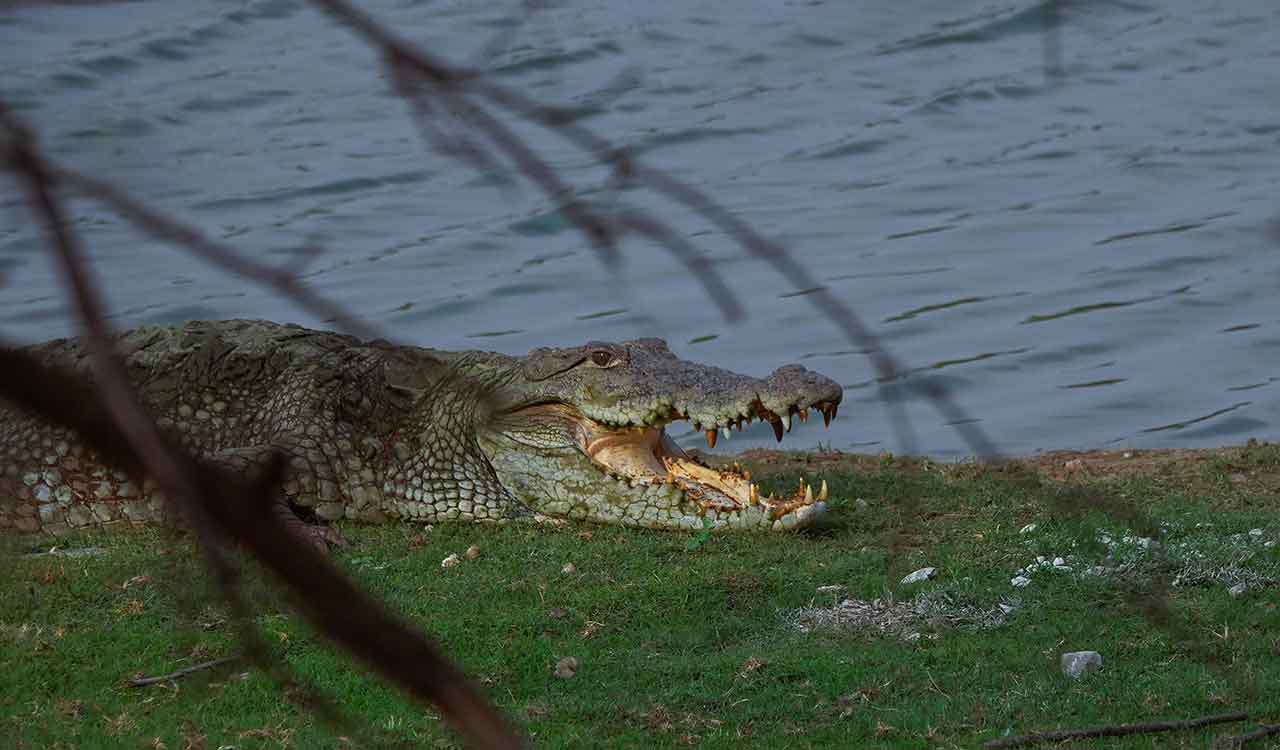


By BC Choudhury, N Shiva Kumar
In the early 1970s, as India stood at the crossroads of ecological reckoning, the tiger’s roar became a rallying cry for wildlife conservation with the launch of Project Tiger in 1973. But another ancient predator, one that had silently ruled India’s rivers and estuaries for millennia, was teetering on the edge of extinction. The crocodile — once a symbol of primal strength —was fast disappearing from its natural habitats.
Then came April 1, 1975 — a quiet turning point. On that day, India launched the Crocodile Conservation Project in Odisha and Uttar Pradesh. It was a race against time. The wild populations had plummeted. Sightings were rare. The future of three distinct crocodilian species — the saltwater crocodile, the marsh-dwelling mugger and the slender-snouted gharial — hung in the balance. It was a precarious state of near extinction for crocodiles in India.
In 1978, the Ethipothala waterfall, 140 km from Hyderabad, witnessed history with the release of the first captive-born, hand-reared mugger crocodiles into the wild — a bold experiment in crocodilian conservation
But India didn’t stop with just two States. By 1978, eight more States — including Andhra Pradesh — joined the mission. Scientists, forest officials and local communities came together with a shared purpose. Special breeding and rearing centres were established, and protected sanctuaries were carved out as safe havens. Here, young crocodiles were raised away from predators and eventually released back into the wild — a second chance at survival.
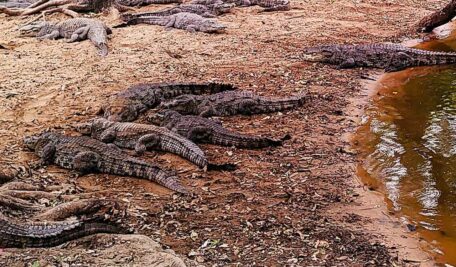
Captive-bred crocodiles are kept in spacious enclosures in groups and later released into the wild to support natural population growth.
Collective Campaign
Forty-seven years ago, in April of 1978, when five of us —wildlife enthusiasts brimming with youthful zeal — set off from Hyderabad to Ethipothala, a 70-foot little-known but breathtaking waterfall. A hidden gem tucked 140 kilometres northwest of the city, bearing a name as wild and winding as the journey itself.
But this wasn’t just another adventure. We were on a mission —one that marked a milestone in the annals of wildlife conservation. Just two years prior, in 1978, the Ethipothala Falls had witnessed history, the release of the first captive-born, hand-reared mugger crocodiles into the wild — a bold experiment in crocodilian conservation. Our journey was part of an ongoing effort to track their survival, to see if nature had embraced them back. This was no ordinary field trip; it was a boots-on-the-ground check-in with history in the making.
Decades of Dedication
Over the next five decades, something remarkable happened. Nature responded. The crocodiles came back. Today, all three species have clawed their way back from near extinction, a revival hailed by the global conservation community as one of India’s proudest environmental triumphs. Regrettably, very few in India are aware of this mega achievement.
The story of India’s crocodiles is not just one of rescue and revival — it is now entering a new chapter, one where balance, understanding, and coexistence will define the path forward. For centuries, the rivers, lakes, and marshes of India have been the ancient strongholds of the planet’s one of most awe-inspiring reptiles. These modern-day dinosaurs have stalked the waters of the subcontinent since time immemorial. Over the past 50 years, their story has unfolded as a dramatic saga of near-extinction and remarkable revival — a tale marked by human conflict, conservation miracles, and the relentless fight for survival.
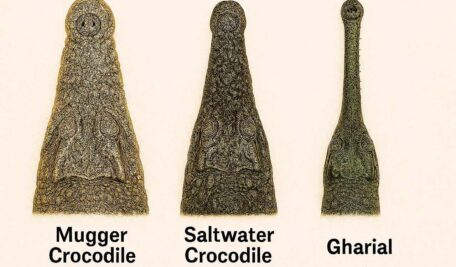
Comparative snout structure profiles of the three crocodiles found in the wild of the Indian subcontinent.
The Opportunistic Survivor
The mugger crocodile, also known as the marsh crocodile, is India’s most widespread species. Found in lakes, rivers, reservoirs, and even man-made water bodies, it is an opportunistic predator, feasting on fish, birds and occasionally livestock. Despite facing habitat destruction and poaching in the mid-20th century, muggers have made a remarkable comeback, thanks to conservation efforts.
These modern-day dinosaurs have stalked the waters of the subcontinent since time immemorial, and over the past 50 years, their story has unfolded as a dramatic saga of near-extinction and remarkable revival
One of the biggest success stories for the mugger crocodile unfolded in Gujarat’s Vadodara city. The Vishwamitra River, which snakes through the city, has become an unusual stronghold for over 250 muggers.
However, this resilience comes at a cost. Human-crocodile conflicts have increased, especially in Maharashtra, Gujarat, and Madhya Pradesh. Farmers often find their livestock snatched by muggers as a meal. Despite this, communities in certain regions have embraced their armour-plated neighbours. In Rajasthan’s Chambal region, for instance, villagers consider the crocodiles sacred and protect them from harm.
The Estuarine Giant
The Saltwater crocodile is the largest living reptile and a formidable apex predator. Found along India’s eastern coastline, particularly in Odisha’s Bhitarkanika National Park and the Sundarbans, these giants can exceed 20 feet in length. Fifty years ago, rampant hunting for their prized skin nearly wiped them out. By the 1970s, their numbers had dwindled alarmingly, prompting one of India’s most ambitious conservation programmes.
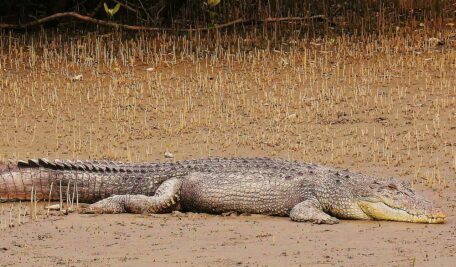
The saltwater crocodile, the largest of all crocodile species, prefers estuarine habitats where it can grow to an impressive size.
Bhitarkanika stands as the ultimate testament to this conservation success. Once down to a handful, the saltwater crocodile population in the park has now rebounded to over 1,800 individuals. A significant credit goes to local communities who have adapted their fishing practices to avoid conflict, recognising the crocodile’s role in maintaining the ecological balance.
Yet, these creatures continue to invoke both awe and fear. In 2018, a massive crocodile was filmed in a dramatic encounter off Odisha’s coast, battling a bull shark — an exceedingly rare spectacle that underscored the power and adaptability of this species. However, rising sea levels and increasing human settlements along estuarine zones are putting them at renewed risk.
The Fragile Fish-Eater
Perhaps the most extraordinary and endangered of India’s crocodilians is the gharial. Distinguished by its long, slender snout and exclusive diet of fish, the Gharial was once found in abundance in India’s northern rivers. However, the 1970s saw their numbers plummet below 200, largely due to habitat destruction, dam construction, and excessive fishing. By the time conservationists recognised the crisis, the species was teetering on the brink of extinction.
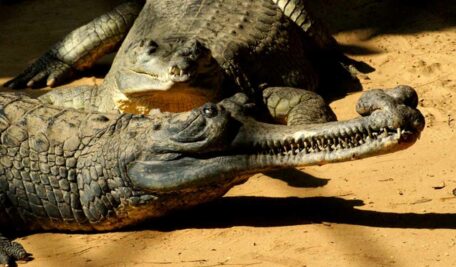
The fish-eating Gharial crocodile is a unique species, easily recognisable by the distinctive pot-like structure at the tip of its long snout.
The National Chambal Sanctuary was established in 1979 as a last-ditch effort to save the species. Over the decades, captive breeding and reintroduction programmes helped push the population back up to nearly 1,500 individuals. Yet, despite these efforts, the gharial remains critically endangered. One of the biggest threats comes from illegal sand mining, which destroys nesting sites.
In 2008, a shocking event unfolded when over 100 Gharials were found dead along the Chambal River due to suspected toxic poisoning. The tragedy reignited debates about industrial pollution and its consequences on fragile aquatic ecosystems.
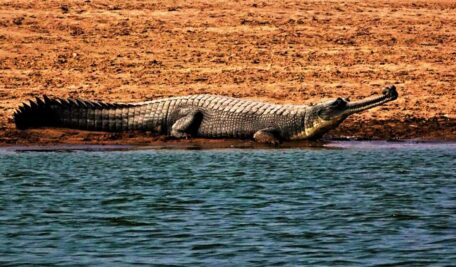
Basking on the sun-kissed banks of the Chambal River, Gharial crocodiles still struggle to live a peaceful life in the rivers of India.
Another notable case came in 2016 when a group of fishermen in Uttar Pradesh stumbled upon a Gharial struggling with a plastic ring stuck around its snout. The image went viral, bringing much-needed awareness to the threats posed by plastic pollution. Conservationists rushed to the scene, successfully freeing the reptile, but the incident served as a grim reminder of human impact on riverine species.
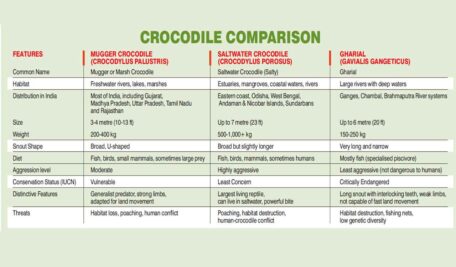
Conservation Efforts
Over the last five decades, crocodile conservation in India has seen significant strides, thanks to initiatives by various governments and environmental organisations. In the 1970s, India launched the Crocodile Conservation Project, focusing on breeding and habitat restoration. This effort helped stabilise populations, particularly in protected areas.
Yet, challenges persist. Human-wildlife conflict is increasing, climate change is altering riverine ecosystems, and pollution continues to degrade habitats. The future of India’s crocodiles hinges on sustainable coexistence strategies. This includes community-based conservation programmes, stricter enforcement of anti-poaching laws, and technological interventions like drone surveillance to monitor populations.
The story of India’s crocodiles is one of resilience and adaptability, but also of fragility in the face of human expansion. As these prehistoric reptiles navigate an ever-changing landscape, their survival depends on a delicate balance — one where humans and crocodiles learn to coexist.
With continued conservation efforts, awareness, and proactive policies, India can ensure that these ancient predators continue to reign over its rivers, lakes, and coasts for generations to come.
(BC Choudhury, a wildlife researcher since 1975, has led India’s crocodile conservation and trained wildlife professionals worldwide. N Shiva Kumar is a wildlife writer and photographer)

Related News