SC refuses to stay SAT order in Bombay Dyeing-SEBI case
The Supreme Court refused to stay the Securities Appellate Tribunal's order setting aside regulatory directions against Bombay Dyeing and its promoters, issued notice on SEBI's appeal, and ruled the SAT's split verdict would not serve as a precedent
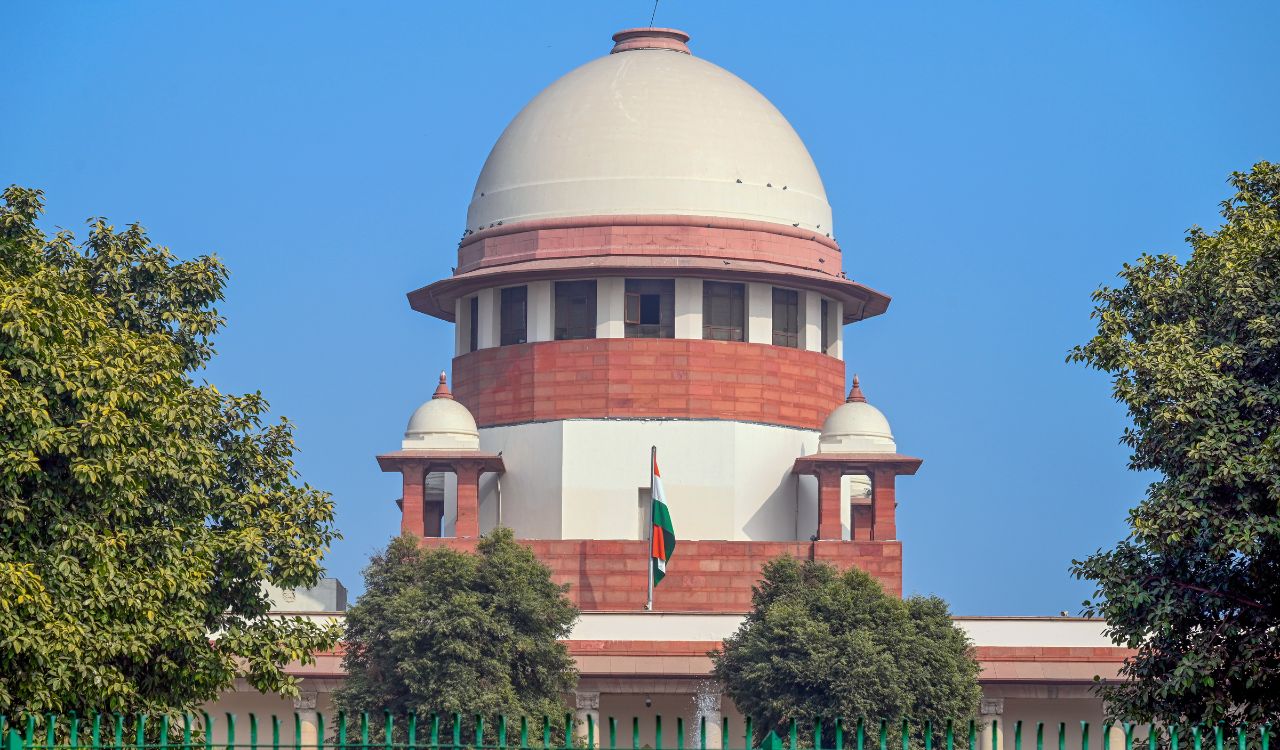


New Delhi: The Supreme Court on Monday refused to stay an order of the Securities Appellate Tribunal (SAT) that had set aside earlier regulatory directions against the Bombay Dyeing and Manufacturing Company Limited and certain members of its promoter group.
A bench of Justices BV Nagarathna and R Mahadevan, while declining to stay the order, issued notice on the plea of the Securities and Exchange Board of India (SEBI) challenging the SAT order, and said that it will not be treated as a precedent.
“As the impugned order is a split verdict 2:1, we observe that the same shall not be a precedent in similar matters before SAT,” the bench ordered.
The earlier SEBI order had included restrictions on accessing the securities market and holding key positions in listed entities for specified periods, citing alleged violations of securities laws and listing norms.
The matter pertains to proceedings initiated by SEBI following a show-cause notice issued in June 2021, which also covered certain current and former promoters and directors of the company, as well as individuals associated with SCAL Services Ltd.
The SAT’s January 16 ruling had overturned a 2022 order passed by a whole-time member of SEBI. Senior advocate Arvind Datar, appearing for SEBI, said Bombay Dyeing originally held 49 per cent in SCAL and on March 29, 2012, it reduced its holding to below 19 per cent, following which SCAL ceased to qualify as an associate company.
However, the 30 per cent stake was transferred to another group entity and not an independent third party, Datar submitted, adding that the first MoU was executed the following day and eleven MoUs aggregating over Rs 3000 crore were executed over two years.
He told the bench that Bombay Dyeing recorded sale proceeds in its books, while SCAL did not reflect corresponding purchases and instead showed an agency commission.
Datar, while seeking a stay of the order, argued that the majority ruling raised questions concerning associate companies, the lifting of the corporate veil and the principle of a single economic entity.
However, counsel for Nusli Wadia, chairperson of the Wadia Group of Companies and Bombay Dyeing, opposed the submission of stay and said the SAT had completely exonerated them on facts and that SEBI had not challenged several findings validating the transactions.
Senior advocates Abhishek Singhvi and Darius Khambata, appearing for Wadia Group companies and Bombay Dyeing, submitted that they have acted in compliance with applicable legal and regulatory requirements.
The bench asked Wadia Group counsel to file counter-affidavits to SEBI’s plea. On January 16, the SAT, by a majority decision, had set aside SEBI’s October 21, 2022 order that imposed monetary and non-monetary penalties on the company and certain promoters and directors.
The dispute concerns 11 memoranda of understanding executed between Bombay Dyeing and SCAL Services Limited, both Wadia Group companies, for the bulk sale of flats in Mumbai. The 2:1 majority decision of SAT held that SEBI had failed to establish that the flat sale agreements executed between the two group companies were sham transactions intended to inflate the company’s revenue.

Related News