SC split verdict on law replacing CJI from CEC appointment panel
The Supreme Court delivered a split verdict on whether challenges to the 2023 law governing CEC and EC appointments should go before a Constitution Bench. Justice Dipankar Datta rejected the reference, while Justice Satish Chandra Sharma favoured it, sending the matter to CJI Surya Kant
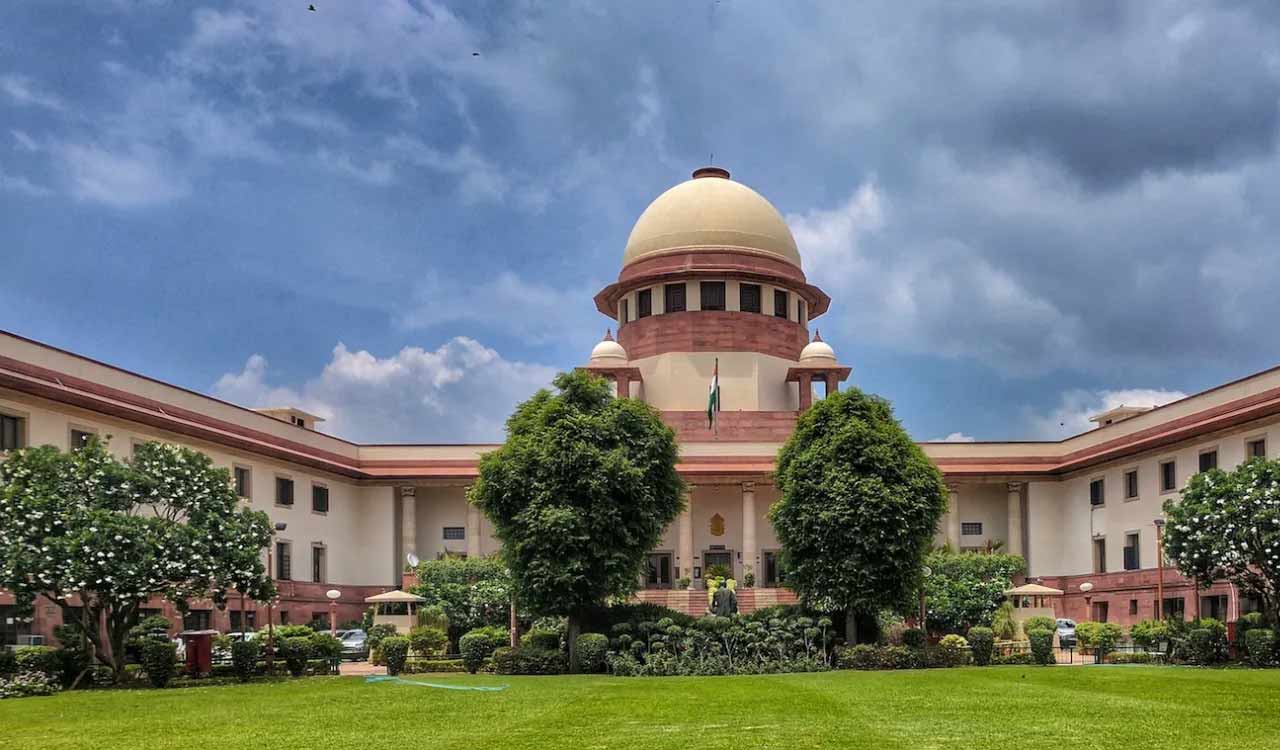


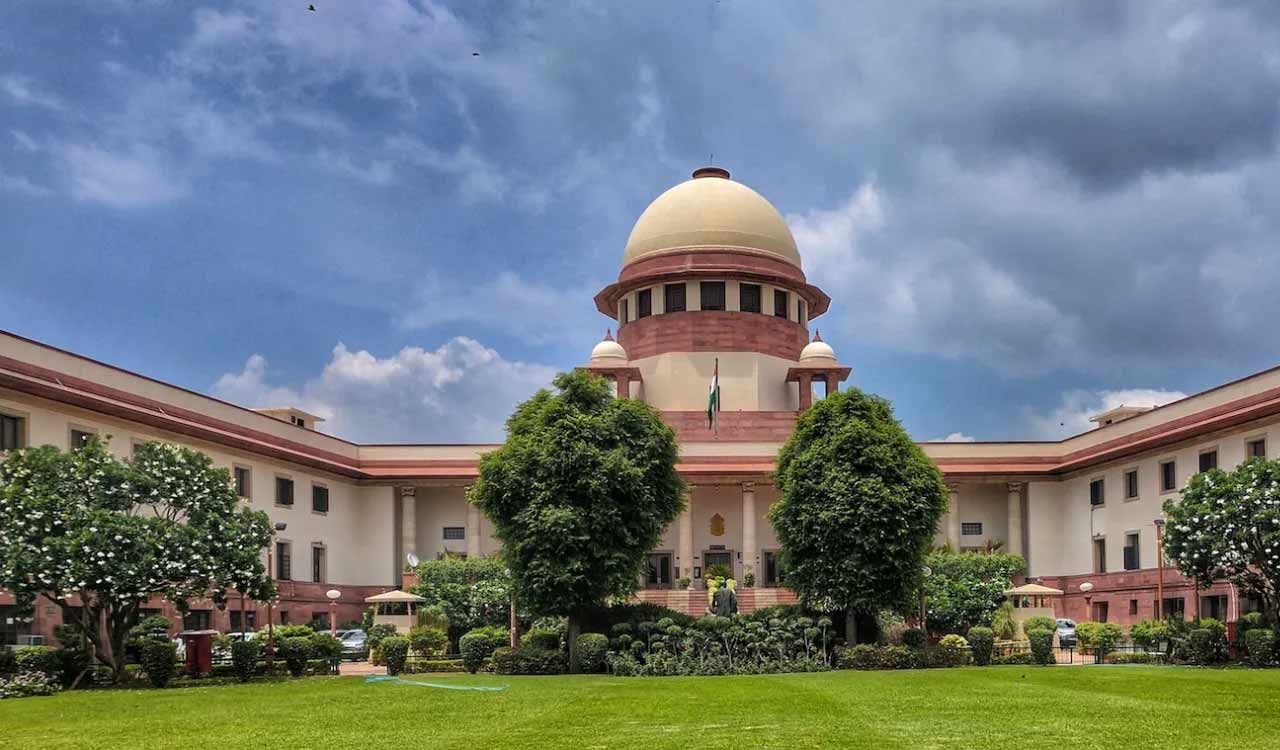
New Delhi: The Supreme Court on Wednesday delivered a split verdict on whether petitions challenging the constitutional validity of the law governing the appointment of the Chief Election Commissioner (CEC) and Election Commissioners (ECs) should be referred to a Constitution Bench.
While Justice Dipankar Datta rejected the plea for reference to a larger Bench, Justice Satish Chandra Sharma held that the challenge raised a substantial question of constitutional interpretation that had not been settled by any earlier judgment and favoured reference to a Constitution Bench.
In view of the difference of opinion, the two-judge Bench directed that the papers be placed before Chief Justice of India Surya Kant for considering the constitution of a Constitution Bench of appropriate strength to decide the constitutional validity of the Chief Election Commissioner and other Election Commissioners (Appointment, Conditions of Service and Term of Office) Act, 2023.
Under the 2023 law, the selection committee comprises the Prime Minister, the Leader of Opposition in the Lok Sabha and a Union Cabinet Minister nominated by the Prime Minister. The law replaced the CJI with the nominated Union Minister on the selection panel.
In his opinion, Justice Datta held that the Constitution Bench judgment in the Anoop Baranwal case had already settled the constitutional principles concerning free and fair elections and the need to insulate the Election Commission of India (ECI) from exclusive executive control in matters relating to appointments.
He said the Anoop Baranwal judgment made it clear that the arrangement prescribing a selection committee comprising the Prime Minister, the Leader of Opposition and the CJI was “transient in nature” and was to operate until Parliament enacted a law.
“If the Constitution Bench intended for the inclusion of the Chief Justice of India (CJI) in the selection committee to be binding, it would have said so,” Justice Datta observed.
Justice Datta further observed that the Union Cabinet Minister nominated by the Prime Minister as the third member of the selection committee could not reasonably be expected to oppose the person who nominated him.
He opined that the Minister nominated by the Prime Minister “cannot be expected to defy his own nominator and risk his continuation” and that the doctrine of collective responsibility would ordinarily preclude the Minister from opposing the Prime Minister.
According to Justice Datta, the Supreme Court had already laid down that free and fair elections are a basic feature of the Constitution and that the ECI should be insulated from exclusive executive control in relation to appointments.
“What remains is no more than the application of the settled principles of law to the facts of the case,” he held, rejecting the prayer for reference to a larger Bench.
Justice Sharma disagreed and held that the question of whether Parliament was justified in excluding a neutral selector from the selection committee was an important constitutional issue arising for the first time before the Supreme Court.
He observed that while the law declared by an earlier Constitution Bench under Article 141 was binding, the specific question arising in the present challenge had not been conclusively dealt with by any precedent.
Justice Sharma held that Article 145, read with Order 38 of the Supreme Court Rules, did not permit the present two-judge Bench to finally decide such a question and favoured placing the matter before the CJI for appropriate orders regarding the constitution of a Constitution Bench.
Despite their difference of opinion, both judges agreed that referring the matter concerning the reference question to another three-judge Bench would serve little purpose and result in further delay in deciding the substantive constitutional issues. The Bench accordingly directed that the papers be placed before the CJI to consider the constitution of a Constitution Bench of such number of judges as may be appropriate.
The judges also flagged the prolonged pendency of references before Constitution Benches, observing that some such references remain unresolved for years. “The pendency of reference for far too long… does not reflect well on the institution,” the order observed, describing the inordinate delay in resolving such references as a matter of institutional concern.
The Bench recorded that the petitioners were justified in expressing concern over the delay in deciding references and requested the CJI to explore the necessity of constituting a permanent five-judge Bench to decide constitutional questions.
The petitions challenge the 2023 Act, which replaced the CJI with a Union Cabinet Minister nominated by the Prime Minister in the selection committee for appointing the CEC and ECs.
In March 2023, a Constitution Bench in Anoop Baranwal vs Union of India had directed that appointments to the poll body be made by the President on the recommendation of a three-member committee comprising the Prime Minister, the Leader of Opposition in the Lok Sabha and the CJI, as an interim arrangement until Parliament enacted a law.
Parliament subsequently enacted the 2023 legislation under which the selection committee comprises the Prime Minister, the Leader of Opposition and a Union Cabinet Minister nominated by the Prime Minister.
The petitions have challenged the exclusion of the CJI and contended that the present mechanism undermines the independence and transparency of appointments to the ECI.
During earlier hearings, the Supreme Court had questioned the absence of an independent member in the selection committee and observed that the independence of the ECI was integral to ensuring free and fair elections, which form part of the basic structure of the Constitution.
The matter will now be placed before the CJI for appropriate orders on the constitution of a Constitution Bench.

Related News
-

Apex court summons senior Delhi police officer assault on women journalists covering protests
-
SC stays trial in defamation case against Rahul Gandhi over derogatory remarks against PM Modi
-
SC urged to initiate suo motu contempt action over social media post targeting CJI, INDIA bloc protest
-
Telangana BJP chief accuses Rahul Gandhi of ‘dragging SC’ into political row