South Bengal’s 91 seats key to power in West Bengal polls
South Bengal’s 91 Assembly seats across 24 Parganas, Kolkata and Howrah are set to play a decisive role in the 2026 West Bengal elections, with both TMC and BJP focusing on this region to secure a path to power


Kolkata: In West Bengal’s electoral chessboard, governments are rarely made in the hills of North Bengal or the forested region of Jangalmahal. Power is usually decided in the crowded plains of South Bengal, where elections are won less by momentum and more by mathematics.
At the heart of that battle lie North and South 24 Parganas, the twin districts which, along with Kolkata and Howrah, form the TMC’s strongest fortress and the BJP’s most crucial gateway to power.
With the BJP seeking to breach the ruling party’s southern citadel, the two biggest districts, North 24 Parganas with 33 seats and South 24 Parganas with 31, once again hold the key to Bengal’s high-voltage electoral battle.
Together with Kolkata’s 11 seats and Howrah’s 16, these four districts account for 91 of Bengal’s 294 Assembly seats, nearly one-third of the House, making them the single most decisive belt in the 2026 polls.
North and South 24 Parganas remain the heart of that contest, what Bengal politicians often call the “Uttar Pradesh of Bengal’s electoral map”, the region that can make or unmake power at Nabanna, the state secretariat.
The larger Presidency division, Kolkata, Howrah, Nadia, North and South 24 Parganas, sends 111 MLAs to the Assembly and remains the TMC’s strongest fortress.
Despite the BJP’s most aggressive push during the 2021 Assembly elections, the TMC won 96 of these 111 seats, while the BJP managed only 14 and the ISF one. The verdict reinforced an axiom: without breaking South Bengal, there is no route to power.
In the 2024 Lok Sabha polls, the BJP improved its footprint and led in 21 of these segments, while the TMC stayed ahead in 90. But the geography barely changed, the BJP gained mainly in Nadia and North 24 Parganas, while South 24 Parganas, Howrah and Kolkata South stayed firmly with the ruling party.
For the TMC, the arithmetic is blunt: hold this belt and the road to a fourth straight term remains open.
“Our electoral battle ends here. If we retain North and South 24 Parganas, Kolkata and Howrah, Bengal stays with us. These are not just seats, they are the social base of Mamata Banerjee’s politics,” a senior TMC minister said.
The BJP sees the same geography as the gateway to regime change.
“Without breaching North 24 Parganas, Kolkata and Howrah, there is no route to power for us. North 24 Parganas is the entry point because of the Matua and refugee votes,” a senior BJP leader said.
This area had once been a stronghold of the Left. In 2006, the CPI(M)-led Left Front won 72 of the Presidency seats. But the Muslim consolidation post-Sachar Committee report, Singur-Nandigram aftershocks and Mamata Banerjee’s rise turned the region into the TMC’s political engine.
South 24 Parganas, along with Purba Medinipur, was among the first zilla parishads the TMC wrested from the Left in 2008. By 2011 and 2016, both 24 Parganas had become the party’s near-complete strongholds.
North 24 Parganas, however, remains the BJP’s best southern hope.
Bordering Bangladesh and housing a large refugee population, it has a decisive Matua vote in at least 14 seats. The BJP’s citizenship plank, built around CAA promises, helped it make deep inroads here in 2019 and retain relevance in 2021.
In 2021, the BJP’s wins in the Presidency division were concentrated largely in Nadia and North 24 Parganas. In South 24 Parganas, Howrah and much of Kolkata, it failed to convert momentum into seats.
In the 2024 Lok Sabha polls, the BJP led in 11 Assembly segments in Nadia and eight in North 24 Parganas. In South 24 Parganas, it could not lead in any segment.
“North 24 Parganas is where the BJP sees possibility and South 24 Parganas is where the TMC sees insurance,” political analyst Biswanath Chakraborty said.
This time, however, another variable has altered calculations, the Special Intensive Revision (SIR).
In 2021, nearly 65 to 70 constituencies across Bengal had winning margins so slender that a few booths could decide the winner. The epicentre lies in nearly 70 seats across 11 districts, with 25 in Kolkata and the adjoining belt of North 24 Parganas, Howrah and Hooghly. North 24 Parganas alone has 13 such closely fought seats.
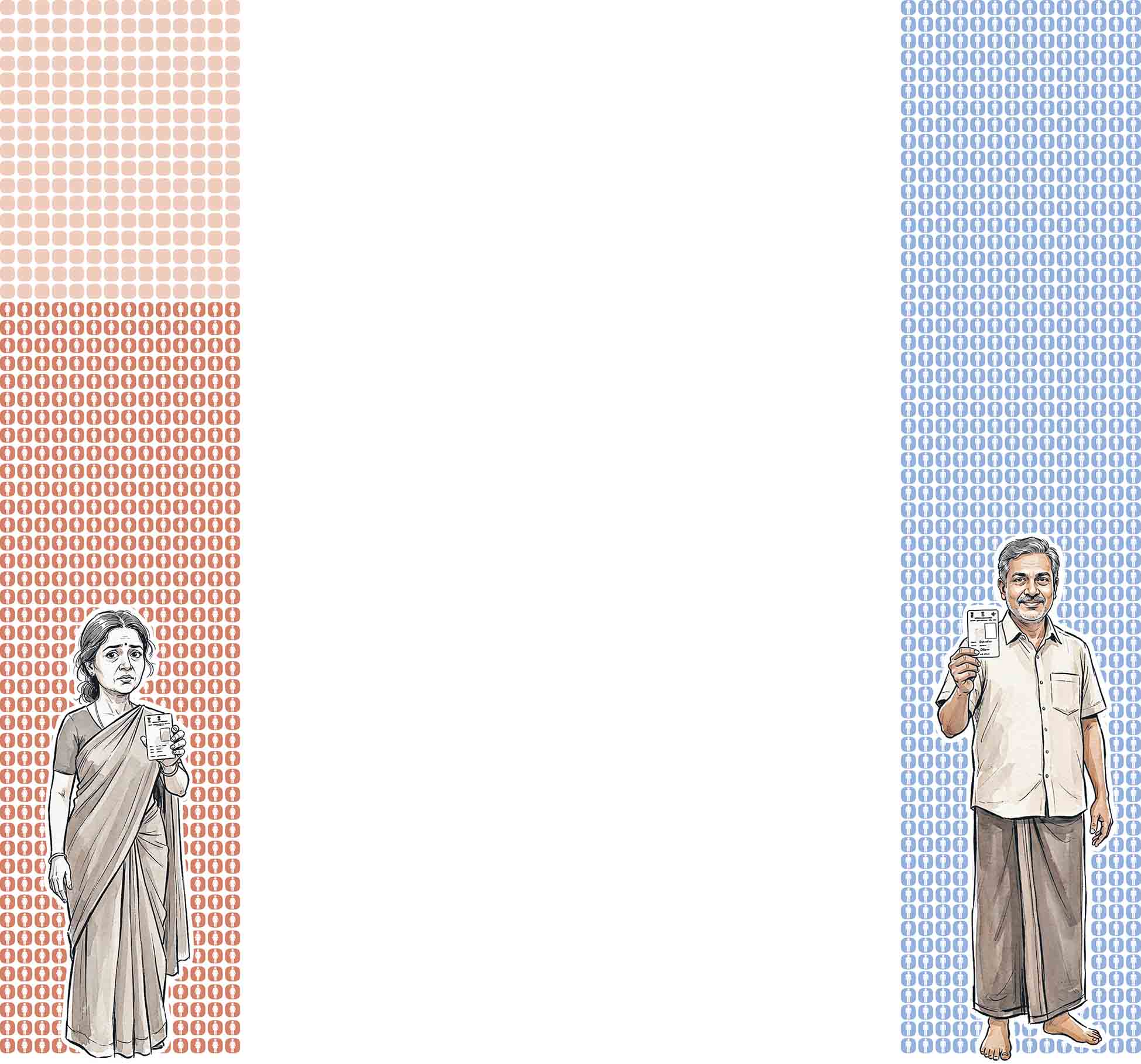
North 24 Parganas lost over 12.6 lakh names, South 24 Parganas over 10.91 lakh, and Kolkata nearly 6.97 lakh during SIR deletions.
In Bongaon South, won by the BJP by around 2,000 votes, nearly 7,000 names were deleted. In Kalyani, another BJP-held seat won by roughly 2,000 votes, deletions touched around 9,000.
Of Kolkata’s 16 seats, only Bhabanipur and Beleghata are estimated to have deletions lower than the previous victory margin. In every other constituency, deleted names exceed the winning margin.
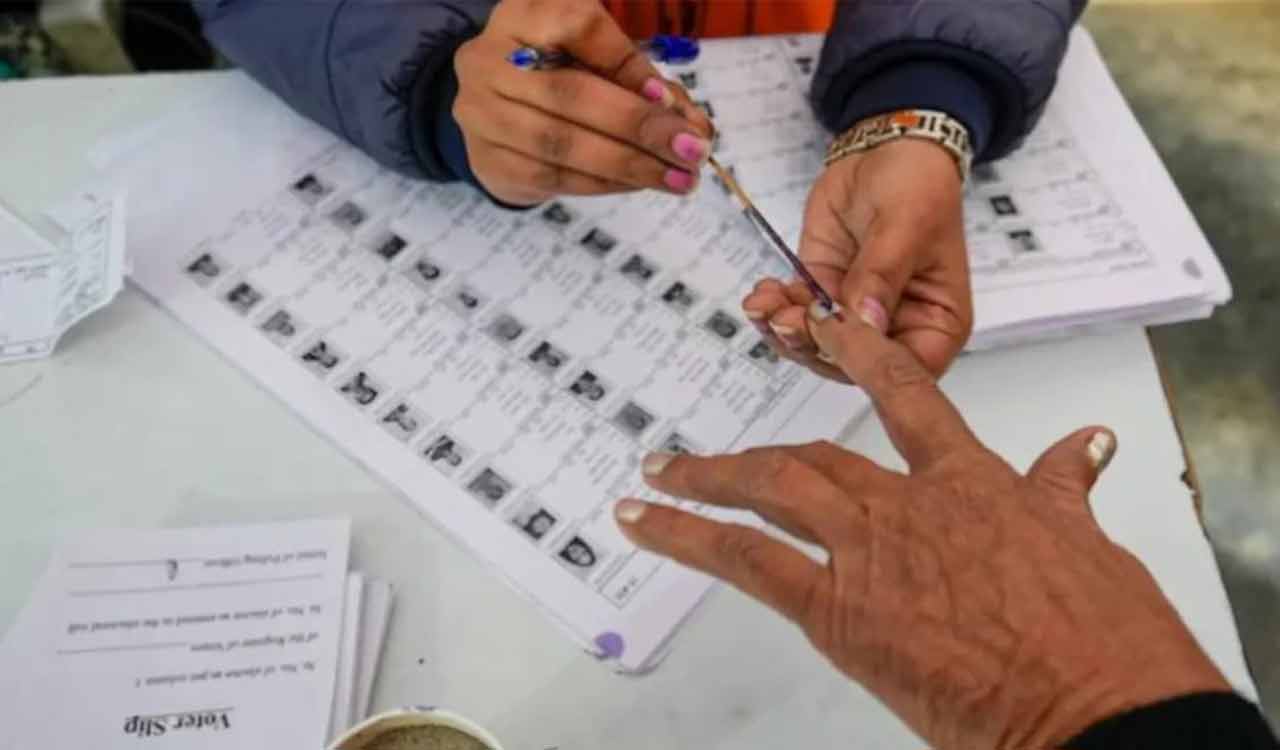
That has turned voter rolls into a political battlefield. Both parties know that where margins are thinner than deleted names, SIR can change not just results but the narrative itself.
That is why booth committees of the parties are being treated like war rooms. In North 24 Parganas, every Matua household is being revisited, every refugee colony mapped again and every deleted voter challenged.
Howrah and Kolkata add another layer. A BJP rise here gives narrative momentum; a TMC hold reinforces Mamata Banerjee’s image of invincibility.
In 2021, the BJP believed Lok Sabha momentum would be enough to break Mamata Banerjee’s southern fortress. Five years later, the lesson remains unchanged: without cracking North and South 24 Parganas, Kolkata and Howrah, there is no road to Nabanna.
The battle is now being fought less in speeches and more in booth lists, Matua colonies, minority belts and slender margins. Because in Bengal, governments are not decided by the biggest rallies but by who holds the south when the votes are finally counted.

Related News