Strong evidence of subsurface ice under craters in Moon’s south polar region: Study
The study conducted by ISRO focused on doubly shadowed craters located inside the permanently shadowed south polar regions in the Moon.
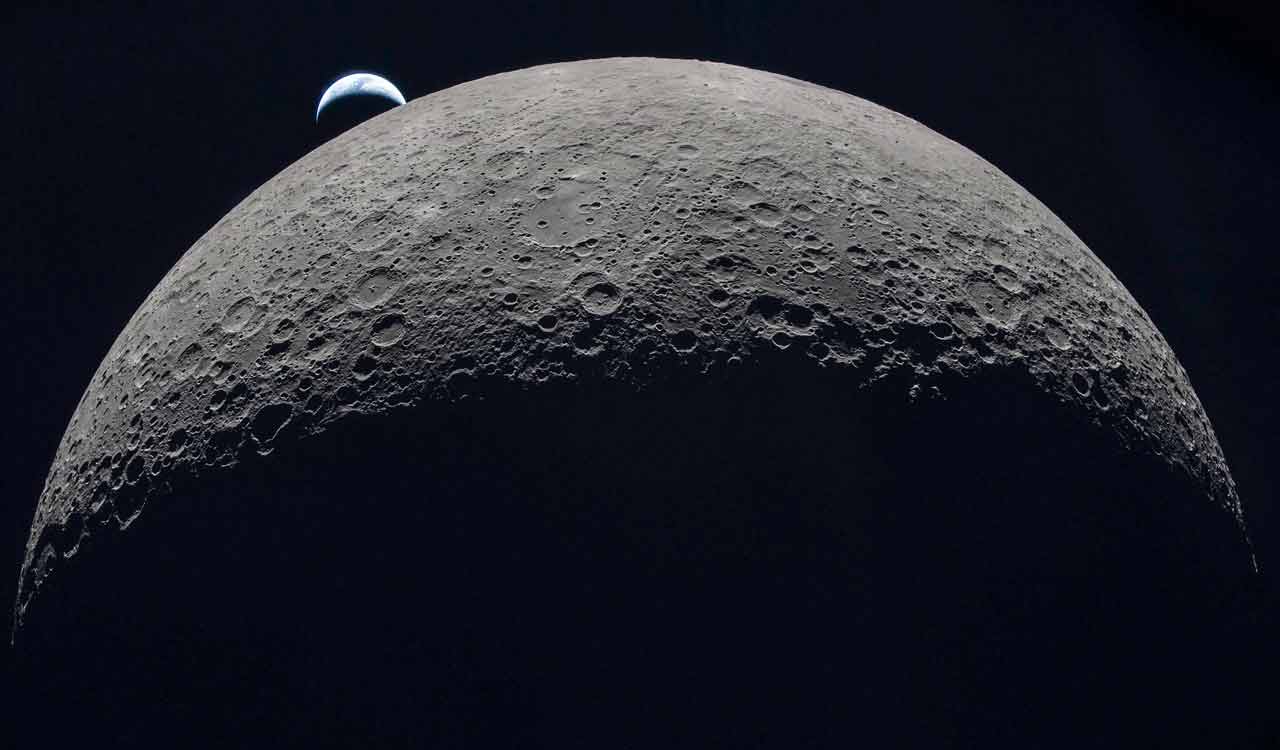


New Delhi: A new study has indicated strong evidence of subsurface ice under some of the coldest craters in the Moon’s south polar region.
The analysis focused on “doubly shadowed craters,” which are special craters located inside permanently shadowed regions (PSRs) of the Moon.
The findings have significant implications for future lunar exploration missions, including the identification of potential ice-bearing regions for future landing and in-situ resource utilisation activities, according to a statement released by the Indian Space Research Organisation (ISRO) on Wednesday.
The study was carried out by the scientists of Ahmedabad-based Physical Research Laboratory (PRL).
For the analysis, they examined observations from Chandrayaan-2 orbiter’s Dual Frequency Synthetic Aperture Radar (DFSAR) — a type of mapping tool that deploys two different radio wave frequencies to take detailed pictures of the landscape.
ISRO said that PSRs remain extremely cold due to continuous shielding from sunlight and thermal radiation. That’s why they are considered favourable locations for preserving water-ice over long geological timescales.