Study reveals importance of controlling cardiovascular risk factors to prevent Alzheimers disease
The findings of a new study by scientists at Madrid's CNIC confirm the importance of controlling traditional cardiovascular risks factors not only to preserve cardiovascular health, but also to prevent Alzheimer's disease and other dementias



Madrid: In elderly people, cardiovascular disease and dementia frequently coexist. Nonetheless, few long-term studies have been conducted to investigate how atherosclerosis and its related risk factors affect brain health beginning in middle age.
A new study by scientists at Madrid’s Centro Nacional de Investigaciones Cardiovasculares (CNIC) provides new data on this relationship; the findings confirm the importance of controlling traditional cardiovascular risks factors, such as hypertension, cholesterol, diabetes, smoking, and sedentary lifestyle, not only to preserve cardiovascular health, but also to prevent Alzheimer’s disease and other dementias.
The CNIC study, published in The Lancet Healthy Longevity, demonstrates that in addition to being the leading cause of cardiovascular disease, atherosclerosis and its associated risk factors are also implicated in the cerebral alterations seen in Alzheimer’s disease, the most common cause of dementia.
According to CNIC General Director Dr ValentÃn Fuster, an author on the study, the new findings are important because they open up the possibility of treating a modifiable disorder (cardiovascular disease) to prevent the development of a disease for which there is currently no curative treatment (dementia). “The sooner we act to control cardiovascular risk factors, the better it is for our brain health,†said Dr. Fuster.
Everybody knows that a healthy lifestyle and controlling cardiovascular risk factors are important for preventing a heart attack, continued Dr Fuster.
Nevertheless, the additional information linking the same risk factors to a decline in brain health could further increase awareness of the need to acquire healthy habits from the earliest life stages.
In 2021, CNIC scientists discovered that the presence of cardiovascular risk factors and subclinical (presymptomatic) atherosclerosis in the carotid arteries (the arteries that supply the brain) was associated with lower glucose metabolism in the brains of apparently healthy 50-year-old participants in the PESA-CNIC-Santander study (Corts-Canteli & Gispert et al. JACC. 2021). Glucose metabolism in the brain is considered an indicator of brain health.
The PESA-CNIC-Santander study, directed by Dr. Fuster, is a prospective study that includes more than 4000 asymptomatic middle-aged participants who have been exhaustively assessed for the presence and progression of subclinical atherosclerosis since 2010.
Dr. Fuster’s team, led by Drs. Marta Corts Canteli and Juan Domingo Gispert, have continued to monitor the cerebral health of these participants over 5 years. Their research shows that individuals who maintained a high cardiovascular risk throughout this period had a more pronounced reduction in cerebral glucose metabolism, detected using imaging techniques such as positron emission tomography (PET).
In participants with a sustained high cardiovascular risk, the decline in cerebral metabolism was three times greater than in participants who maintained a low cardiovascular risk, commented Catarina Tristão-Pereira, first author on the study and INPhINIT fellow.
Glucose is the main energy source for neurons and other brain cells. If there is a sustained decline in cerebral glucose consumption over several years, this may limit the brain ability to withstand neurodegenerative or cerebrovascular diseases in the future, explained Dr. Gispert, an expert in neuroimaging at the CNIC and Barcelona eta Research Center.
Through a collaboration with Drs Henrik Zetterberg and Kaj Blennow, world experts in the identification of new blood biomarkers at the University of Gothenburg in Sweden, the CNIC team discovered that the individuals showing this metabolic decline already show signs of neuronal injury.
This is a particularly important finding because neuronal death is irreversible, said Dr. Corts Canteli, a neuroscientist at the CNIC and a Miguel Servet fellow at the Fundacin Jim nez Daz Health Research Institute.
The CNIC team also discovered that the progression of subclinical atherosclerosis in the carotid arteries over 5 years is linked to a metabolic decline in brain regions vulnerable to Alzheimer’s disease, in addition to the effect of cardiovascular risk factors.
These results provide yet another demonstration that the detection of subclinical atherosclerosis with imaging techniques provides highly relevant information, said Dr. Fuster, who is the principal investigator on the PESA study.
The interaction between the brain and the heart is a fascinating topic, and with this study we have seen that this relationship begins much earlier than was thought. The scientists conclude that in light of these results, carotid screening has great potential to identify individuals at risk of cerebral alterations and cognitive decline in the future.
In the published article they write, this work could have important implications for clinical practice since it supports the implementation of primary cardiovascular prevention strategies early in life as a valuable approach for a healthy cerebral longevity.
Although we still dont know what impact this decline in cerebral metabolism has on cognitive function, the detection of neuronal injury in these individuals shows that the earlier we start to control cardiovascular risk factors, the better it will be for our brain, concluded Dr. Corts Canteli.

Related News
-

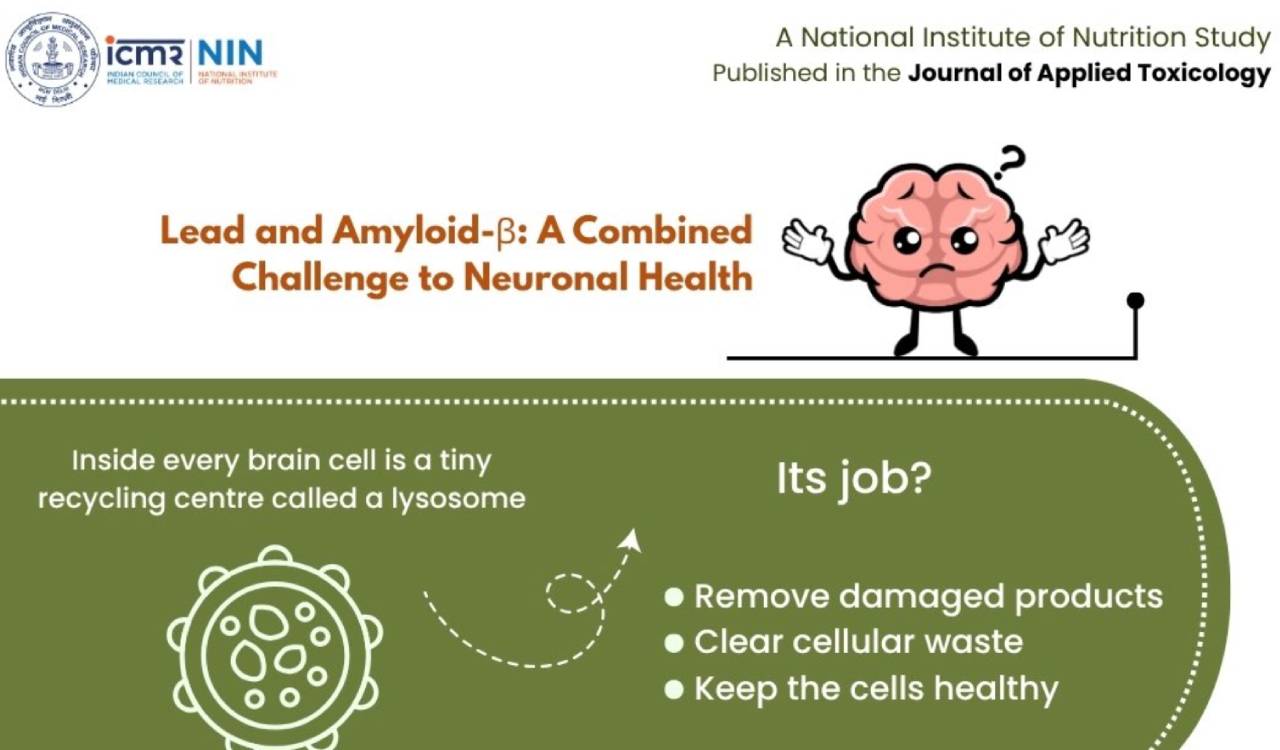
Environmental lead exposure may aggravate Alzheimer’s pathology: ICMR-NIN study
-
Eisai launches LEQEMBI for early Alzheimer’s disease treatment in India
-
US study finds direct link between air pollution and Alzheimer’s disease risk
-
‘Sandhya, Tum Kahaan Ho,’ a play around Alzheimer’s disease to be staged in Hyderabad