Supreme Court plea challenges CEC decisions over electoral-roll revision
: A plea in the Supreme Court challenges decisions and software changes allegedly made by CEC Gyanesh Kumar without the concurrence of the other two Election Commissioners. The petitioner seeks their annulment, criminal proceedings and an independent inquiry
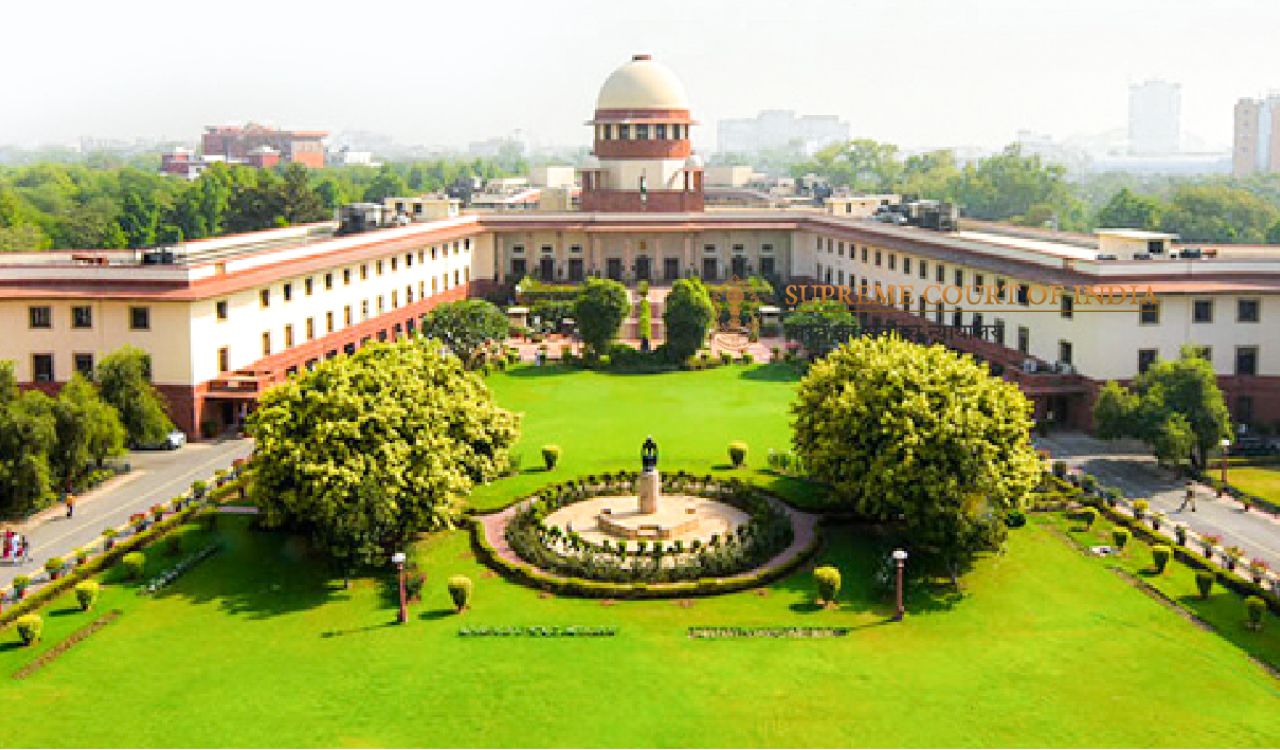


New Delhi: A plea has been filed in the Supreme Court challenging decisions, guidelines and software changes allegedly made by Chief Election Commissioner Gyanesh Kumar without the concurrence of the other two Election Commissioners, claiming that such actions violate the statutory requirement of collective decision-making.
The plea, filed by advocate Shailendra Mani Tripathi through advocate Chand Qureshi, seeks a declaration that such decisions are unconstitutional, beyond the powers of the CEC and void if they were taken without the concurrence of the full Election Commission or contrary to the majority view of the poll panel.
Besides challenging decisions allegedly taken without the required concurrence, the petitioner has sought initiation of criminal proceedings against the CEC and other officials under provisions relating to breach of official duty.
“Divested of any statutory or constitutional immunity, the Chief Election Commissioner remains directly accountable under the law — subject to police investigation, evidence gathering, and regular trial proceedings as an ordinary accused,” the plea said.
The petition was filed days after a report said Election Commissioners Sukhbir Singh Sandhu and Vivek Joshi had recorded written objections to several decisions allegedly taken in the name of the three-member Election Commission.
The petitioner has relied on Section 18 of the Chief Election Commissioner and Other Election Commissioners Act, 2023, which provides for decision-making by the Election Commission and says that where there is a difference of opinion, the view of the majority prevails.
The plea alleged that several decisions connected with the Special Intensive Revision (SIR) of electoral rolls were taken or implemented despite objections from the other two commissioners.
One of the main issues raised is the alteration of Form 6, used by people seeking registration as voters. The petition alleged that a requirement relating to ancestral details and linkage with the previous SIR was introduced through the Election Commission’s software without the statutory amendment required under the electoral rules.
“Issue a writ of mandamus or any other appropriate writ, order, or direction declaring all decisions, guidelines, directives, and software modifications initiated, approved, or implemented under CEC Gyanesh Kumar without full commission concurrence or contrary to the majority opinion of the Election Commissioners as unconstitutional, ultra vires, and void ab initio,” the plea said.
The petition said the two Election Commissioners had objected to the change and taken the view that the prescribed form could not be altered without following the statutory procedure. Reports have said the objections concerned a change to Form 6 that asked new applicants about the presence of their own name or that of a parent or grandparent in a previous SIR electoral roll.
The plea also alleged that the Election Commission’s digital systems were increasingly centralised, restricting the statutory powers of Electoral Registration Officers and other officials at the field level.
It further raised concerns over the handling of electoral-roll revisions in Goa and West Bengal. It alleged that the software did not have a facility to restore 97 eligible electors in Goa despite directions for their verification.
In West Bengal, the petitioner claimed that more than 16.10 lakh appeals were filed in the name of the Election Commission against voters whose names had been restored by judicial officers. It alleged that the other two Election Commissioners and the West Bengal chief electoral officer were not aware of or had not authorised these appeals.
The petition also challenges a July 28 order concerning the allocation of administrative responsibility for the Election Commission’s IT division. According to the plea, the order was objected to by the two Election Commissioners, who subsequently sought its withdrawal and questioned its validity under Section 18 of the 2023 Act.
The petitioner has argued that the CEC is the “first among equals” in the multi-member Election Commission and does not have superior voting power or a veto over the other commissioners.
The plea seeks preservation of server logs, databases, communications and metadata relating to the Election Commission’s electoral-roll management systems from October 1, 2025, onwards.
It also seeks an independent judicial inquiry into the allegations and directions for restoration of the 97 voters in Goa and similarly placed persons.
The petition comes amid reports of differences within the Election Commission over aspects of the SIR exercise. The Election Commission has rejected the reported claims of internal disquiet, saying that decisions, including those relating to SIR, had the approval of all three commissioners.

Related News
-

BJP to launch nationwide campaign to counter Cong claims on SIR, ECI
-
‘Only to save one man’: Dipke questions detention of protesters and Opposition leaders
-
NEET-PG 2026: Plea seeks permanent copies of question papers and response sheets
-
BRS MLC Dasoju Sravan demands Revanth Reddy’s resignation over power crisis