Technology breaking barriers in Courts: CJI
Surya Kant said technology integration in courts removes geographical barriers and improves access to justice, highlighting digital tools like e-Courts, AI systems and data platforms as key to modernising India’s judicial processes and enhancing efficiency



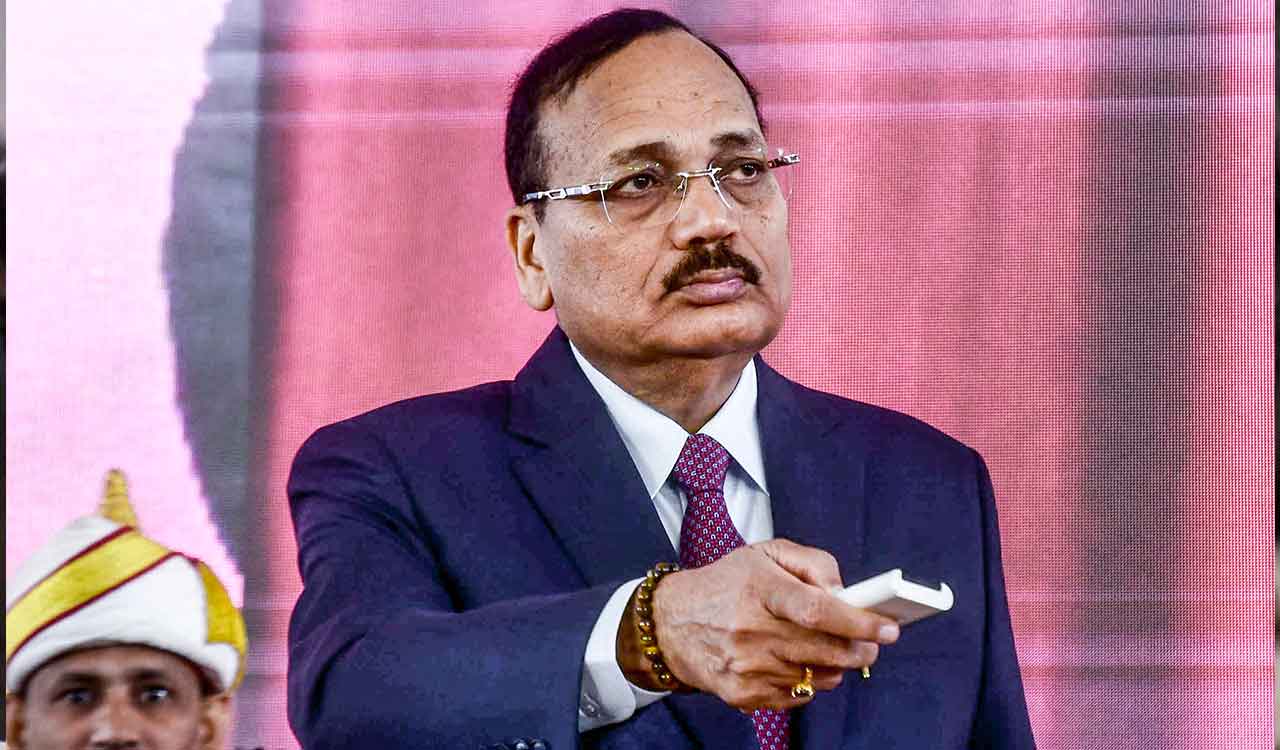
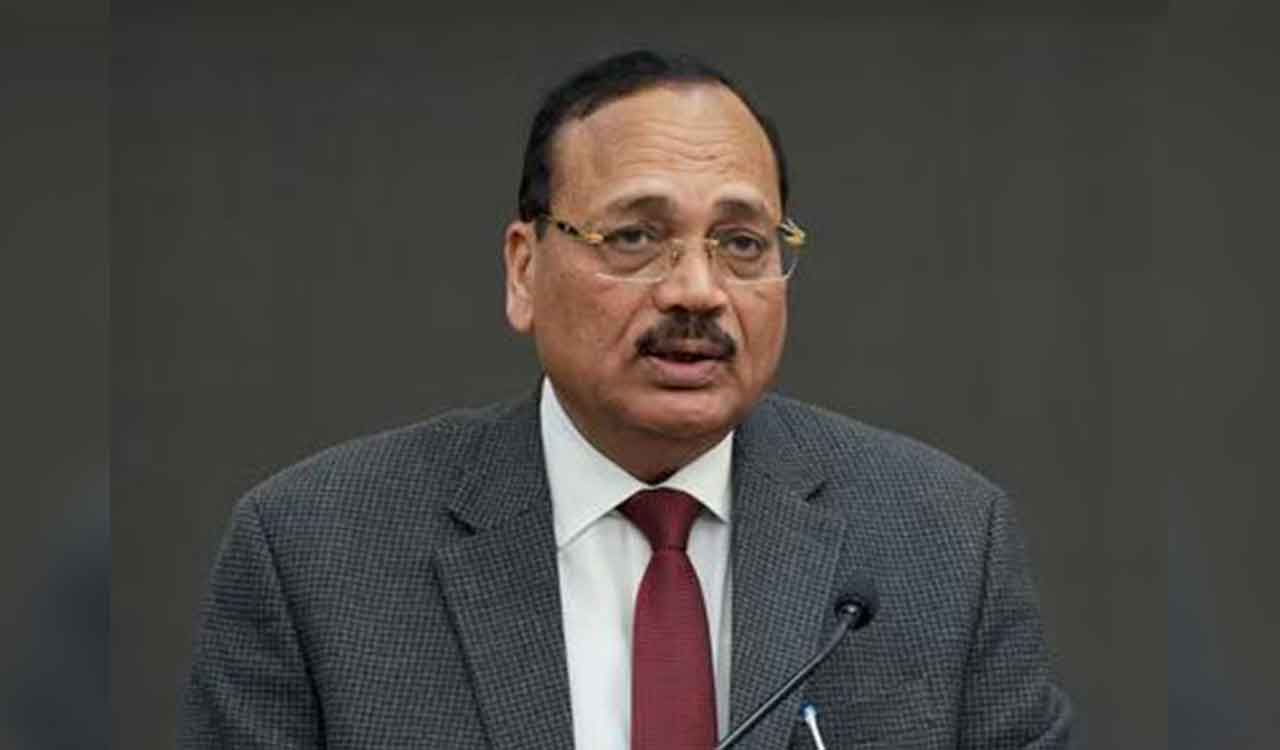
Gangtok: Chief Justice of India Surya Kanth on Friday said integrating technology into judicial processes dismantles geographical barriers to help litigants overcome problems of terrain, finance and distance.
Addressing the inaugural session of the two-day National Conclave on Technology and Judicial Education here, the CJI also said the Indian legal landscape has moved away from the era of the paper trail, where vital records languished in physical storage, to a vibrant digital ecosystem.
“When we speak of integrating technology into judicial processes across the country, we are, in effect, addressing the dismantling of geographical constraints, whether they arise from difficult terrain, financial barriers, or sheer distance,” he said. The journey to a courtroom was often measured as a test of endurance, the Chief Justice of India said.
“The mighty Himalayas, magnificent as they are, make movement slow and uncertain. If we look at the scenario just a decade or so ago, for a Sikkimese litigant seeking justice, distance was not measured in kilometres but in days of travel across narrow paths and unpredictable weather,” he said. The CJI said digital reform is not a matter of theory, but a practical necessity for sustaining the rule of law.
“We have moved away from the era of the paper trail, where vital records languished in physical storage, to a vibrant digital ecosystem. The e-Courts project has rewritten the relationship between the litigant and the law,” he said.
What once required physical presence and toilsome inquiry is now available through a simple digital interface, CJI Kanth said, adding that in consonance with this advancement, the National Judicial Data Grid (NJDG) stands as the “beating heart” of this endeavour, offering a window into the pulse of our judicial performance.
“Beyond basic data collection, we have witnessed the advent of intelligent assistance within our chambers,” he said, mentioning translation tool SUVAS and SUPACE, an AI-driven tool designed to assist judges.
“These innovations act as force multipliers, aiding in the swift translation of judgments and providing rapid, comprehensive research to the bench. They relieve the judge of the mechanical burden of routine inquiry, allowing for a deeper immersion in the complexities of the law,” the CJI said. He also discussed another aspect of technological advancements.
“When a litigant in the most distant corner of the country can track the progress of a case or view an order without intermediaries; if he can engage counsel from across the country and view proceedings in real time through video conferencing and live proceedings, the power dynamics of the courtroom undergo a healthy calibration,” he said.
Yet, it would be premature to assume that the task is complete, said the Chief Justice of India. He suggested that the large-scale digitisation achieved in trial courts through the National Core Case Information Systems (NC CIS) must now find a clear and consistent reflection in the higher judiciary through stronger standardisation.
“It enables High Courts to align with a common national standard while still accommodating state-specific requirements, whether in terms of nomenclature, local language needs, or procedural workflows,” he said.
The CJI said this standardisation exercise must also be accompanied by an expansion of e-Seva Kendras, one-stop digital service centres established in high courts and district courts to help litigants and lawyers access electronic court services such as assistance with case status, e-filing, obtaining certified copies, e-payments, and video conference hearings.
“These centres must grow beyond being simple access points and develop into effective hubs of digital support. In a country marked by varying levels of literacy, they serve as the crucial link between the complexity of the law and the immediacy of a citizen’s need,” he said.
Noting that currently, there are 48 functioning e-Seva Kendras in high courts and 2,283 operational units across district courts, he said that strengthening their technical capacity is essential to ensure that the digital divide does not become a new line of exclusion.
CJI Kanth also said there is a clear scope for the careful infusion and granular application of Artificial Intelligence at the trial court level. In the context of recovery suits, for instance, predictive and analytical tools can be deployed at the very threshold of litigation, he said.
“Instead of allowing valuable judicial time to be spent at the execution stage, on tasks such as verification of assets or tracing encumbrances, these systems can undertake such foundational checks with a degree of speed and accuracy that manual processes often cannot match,” he said. Similarly, Artificial Intelligence systems can be deployed to identify patterns in sentencing and bail practices, to promote greater consistency and predictability, the CJI said.
“This Conclave recognises that the adoption of technology is not only about implementation, but also about a necessary shift in legal education. It is no longer sufficient to be well versed in the statutes of the past. The modern judge must also engage with the logic that underpins emerging technologies,” the CJI said.
Judicial academies also must move beyond basic digital literacy, encouraging a deeper understanding of how algorithmic systems operate, and how they intersect with longstanding principles such as natural justice, he said.
“Only then can technology be integrated in a manner that strengthens, rather than unsettles, the core values of the legal system,” CJI Kanth said. The programme was attended by Chief Justice of Seychelles Supreme Court Rony James Govinden, Sri Lankan Supreme Court judge Mohammad Dhilip Nawaz and others.

Related News