Telangana crime up 7.15 pc in 3 yrs; organised crime jumps 1,704 pc
Telangana has reported a 7.15 per cent rise in overall crime over the past three years, driven largely by organised crime, narcotics and traffic offences. While grave crimes, cybercrime and economic offences registered a decline, DGP CV Anand has directed officers to adopt data-driven strategies to counter emerging threats, with emphasis on organised networks and drug-related cases.


Hyderabad: Telangana recorded a 7.15 per cent increase in overall crime in the last three years, with a sharp rise in organised crime, narcotics and traffic offences. However, grave crimes, cybercrime and economic offences showed a decline, according to the latest crime review conducted by the Telangana Police.
The number of registered cases increased from 2,65,377 in 2023-24 to 2,84,363 in 2025-26. The most drastic increase was recorded in organised crime, with cases rising from just 25 to 451 , which is almost a 1,704 per cent jump. Narcotics cases also rose 46.10 per cent, from 2,026 to 2,960.
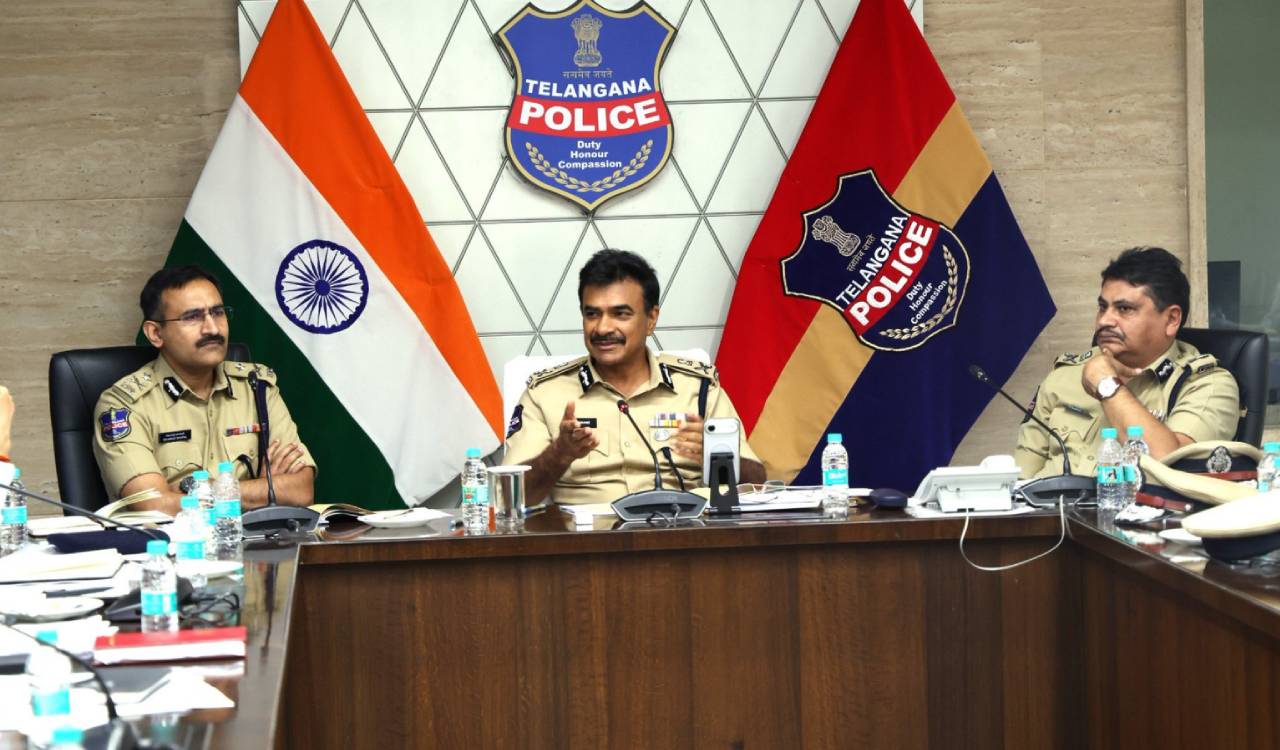
The figures were reviewed at the half-yearly crime review meeting chaired by DGP C.V. Anand on Friday.
Anand directed officers to adopt a data-driven and unit-specific strategy to tackle emerging crime patterns, with particular attention to organised criminal networks and drug offences.
Despite the overall rise, grave crimes declined 10.33 per cent, from 7,019 cases in 2024-25 to 6,294 in 2025-26.
Among other places, Hyderabad recorded a significant reduction, with grave crime cases falling from 1,483 to 1,094.
Non-grave offences, however, continued to rise, increasing 7.28 per cent from 2,59,201 cases in 2023-24 to 2,78,069 in 2025-26. Traffic offences also increased 9.48 per cent, from 29,130 to 31,891 cases.
Cybercrime provided some relief, declining 13.29 per cent to 22,000 cases, while economic offences fell 13.28 per cent to 32,684.
The DGP called for closer surveillance of narcotics networks and organised crime and asked officers to identify emerging trends early and formulate specific action.
CCTNS compliance was among the areas highlighted at the meeting. The rate of data updating has improved to 96 per cent from the earlier 70–80 per cent range.
Anand said policing priorities must be continuously adjusted according to the crime profile of individual units, with data analysis translated into effective field action.

Related News