Telangana govt urges stricter controls in overexploited areas as groundwater recharge levels rise
Telangana has recorded an increase in annual groundwater recharge, rising from 18.44 lakh hectare metres in 2024 to 19.61 lakh hectare metres in 2025. Irrigation Minister N Uttam Kumar Reddy has directed officials to treat conservation as a mass movement.
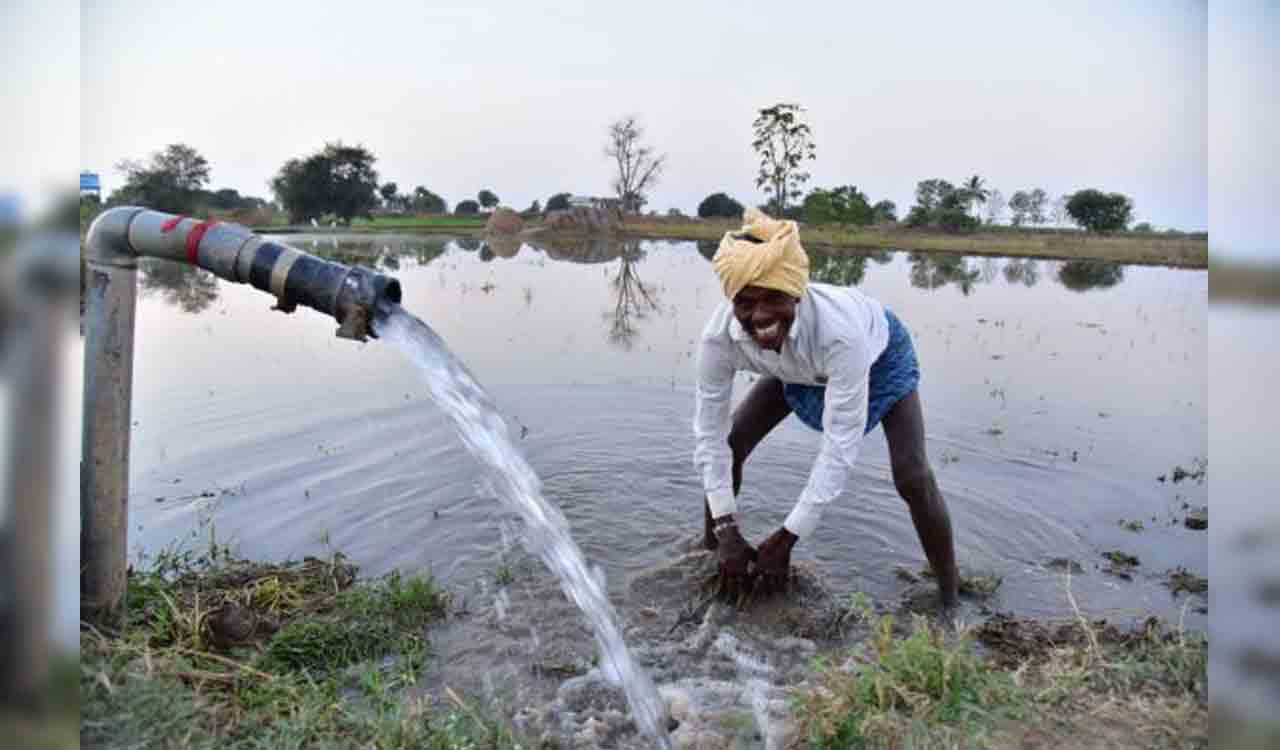


Hyderabad: With the State recording improvement in annual recharge levels, Irrigation Minister N Uttam Kumar Reddy directed officials to treat groundwater conservation as a mass movement and enforce stricter controls in over-exploited areas.
Chairing a review meeting with the Groundwater department officials at the State Secretariat on Friday, Uttam Kumar Reddy said groundwater utilisation climbed from 45.93 per cent in 2024 to 46.86 per cent in 2025.
During the same period, annual recharge rose from 18.44 lakh hectare metres to 19.61 lakh hectare metres marking an addition of 1.17 lakh hectare metres. However, groundwater extraction also increased from 8.45 to 9.18 lakh hectare metres in the same period.
Sixteen districts in the State are currently under groundwater stress, with Hyderabad alone having eight mandals classified as over-exploited. The Minister directed that details of such villages be formally communicated to district administrations to regulate fresh borewell drilling and additional extraction.
Uttam Kumar Reddy called for massively scaling up rainwater harvesting pits, strengthening inter-departmental coordination among the Groundwater, Irrigation, Panchayat Raj, and Industries departments, and holding district-level groundwater committee meetings regularly under district collectors. He also stressed that the Groundwater Department must be mandatorily consulted before sand mining permits are granted.
He asked officials to leverage artificial intelligence and modern technology to improve outcomes further. He also directed them to study and adapt successful conservation models from other States for Telangana. Special focus on fluoride and nitrate contamination in drinking water sources was declared as a priority.

Related News