This is taxpayers’ money: Supreme Court raps freebies culture
The Supreme Court criticised the freebies culture ahead of elections, warning that indiscriminate subsidies burden taxpayers and hurt development. While backing welfare for the poor, the court said states must revisit populist policies and maintain fiscal discipline
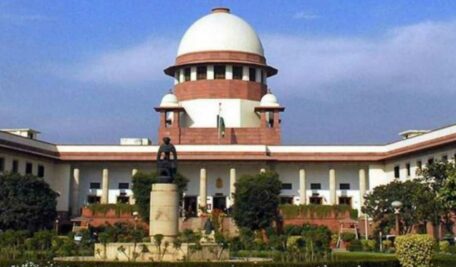


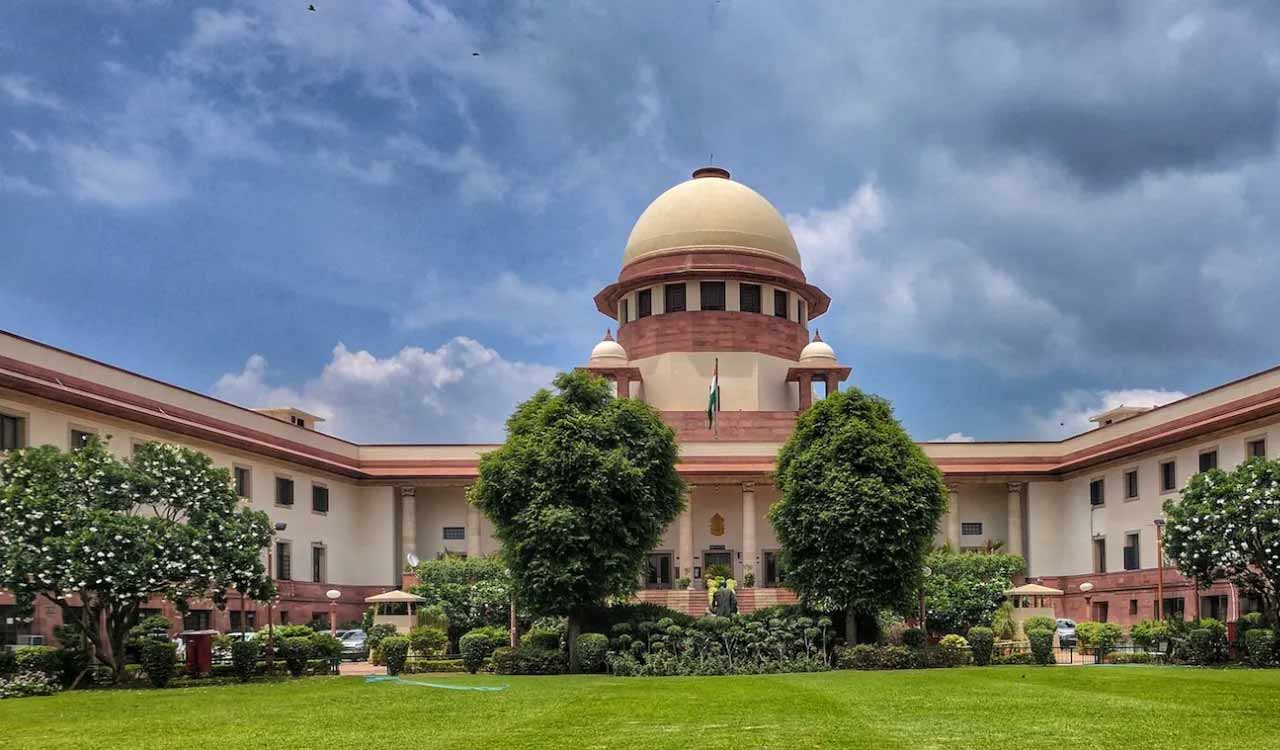
New Delhi: The Supreme Court on Thursday slammed the freebies and subsidies culture ahead of elections and said it was “high time” to revisit such policies that hamper the country’s economic development.
Observing that the ultimate financial burden of such populist measures falls squarely on the shoulders of taxpayers, a bench headed by Chief Justice Surya Kant asked, “But this money which the State says it will pay now. Who will pay for it? This is taxpayers’ money.”
The observations were made during the hearing of a petition filed by the Tamil Nadu Power Distribution Corporation Limited which proposed to give free electricity to all irrespective of consumers paying capacity.
“It is understandable when some people cannot afford, you have to provide. There are children who cannot afford education, so the state must provide. It is the state’s duty. There are children who are bright but cannot afford to go to medical colleges. The State must help them. But the persons who can enjoy, have all means available and are affluent and therefore any kind of freebie first comes to their pocket. Is it not high time for the States to revisit these policy frameworks,” the CJI asked.
The bench, also comprising justices Joymalya Bagchi and Vipul M Pancholi, warned that the indiscriminate distribution of largesse is hampering the nation’s economic development and straining state exchequers already reeling under massive revenue deficits.
“It is high time that all political stalwarts, leaders, parties, and all social engineers, they need to revisit everything. We will be hampering the development of the nation if we keep on having this largesse distribution. There has to be a balance. But how long will this continue,” the CJI asked.
The state-owned firm has challenged Rule 23 of the Electricity (Amendment) Rules, 2024, which imposes strict financial discipline on power distribution companies.
The impugned rule requires that any gap between the approved cost of supplying electricity and the tariff actually recovered from consumers must not exceed 3 percent and that such gaps must be cleared within a fixed time.
The DMK-ruled Tamil Nadu is going for assembly polls this year.
The top court, which issued notices to the Centre and others on the plea of Tamil Nadu firm, said it was quite understandable if states hand-hold the poor who are in need.
“Yes, some people cannot afford it. Some people cannot afford education or basic life. Yes it is the State’s duty to provide. But the ones who are enjoying freebies landing in their pockets first, is it not something that should be looked at,” the bench asked.
“Most of the states in the country are revenue deficit states and yet they are offering such freebies overlooking development,” it said.
Making it clear that it was not singling out Tamil Nadu, the bench said most of the states are revenue deficit states and yet they indulge in populist schemes like giving free ration, free cycles and asked was it not destroying the work culture? “We are not talking of Tamil Nadu in particular. We are talking of pan-India. What kind of culture are we developing? What is the distinction between persons who are capable of paying the electricity bill and persons who are marginalised? It is understandable that, as a welfare state, you want to provide relief to the marginalised. But without drawing any distinction between those who can afford and those who cannot afford, if you start giving, will it not amount to a sort of appeasing policy,” the CJI asked.
He said due to these populist measures, most of the state governments are performing two functions and they are funding the distribution of largesse and paying salaries and all other development work like making hospitals and good roads are put on the backburner.
‘Generate employment, make roads’
“State governments should generate employment, make roads and hospitals so that poor are saved… but in the name of welfare schemes we are giving cash, free ration, free kerosene, free cycles to all,” the CJI said.
The bench asked as to why the Tamil Nadu firm suddenly decided to loosen the purse strings after the electricity tariff was notified.
The CJI said in some states, even large landlords receive free electricity, allowing them to keep lights and machines running without cost. “If you want to have a facility, you pay for it,” he said.
Senior advocate Gopal Subramaniam, appearing for the Tamil Nadu firm, said that there must be equity in allocation of resources and that the widening gap between revenue and expenditure was a matter of governance.
Justice Joymalya Bagchi raised concerns about fiscal planning and regulatory processes, particularly in the context of electricity subsidies.
“After the tariff has been notified suddenly the state government decided to open its purse a bit more,” he said, adding, “If you really want to do all this, put it in the budgetary allocation and then justify how you will do so.” Justice Bagchi also raised concerns about governments stepping in after tariffs have been fixed by statutory regulators such as electricity commissions.
He observed that such post-tariff interventions could introduce arbitrariness into fiscal administration and undermine the role of independent regulatory bodies.
According to the petition, applying a surcharge rate would mean delayed payments to accumulated revenue gaps which would either lead to sharp tariff hikes for consumers or require significant financial support from the state government.

Related News
-

Supreme Court clarifies legal route for complaints against elected candidates
-
NEET-PG 2026: Plea seeks permanent copies of question papers and response sheets
-
SC issues notice to ECI on Rahul Gandhi-led plea against Special Intensive Revision exercise
-
Internet shutdown during October 10 CJP protest was necessary: Centre to SC