-
Generations of private savings reveal a striking disconnect between India’s accumulated real wealth and what its monetary architecture officially recognises
-
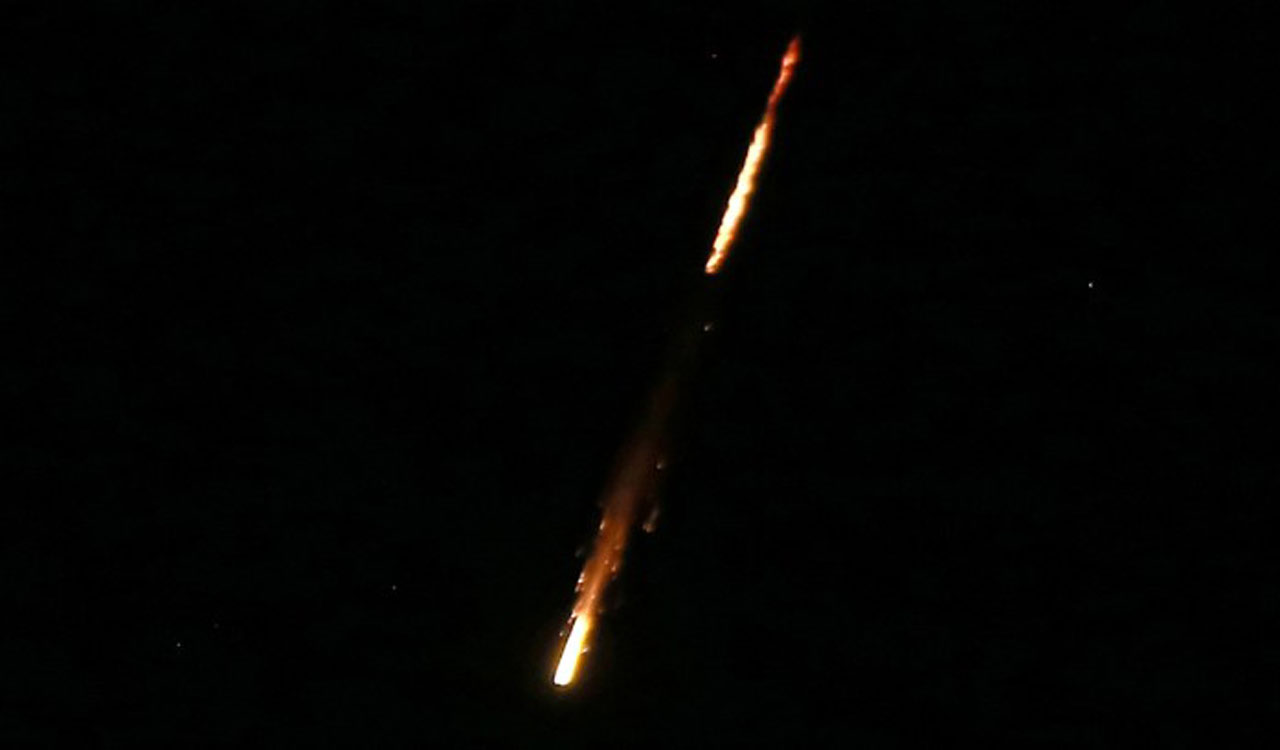
Explosions were heard in Riyadh early Saturday as residents received air defence alerts through mobile apps. Saudi Civil Defence later said the danger had passed in Riyadh and Al-Kharj. The developments follow recent drone incidents and reported strikes in Yemen.
-
President Donald Trump has signed the Sanctioning Russia and Iran Act, expanding sanctions and authorising tariffs of up to 100 per cent on countries buying Russian oil and gas. The legislation targets Russia’s energy sector, leadership and so-called shadow fleet.
-
President Donald Trump has renewed a $100,000 fee for certain H-1B visa applications and ordered federal agencies to scrutinise employers’ recent and planned layoffs. The measures also expand inter-agency checks and follow changes to the H-1B selection system.
-
-
Houthi attacks have cast doubt on the alliance’s value, with neither Islamabad nor Ankara showing any inclination to provide military assistance to Riyadh
-
Johannesburg’s waste crisis is worsening as illegal dumping, unreliable collection and shrinking landfill capacity threaten communities and the environment. More than 2,000 illegal dumping hotspots have been identified, while experts warn waste generation is outpacing infrastructure, increasing pollution, flooding and health risks
-
Nepal’s Department of Immigration is preparing a “Passport-Free Travel” system allowing foreign nationals to travel without carrying physical passports. Visitors can upload passport and visa details through an official app, simplifying domestic travel, hotel check-ins, currency exchange and visa services
-
The US sanctioned Iranian cryptocurrency exchange BitBank, its developer and three individuals, alleging they helped transfer hundreds of millions of dollars in Bitcoin to Iran’s Revolutionary Guard. Treasury said the action targeted a sanctions-evasion network linked to businessman Babak Zanjani
-
Microsoft CEO Satya Nadella said AI must remain under human control and urged global norms involving governments and technology companies. He called US-China understanding an essential starting point for AI governance, while stressing sovereignty, inclusivity, safety, trust and broad access to AI knowledge
-
External Affairs Minister S Jaishankar arrived in Thimphu on a two-day Bhutan visit to deepen bilateral ties. He reviewed cooperation in development, energy, trade, connectivity and culture, while inaugurating infrastructure projects and handing over 43 Jersey cows for Bhutan’s dairy programme
-
The International Campaign for Tibet urged US President Donald Trump to raise Tibet, seek the Panchen Lama’s release and press China on human rights during talks with Xi Jinping. It also alleged AI-assisted surveillance targeting Tibetan organisations and communities
-
Pakistan and China have operationalised a joint commission to manage their common border, focusing on security and trade connectivity. India rejected the mechanism, saying it has no legal basis to decide arrangements involving Indian territory under illegal occupation, including Shaksgam Valley
-
Russia’s parliamentary election begins Friday, with United Russia and nine other parties supporting President Vladimir Putin’s policies. The only registered party opposing the Ukraine war, Yabloko, was removed from the ballot, while electronic voting and regional elections will also take place
-
More than 125,000 Yemenis have fled renewed Houthi fighting along the Red Sea coast, facing hunger, inadequate shelter and limited healthcare. The escalation, linked to the wider Iran war, has intensified Yemen’s already severe humanitarian crisis, aid agencies said
-
A US House-passed bill could allow President Donald Trump to impose tariffs of up to 100 per cent on India over Russian oil purchases, GTRI said. It warned such measures could threaten Indian exports, energy security and trade relations with Washington
-
A six-storey residential building in western Gaza City collapsed after being previously damaged by Israeli bombardment, killing 21 people, including 11 children and six women. More than 25 were injured, while rescue teams saved 45 people during operations.
-
US President Donald Trump praised Prime Minister Narendra Modi’s efforts against illicit opium cultivation and said he looked forward to continued India-US cooperation on drug policy. India was listed among major drug transit or producing countries, but not among those failing demonstrably.
-
Witnesses told a US congressional panel that China was using bot networks, state media and US-based organisations to influence opposition to AI infrastructure. Lawmakers examined alleged foreign influence operations while debating transparency, free expression and America's technology competition with China
-
A Russian drone struck a passenger bus in southern Ukraine, killing five people and injuring at least seven, Ukrainian officials said. President Volodymyr Zelenskyy also reported strikes on trains and rail infrastructure as Kyiv sought replacement locomotives from international partners
-
New Zealand’s Parliament passed legislation needed for the free trade agreement with India by a 93-29 vote. The pact will make 57 per cent of New Zealand exports to India duty-free initially, with tariffs removed or reduced on 95 per cent eventually.
-
US Attorney General Todd Blanche said the United States could not afford to lose the AI race to China and rejected calls for Justice Department regulation. He said authorities would prosecute individuals and companies involved in alleged technology theft.
-
The US military campaign against Iran has cost the Pentagon about $38 billion through August 1, according to the Congressional Budget Office. The agency warned of depleted missile-defence stocks, higher energy prices and continued costs of $2-3 billion monthly.
-
The US and China are intensifying their race to develop powerful AI models as concerns over security, governance and technology transfer grow. Chinese companies are rapidly narrowing the gap with American rivals despite US restrictions on advanced chips and technology