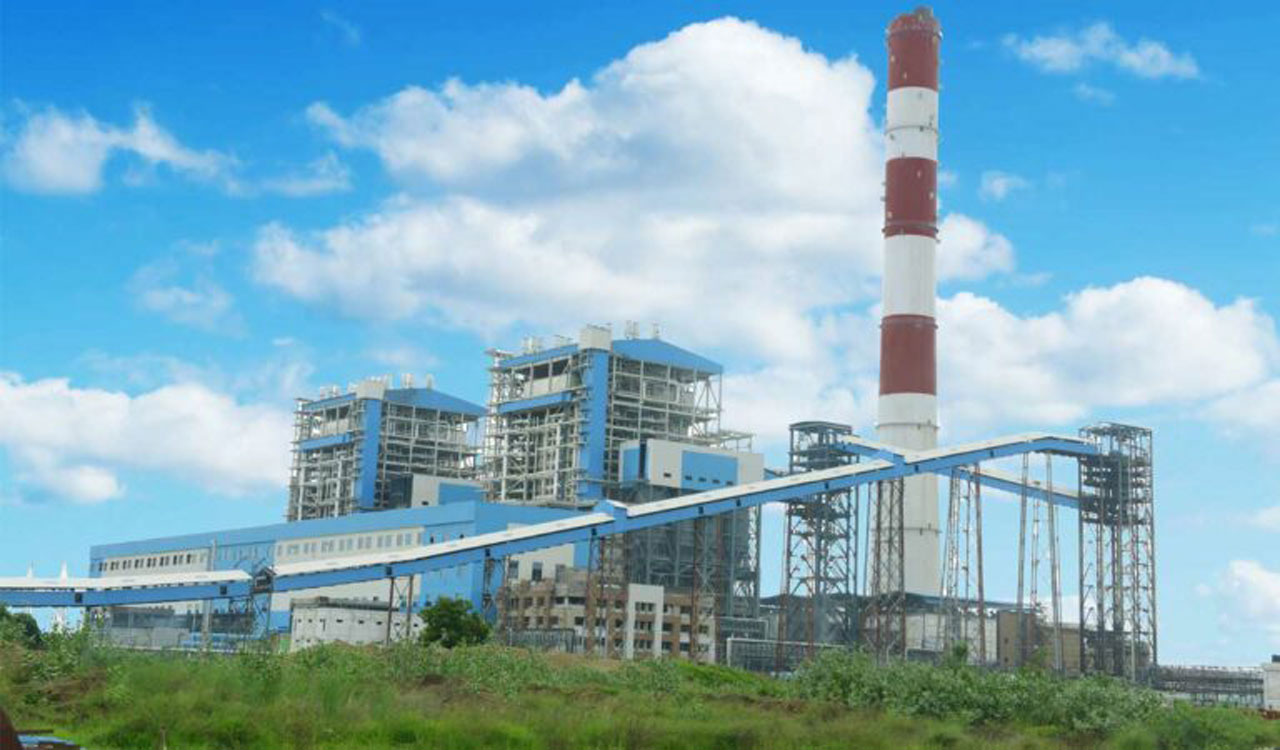
Yadadri’s fifth unit marks milestone in Telangana’s power security
Telangana’s Yadadri Thermal Power Plant synchronised its fifth 800 MW unit, advancing towards full 4,000 MW capacity. The project aims to strengthen power security, but coal supply concerns remain. Congress has questioned its costs, location and procurement arrangements.
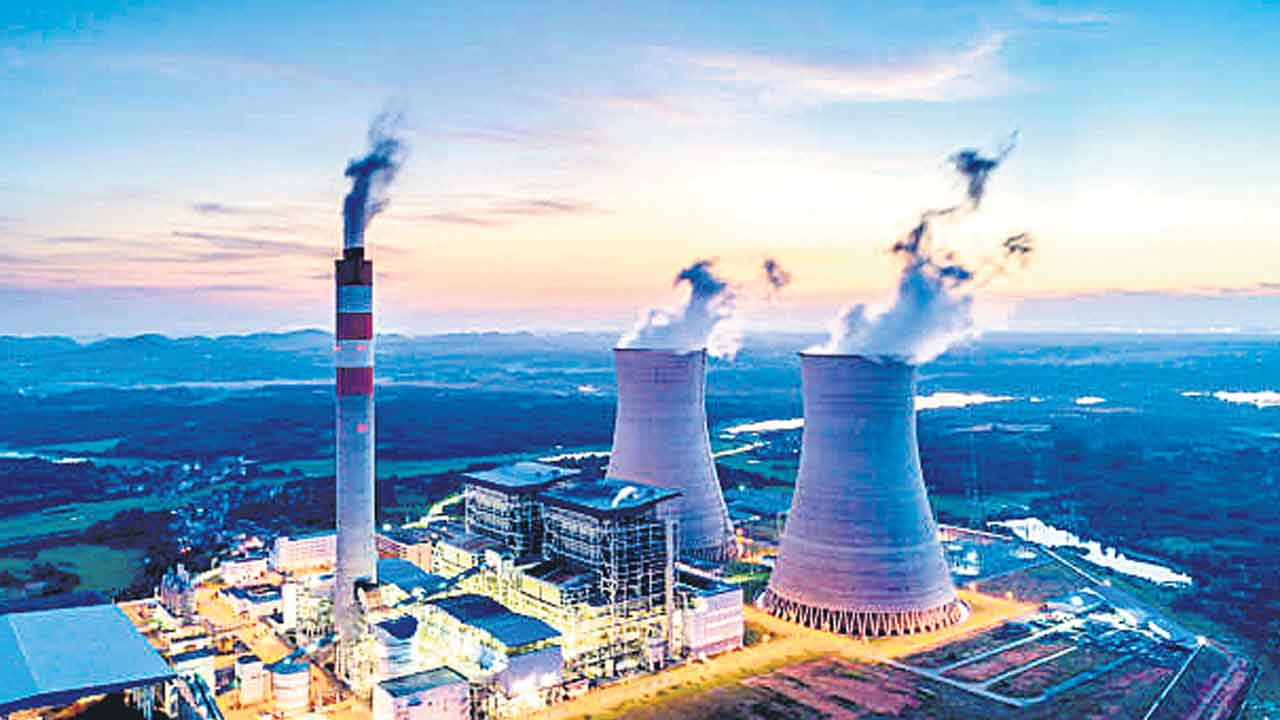


Hyderabad: The synchronisation of the fifth 800 MW unit of the Yadadri Thermal Power Plant with the grid marked a major milestone in Telangana’s quest for power security, vindicating the long-term generation strategy initiated by the K Chandrashekhar Rao government. With all five units of the 4,000 MW project advancing towards full-scale operation by the end of November, the State is poised to gain a substantial source of dependable power to meet growing demand.
Conceived as a major addition to Telangana’s generation capacity, Yadadri was designed to provide reliable baseload power, reduce dependence on external sources and strengthen the grid during periods of peak demand. Its importance is particularly evident as the State faces rising electricity requirements and seeks to ensure uninterrupted supply to agriculture, industry and households.
Strategic investment in power generation
The project was entrusted to BHEL in June 2015, with the original order valued at about Rs 17,950 crore. A revised letter of intent was issued in October 2017, taking the main plant order to approximately Rs 20,400 crore. Execution formally commenced on October 23, 2017.
Located at Damaracherla in Nalgonda district, the plant comprises five units of 800 MW each. Its scale reflects the previous BRS government’s emphasis on building generation capacity to meet Telangana’s long-term needs rather than relying solely on power purchases from outside the State.
Supercritical technology matters
Yadadri was designed as a supercritical thermal power station, using higher steam pressure and temperature than conventional subcritical plants. This improves the efficiency of converting coal into electricity, potentially reducing coal consumption per unit of power generated and lowering carbon dioxide emissions compared with older technology, in line with international standards.
The project was intended to combine large-scale generation with improved efficiency over the plant’s operating life. Once all units are operating reliably, the station can provide a substantial and steady supply to support the State’s power requirements.
G-9 coal key to sustained generation
The plant’s boilers were designed for G-9 grade coal, with a gross calorific value of about 4,601–4,900 kcal per kg. The required grade is important for achieving the intended combustion performance and efficiency while managing ash handling and maintenance requirements.
The previous BRS government had explored arrangements involving Singareni Collieries and MSTC, a Central public-sector enterprise, to facilitate supplies meeting the plant’s requirements, including through imports. However, after the Congress assumed office, Singareni Collieries recently informed Telangana GENCO that it would not be able to produce sufficient quantities of the specified grade.
Coal India has now agreed in principle to supply 50 lakh tonnes annually from Mahanadi Coalfields in Odisha. The source mines and commencement date are yet to be finalised, and a formal agreement is pending. Limited quantities are currently being supplied from Singareni’s Naini mine in Odisha. With coal stocks reportedly sufficient for only five days, finalising the long-term supply arrangement is essential to sustaining generation.
Congress allegations and the project’s rationale
The ruling Congress has questioned the project’s cost, location and coal procurement arrangements, alleging substantial cost escalation and avoidable transportation expenditure. It has also raised concerns over contracts and sub-contracting.
The rationale for locating the plant at Damaracherla was to strengthen supply to southern Telangana and promote a more balanced distribution of generation capacity. The adoption of supercritical technology and planning for coal with the required calorific value were integral to the plant’s design. Further, the plant’s location was strategic because it is close to ports in neighbouring Andhra Pradesh, facilitating foreign coal imports in an emergency.
The project’s original BHEL order and broader cost estimates relate to different stages and components of expenditure.
Fifth unit adds to the State’s power security
The synchronisation of Unit-5 on October 20, 2026, advanced the project towards making its full 4,000 MW capacity available. The other units have progressed through commissioning milestones, with the third unit declaring commercial operation in May 2026 after completing its continuous-run test.
Yadadri builds on the expansion of Telangana’s installed power capacity from 7,778 MW in 2014 to nearly 20,000 MW over the following decade, as cited by the previous government. Its full operation will give the State a significant additional source of power at a time when reliable electricity is central to agricultural activity, industrial growth and domestic needs.
Experts asserted that once fully operational, Yadadri will stand as a major component of Telangana’s energy generation infrastructure, producing dependable power within the State and strengthening its ability to meet demand reliably. However, the immediate priority is to secure dependable coal supplies and stabilise all five units.

Related News