
Zeenath Khan’s debut novel explores Hyderabad’s 1948 integration with India
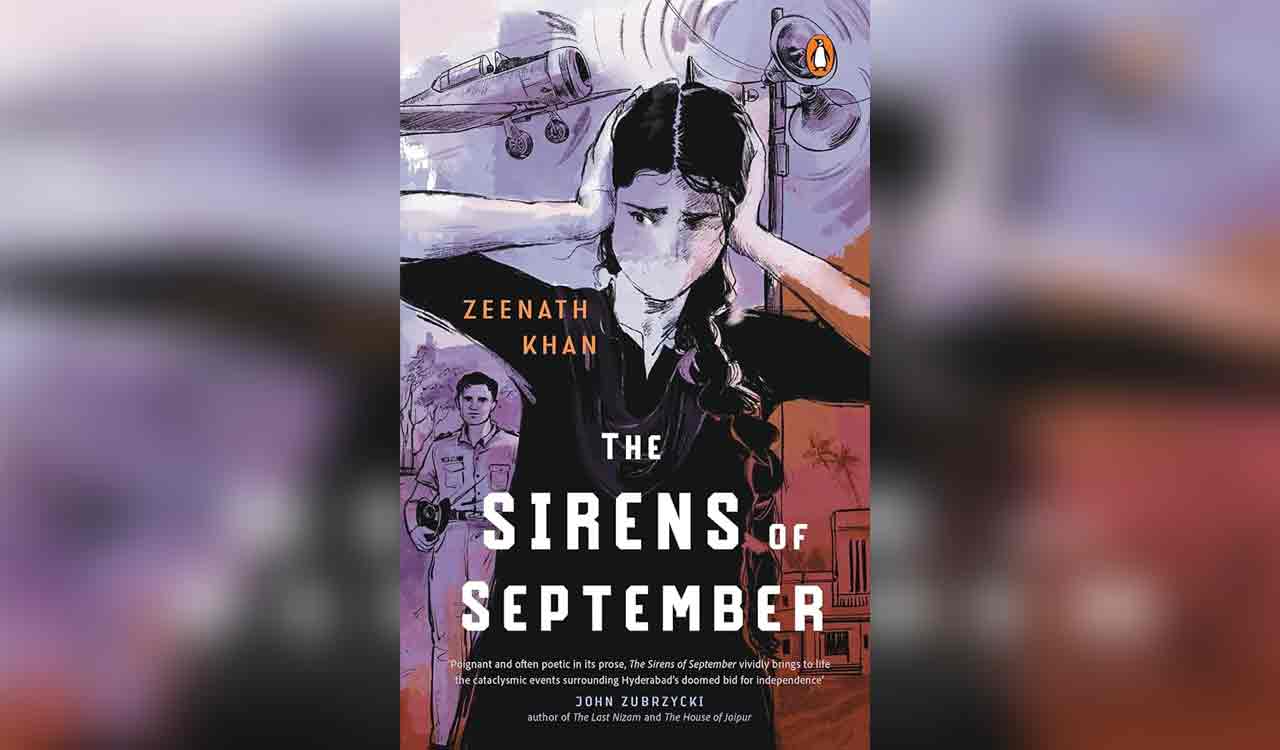
Zeenath Khan's debut novel The Sirens of September explores Hyderabad's 1948 integration with India through real and imagined characters. Set against a fading princely world, the historical fiction follows teenage protagonist Farishteh amid political intrigue, espionage and upheaval


New Delhi: It was on a summer evening in 2017, during a walk along a sea-facing boulevard in Mumbai, that Zeenath Khan came up with the idea for a novel with India’s annexation of Hyderabad as its backdrop.
The entire episode had “all the ingredients for an exciting novel — lavish settings, wayward characters, intrigue and high stakes”, says Khan, who divides her time between Hyderabad and New York City.
Thus, her debut novel, The Sirens of September, was born.
Published by Penguin, The Sirens of September is a historical novel that tells the tale of India’s 1948 takeover of Hyderabad through real and imagined characters.
Khan says that while books and cinema have often depicted India’s Partition, the simultaneous drama that played out in the south has largely been relegated to academic papers.
The Sirens of September is a story about a lost world, not unlike the American South depicted in Gone with the Wind and the Sicily of The Leopard, she says.
“It tells the tale of princely Hyderabad’s collapse through real and imagined characters. Throughout my writing process, I tried to instil a sense of nostalgia in my readers for a time and place that we cannot regain. ‘The Sirens of September’ narrates the events leading up to Operation Polo from the perspective of the losing side,” Khan told PTI.
Operation Polo was the code name for the Indian military operation launched on September 13, 1948, that led to the integration of the princely state of Hyderabad with India.
“On a summer evening in 2017, while I was walking along a sea-facing boulevard in Mumbai, it occurred to me that the backdrop of India’s invasion of Hyderabad had all the ingredients for an exciting novel — lavish settings, wayward characters, intrigue and high stakes,” Khan says.
Protagonist Farishteh is a 15-year-old aristocratic teenager who navigates political intrigue, international espionage and a long-distance courtship with an air force cadet while her gilded world tumbles around her.
“I conjured the character of Farishteh even before I had figured out my novel’s plot. My protagonist was going to be an aristocratic teenage girl who was idealistic, clever and brave,” the author says.
“Her personality was a foil to the adults in the novel whose character attributes ranked high on the dark triad,” she adds.
According to Khan, writing a historical fiction novel from a female point of view was challenging, as a young girl in 1948 had limited agency.
“Yet if I’d written it from the point of view of the middle-aged men in charge, it would have been rather depressing as, whether or not they admitted it to themselves, they helmed a sinking ship,” she says.
For her research, Khan scoured all the newspapers she could find from 1946 to 1948.
“Pathe videos on YouTube were a great help. I read books and watched movies that depicted life in the 1940s to describe modes of transport, communication and fashion. Biographies, memoirs and first-person narratives, including those from family members, were invaluable,” she says.

