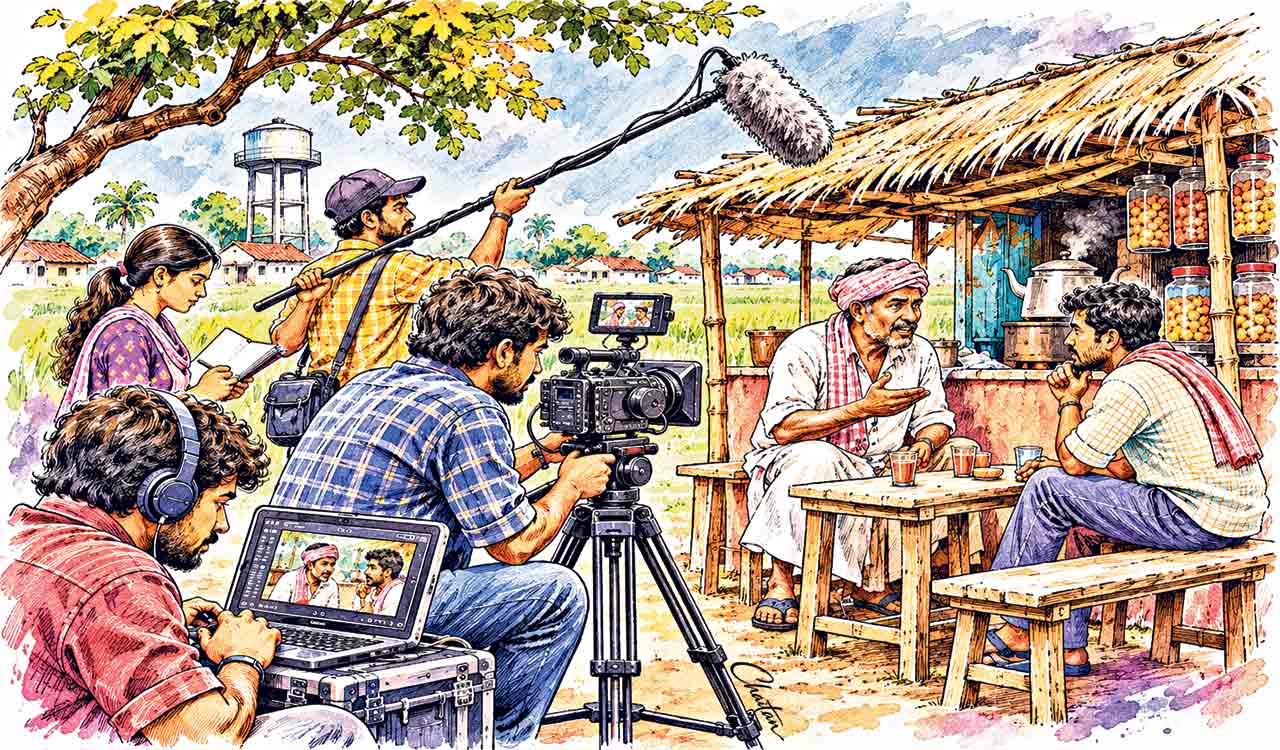
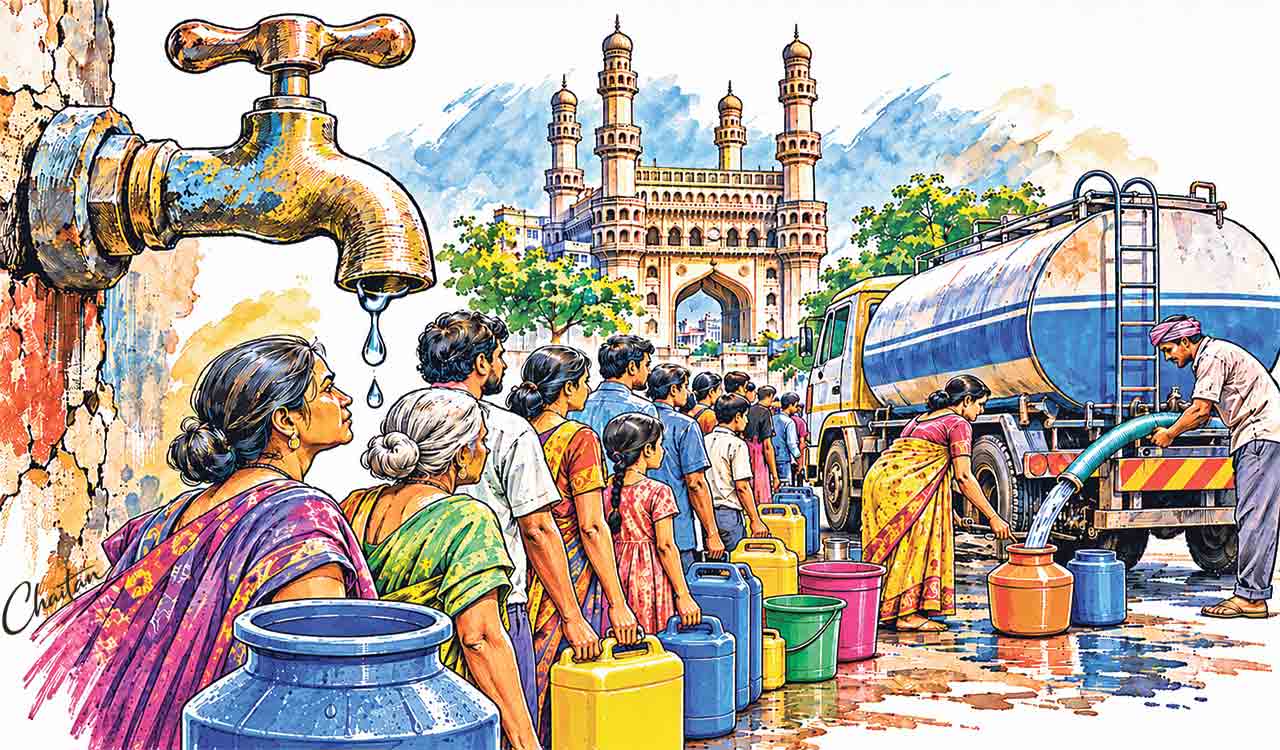
Opinion: Inflation is not equal — why India needs a Distributional Inflation Index
One inflation rate cannot tell the whole story. India must look beyond headline CPI and introduce a Distributional Inflation Index to measure not just how much prices rise, but who bears the greatest burden


By Dr K S Sujit
India’s inflation debate often begins and ends with a single number: the Consumer Price Index (CPI). When headline inflation rises, concerns centre on monetary tightening; when it falls, policymakers take comfort in the belief that price stability is returning. Yet an important question remains largely outside this debate: whose cost of living is actually rising, and by how much?
Also Read
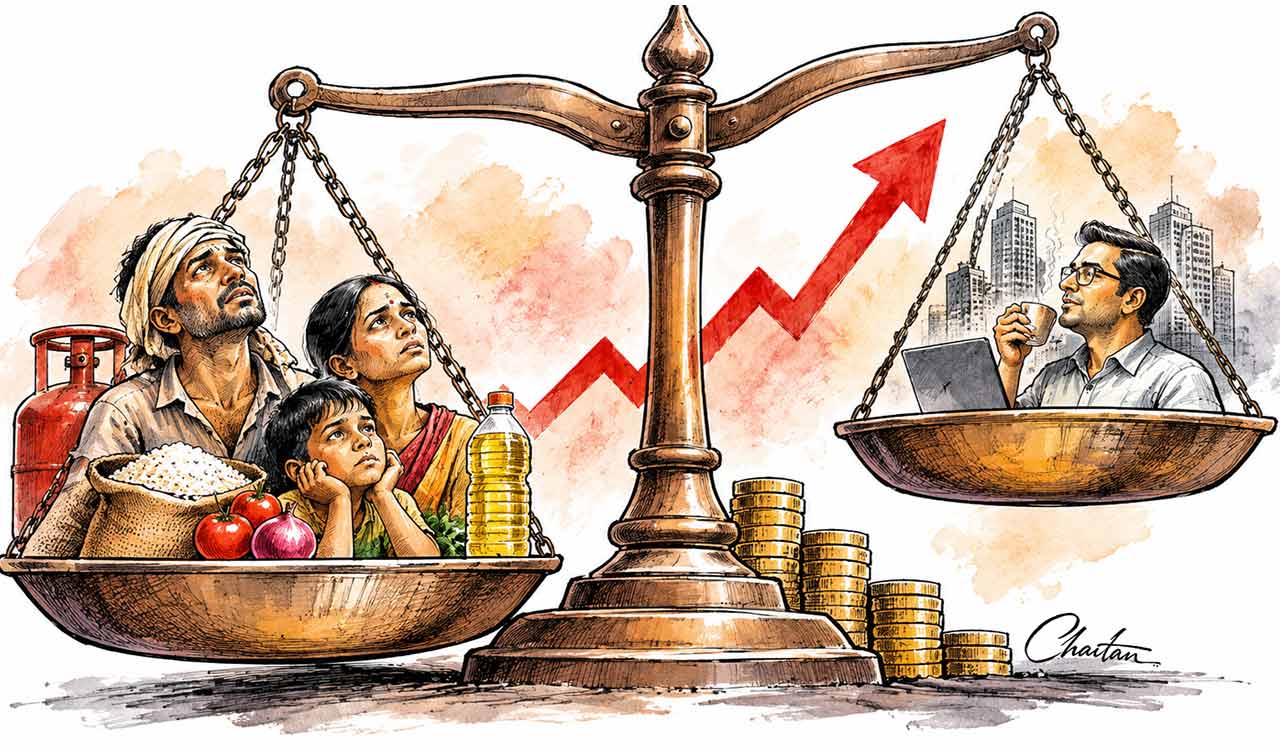
Inflation is measured as the average change in the prices of a representative basket of goods and services. However, households do not consume the same basket, nor do they have the same capacity to absorb price increases. A rise in the prices of essential food items has very different consequences for a low-income household that spends nearly half its consumption budget on food than for an affluent household with a substantially smaller food expenditure share.
This distinction deserves greater attention in India’s inflation policy.
The latest available figures illustrate the problem. In October 2026, India’s headline retail inflation stood at 6.09 per cent while food inflation increased more sharply to 8.94 per cent. More significantly, rural inflation stood at 6.63 per cent, compared with 5.41 per cent in urban areas. Rural food inflation was 9.09 per cent, against 8.68 per cent in urban India. These differences suggest that inflation is already experienced differently across geographical and consumption categories.
The distributional dimension becomes clearer when these figures are considered alongside the Household Consumption Expenditure Survey (HCES) 2023–24. Food accounted for approximately 47.04 per cent of rural consumption expenditure and 39.68 per cent of urban expenditure. For households with limited disposable resources, even a modest increase in food prices can substantially reduce the resources available for education, healthcare, transport and other essential needs.
The differences in consumption capacity are equally striking. Average monthly per capita consumption expenditure among the bottom 5 per cent of rural households was Rs 1,677 in 2023–24, compared with Rs 10,137 among the top 5 per cent. In urban India, the corresponding figures were Rs 2,376 and Rs 20,310. The same increase in the price of an essential commodity cannot reasonably be assumed to impose an equivalent welfare burden on these households.
The problem, therefore, is not simply how much prices increase, but how that increase is distributed across households.
Beyond the average: A case for a Distributional Inflation Index
India has made important progress in modernising its inflation measurement framework. The revised Consumer Price Index, introduced in February 2026 with 2024 as its base year, uses expenditure weights derived from HCES 2023–24. It has expanded coverage of goods and services and improved the representation of contemporary consumption patterns. However, updating the representative consumption basket does not necessarily capture the differences in inflation experienced by households at different levels of economic well-being.
The proposed index would complement, not replace, headline CPI, giving policymakers a clearer picture of how price movements shape household consumption, savings and inflation expectations
It may be time to consider a complementary measure such as a Distributional Inflation Index (DII).
The proposed index would estimate inflation separately for different household consumption-expenditure groups rather than relying exclusively on a single representative consumption basket. Initially, households could be classified into expenditure deciles, with separate estimates for rural and urban areas. A simpler presentation could report inflation for the bottom 20 per cent, middle 60 per cent and top 20 per cent of households, while retaining more detailed decile estimates for analysis.
Each group would have its own consumption weights, reflecting the proportion of expenditure allocated to food, housing, transport, healthcare, education and other goods and services. These weights would be combined with the corresponding price movements to calculate group-specific inflation.
For example, if food accounts for a substantially larger share of expenditure among lower-consumption households, an increase in food prices would translate into a greater inflation burden for that group than for households with a more diversified consumption basket. Similarly, rising housing, education or healthcare costs could exert greater pressure on particular middle- and higher-consumption groups.
The proposal is not to replace the existing CPI or introduce another competing inflation target. Rather, the Ministry of Statistics and Programme Implementation (MoSPI) could develop the DII as a supplementary statistical measure. The exercise need not begin from scratch. HCES already provides a statistical foundation through household consumption data and expenditure fractiles. Combining these expenditure patterns with CPI price information could make the proposed index operationally feasible.
An important methodological distinction, however, must be recognised. HCES measures household consumption expenditure rather than comprehensive household income. Therefore, expenditure deciles would initially serve as a practical proxy for economic position. Better integration of household income information into future statistical exercises could subsequently enable more precise income-based estimates.
Moreover, differences in expenditure weights alone may not capture the full variation in inflation experiences. Households may purchase different qualities of the same product, shop in different markets or face different regional prices. The methodology should, therefore, progressively incorporate more granular regional and market-level price information. This would strengthen the reliability of group-specific inflation estimates.
Distribution Matters
Such an index would offer more than an alternative statistical presentation. It could improve the quality of economic policymaking.
For the Reserve Bank of India (RBI), the headline CPI must remain the principal reference for the existing inflation-targeting framework. The proposed DII need not replace it or create multiple inflation targets. Instead, it could provide supplementary information to help policymakers better understand the distributional consequences of price movements and assess how inflation affects consumption, savings and household expectations.
This distinction is important because monetary policy operates largely through aggregate demand, credit conditions and inflation expectations. It cannot directly address a temporary shortage of onions, an adverse harvest or disruptions in agricultural supply chains. For context, onion prices alone experienced an inflation rate of 116.22 per cent in October 2026. Higher interest rates cannot compensate a low-income household for such a disproportionate increase in the cost of essential food.
A distribution-sensitive approach would help policymakers distinguish between broad-based demand pressures and price increases concentrated in essential commodities. The latter may require more targeted responses, including better agricultural supply-chain management, improved storage facilities, timely market interventions and appropriately designed social protection measures.
Fiscal policy could also benefit. Government transfers, food subsidies, wage revisions and social protection programmes could be assessed against the inflation experienced by their intended beneficiaries. A distributional inflation measure could also inform discussions on dearness allowance, pension adjustments and the adequacy of welfare transfers.
Beyond price movements, policymakers should examine their consequences for household welfare. When food prices rise, lower-income households may reduce dietary diversity, substitute cheaper food items or cut expenditure on other essentials. A household may, therefore, maintain its consumption budget while experiencing a deterioration in nutritional quality and living standards. This suggests that inflation measurement should be complemented by indicators of essential consumption affordability and real purchasing power.
From Price Stability to Household Welfare
There is a broader economic argument here. Inflation is not merely a monetary phenomenon; it is also a question of purchasing power and economic welfare. Two households facing the same national inflation rate may experience very different reductions in their real standard of living.
International research has already examined differences in inflation across household income groups, including work by the US Bureau of Labor Statistics. India has an opportunity to develop its own framework using its extensive household consumption surveys and expanding price collection system.
The framework should be more sensitive to the distribution of economic costs.
Price stability is a macroeconomic achievement. But equitable protection of purchasing power is a broader economic and social objective. Measuring the first without adequately understanding the second leaves an important gap in India’s policy framework.
(The author is Professor, School of Business and Management Bangalore Central Campus, CHRIST [Deemed to be University])

Related News