ZKTOR Signals India’s Bid to Shape South Asia’s Next Digital Order
Built around privacy, data safety, local languages and district-level realities, Softa’s ZKTOR is emerging as an Indian technology platform with regional ambition and grassroots economic depth.


New Delhi: The rise of ZKTOR across South Asia is not only a social media story; it is also a story of India’s growing confidence as a builder of digital infrastructure for the region. Developed by Softa Technologies, ZKTOR is being positioned as an all-in-one Indian social media platform designed for an era defined by artificial intelligence, deepfakes, cyber insecurity and rising distrust of platforms built around behaviour tracking and data extraction.
Its architecture is central to that claim. ZKTOR is built around privacy and data safety by design, Zero Knowledge Server Architecture, No URL Media Architecture, no behaviour tracking and default multi-layer encryption. In a region with large rural populations, uneven digital literacy, linguistic diversity and strong community-linked reputations, such safeguards are not merely technical choices; they are conditions for wider social acceptance.
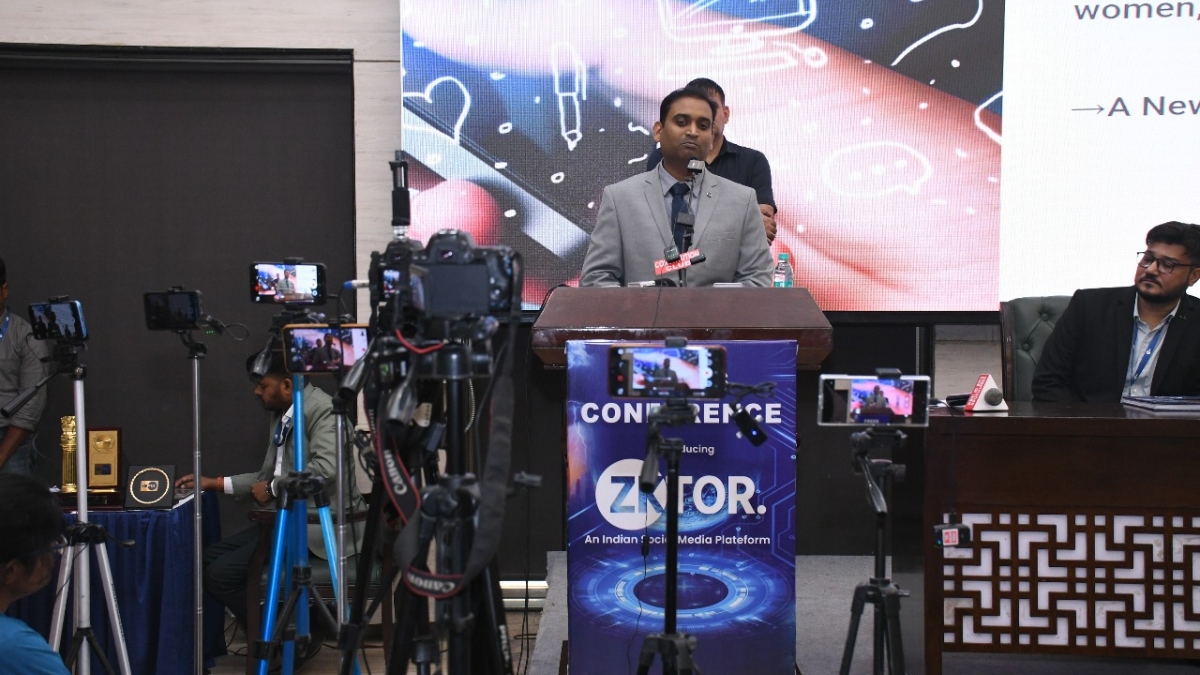
The platform’s early momentum suggests that this trust-first model has regional relevance. Less than six months after Softa CEO Sunil Kumar Singh introduced ZKTOR at New Delhi’s Constitution Club of India, it expanded from India into Nepal, Sri Lanka and Bangladesh, crossing half a million beta users, largely from Gen Z. Its strong acceptance among young users and women has encouraged Softa to announce beta rollout plans for Bhutan, Pakistan and Maldives, turning ZKTOR into a broader South Asian test of Indian platform capability.
What separates ZKTOR from conventional social media is its attempt to align digital safety with local economic participation. Its wider ecosystem includes Subkuz for hyperlocal news and diaspora, Ezowm for hyperlocal commerce, Hola AI as the intelligence and safety layer, and ZHAN as a transparent hyperlocal advertising network. ZHAN targets an existing but fragmented local ad economy still driven by newspapers, radio, agencies and district networks, especially in smaller cities and rural belts where language, trust and familiarity matter more than generic digital reach.
Singh’s own background gives the project a distinct ideological frame. Born in a farmer family in rural Bihar and shaped by more than two decades in Finland’s disciplined, restrained and rights-conscious design environment, he argues that user-protection technologies were never missing; the will to make them default was. For him, ZKTOR is an ethical response to the “I accept” model, where rural and digitally vulnerable users are pushed into complex terms, privacy policies and data clauses they often do not understand.
Several prominent South Asian newspapers have reported that Singh refused foreign VC funding and Finland/EU grants to keep ZKTOR free from external, political or institutional pressure. Softa also claims an ISRO-like low-cost model, running ZKTOR 7–8 times cheaper than big-tech platforms, reinforcing a wider Indian technology message: serious platforms can be built with discipline, restraint and national intent.
Singh’s larger vision is district-level digital infrastructure under one national brand with local digital identities, connecting social media, commerce, creators, entertainment, news, governance, civil society, education, police, judiciary and citizens. Softa believes this can create lakhs of direct jobs for local partners, campaign managers and digital operators, empower women-led and home-based businesses, reduce youth migration, digitise India’s vast unstructured rural economy, unlock GDP value and serve Prime Minister Narendra Modi’s Vision 2047 as a technology mission dedicated to India. ZKTOR’s South Asian expansion therefore carries a wider signal: India is not only consuming global platforms, but attempting to export a digital model rooted in trust, privacy, local markets and grassroots participation.

Related News