Back from brink: India’s vultures stage comeback as captive-breeding, release efforts gather pace
Vultures are making a comeback in India after toxic drug bans, with 700 birds bred in captivity and phased releases in tiger reserves. BNHS-led efforts show survival success, natural breeding, and dispersal, though safe food sources remain critical for recovery
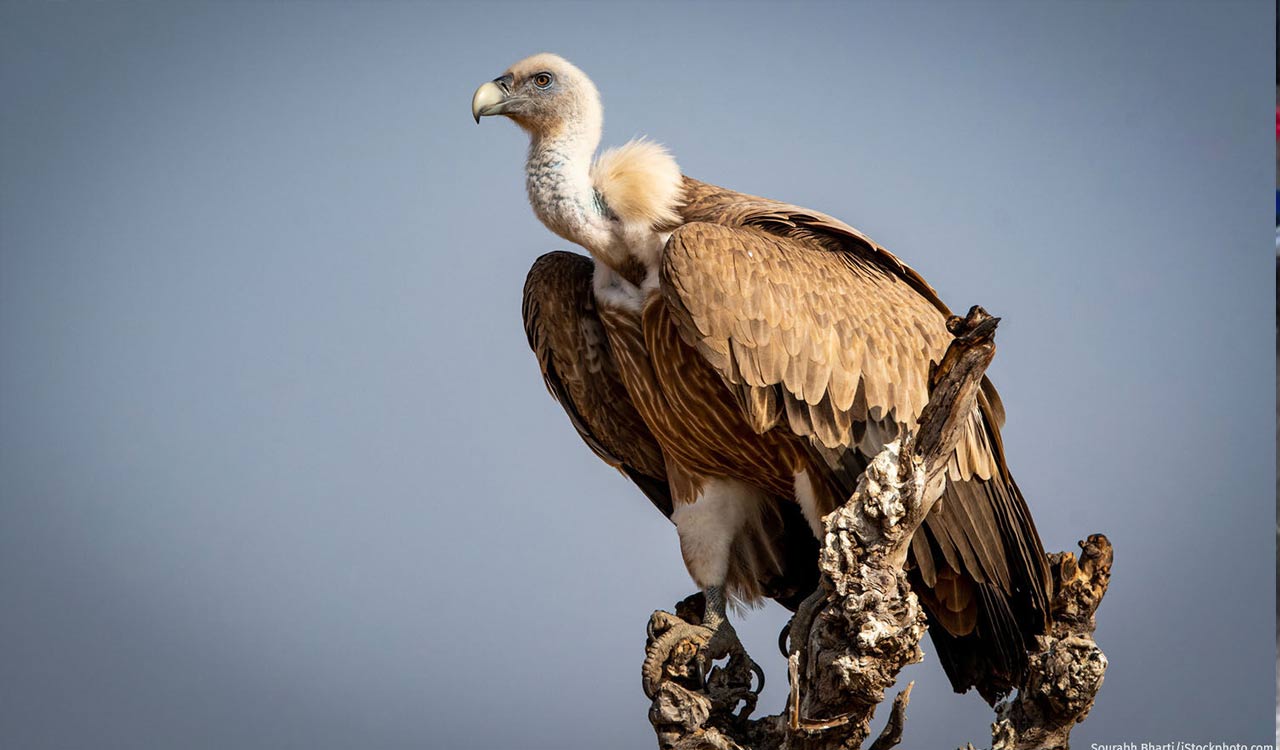


Mumbai: Two decades after toxic veterinary drugs cleared India’s skies of its ultimate scavengers, vultures are making a comeback with more than 700 birds bred in captivity and phased wild-release programmes turning protected tiger reserves into their new safe havens.
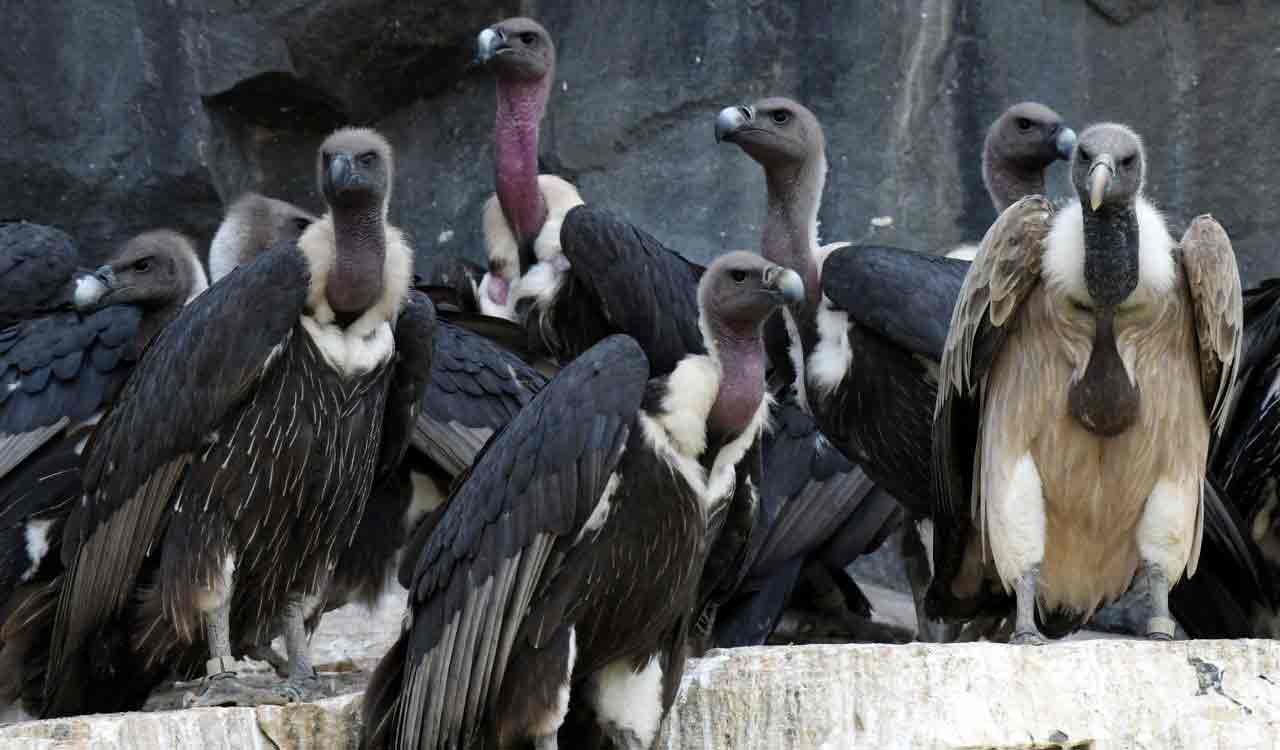
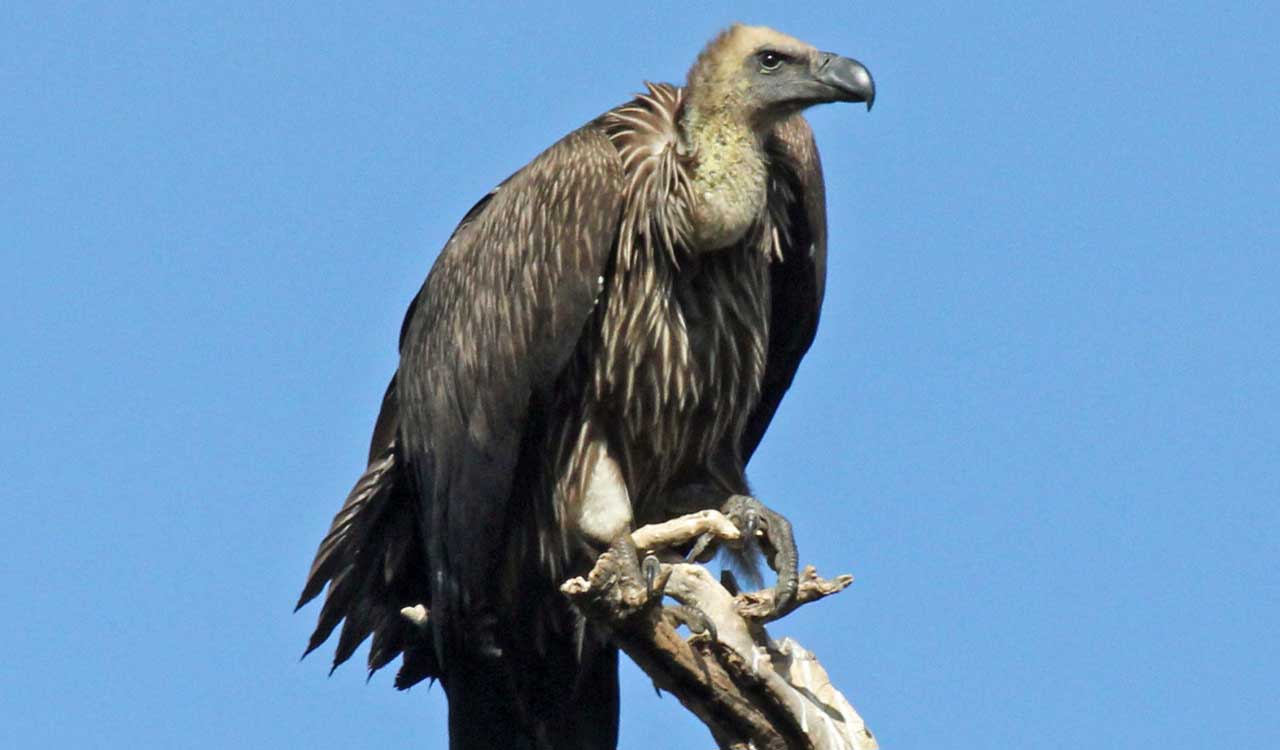
Led by the Bombay Natural History Society (BNHS) and state governments, the recovery initiative for the critically endangered white-rumped, long-billed, and slender-billed vulture species has entered a vital new phase with experimental releases across Haryana, West Bengal, Maharashtra, and Assam, BNHS director Kishor Rithe said.
Moreover, monitoring through GPS and GSM transmitters has already shown encouraging survival and dispersal patterns, with a long-billed vulture released from Pench travelling 750 km to Nashik, Maharashtra, in 17 days.
Rithe, however, noted that long-term success would depend on the availability of safe food sources beyond protected areas, such as sanctuaries, national parks and conservation reserves.
“The breeding and release programme can succeed only when a safe environment is created for vultures beyond protected areas. Eliminating harmful NSAIDs and ensuring safe food sources remain critical for the recovery of these species,” he said.
The BNHS first documented the sharp decline in vulture populations across the Indian subcontinent in 1999, and subsequent research established that diclofenac, a veterinary non-steroidal anti-inflammatory drug (NSAID), was responsible for mass mortality among the birds.
This finding prompted a ban on the drug in 2006, followed by subsequent prohibitions on other toxic variants like ketoprofen, aceclofenac, and nimesulide, Rithe said.
To prevent total extinction, the BNHS and state forest departments, with the support of the Royal Society for the Protection of Birds (RSPB), established four Jatayu Conservation Breeding Centres at Pinjore (Haryana), Rajabhatkhawa (West Bengal), Rani (Assam), and Bhopal (Madhya Pradesh).
These facilities currently house 740 vultures. The programme has supplied 80 birds and released 110 vultures into the wild as part of reintroduction efforts.
The reintroduction efforts have already shown remarkable milestones, such as captive-bred white-rumped vultures released in Haryana in 2020 have begun breeding naturally in the wild. Meanwhile, 31 birds released from West Bengal have dispersed safely across India, Nepal, and Bhutan with zero reported NSAID-linked mortalities.
Maharashtra has emerged as a major centre for vulture reintroduction, with releases taking place in Pench, Tadoba-Andhari and Melghat Tiger Reserves.
Recent conservation focus has shifted heavily toward secure tiger reserves, such as Pench, Tadoba-Andhari, and Melghat, where large landscapes offer abundant natural carrion free from domestic cattle drugs.
As many as 20 vultures were transferred to Maharashtra from Haryana in 2024 and another 34 birds in 2025 for phased release programmes, while Assam initiated its first soft-release of slender-billed vultures in the Kaziranga landscape this March.
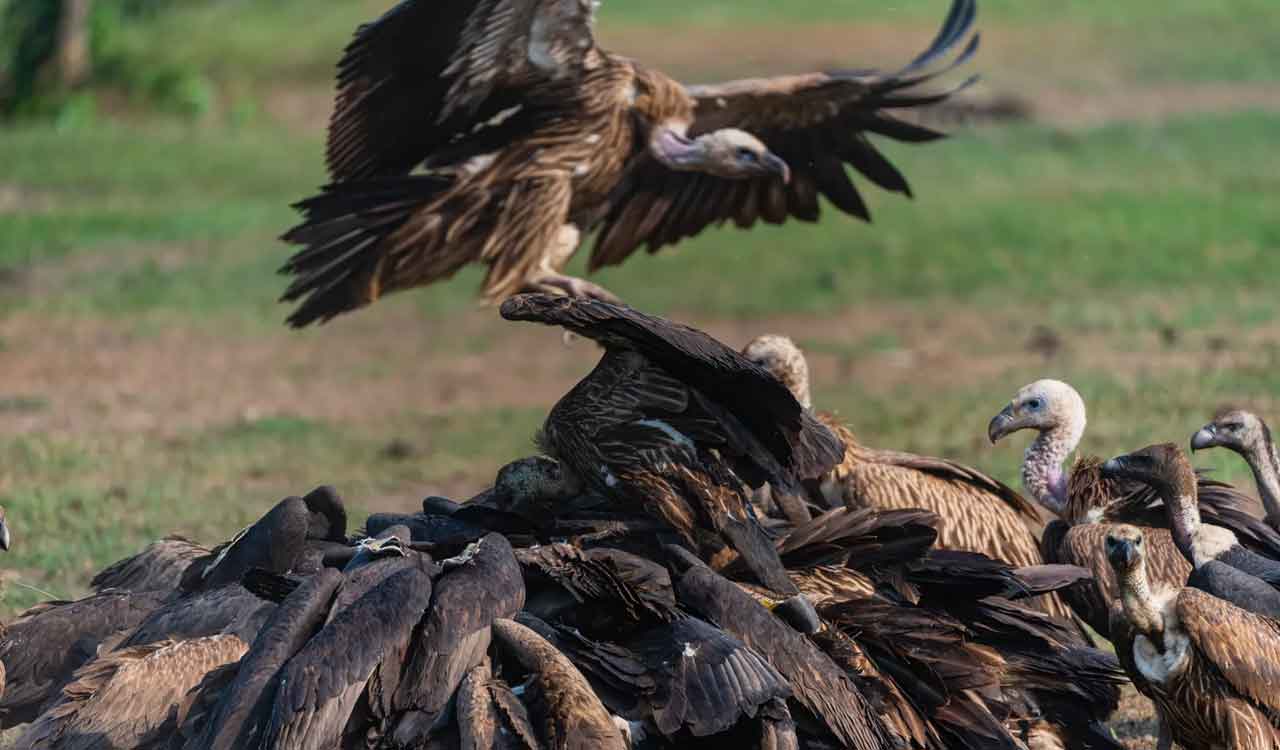
Conservationists said tiger reserves have become ideal release sites because large protected landscapes are largely free from harmful veterinary drugs and provide abundant natural food sources and wild carrion of deer species like chital and sambar.
Citizen-science surveys cited by BNHS have recorded increasing vulture population trends in several protected areas and tiger reserves, indicating that conservation measures and improved habitat protection are beginning to reverse decades of decline.
The programme is being implemented with support from the Ministry of Environment, Forest and Climate Change, the Central Zoo Authority, state forest departments and several national and international conservation organisations.

Related News
-

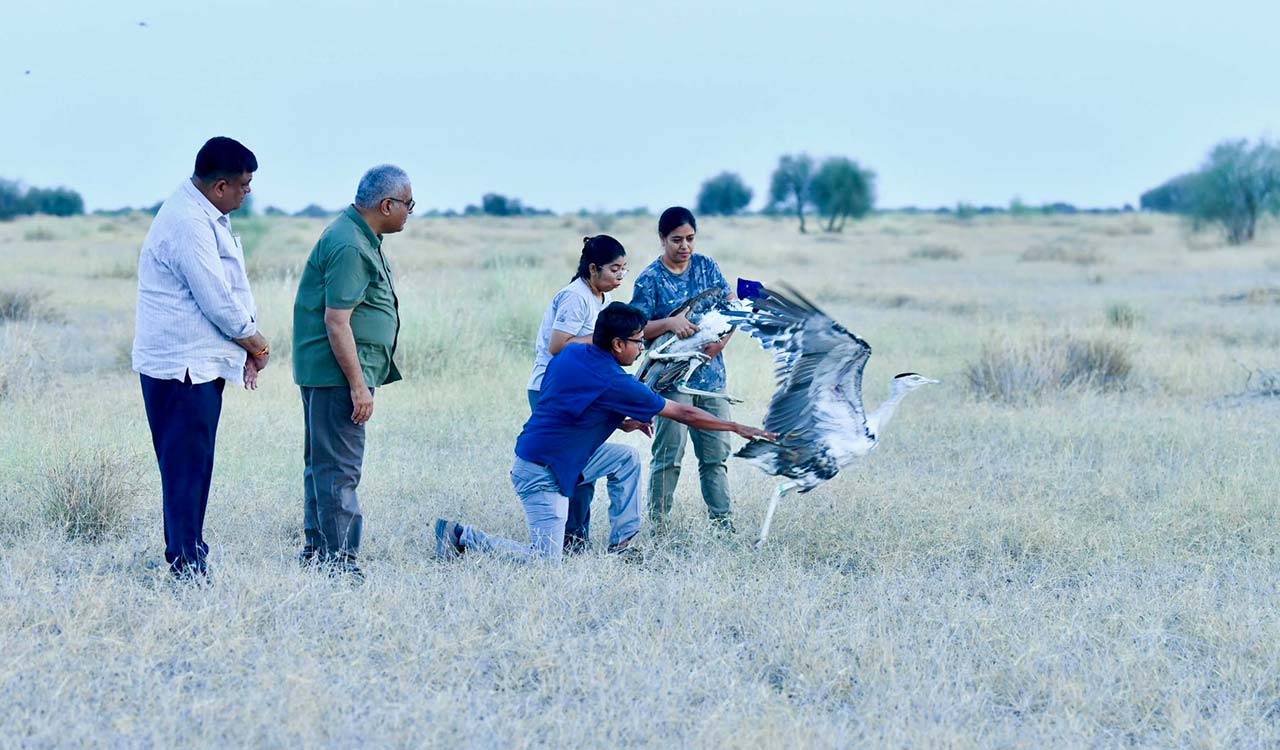
Rajasthan: Union Minister Bhupender Yadav releases two rare Great Indian Bustards in Jaisalmer
-
Gaushalas shun toxic veterinary drugs, help revive critically endangered vultures: BNHS
-
15 long-billed vultures tagged in Maharashtra’s Melghat Tiger Reserve
-
Wildlife group BNHS to reintroduce two vulture species in Assam in January