Beyond Hormuz: A four-pillar strategy for India’s energy security
Amid concerns over potential disruptions in the Strait of Hormuz, the article urges India to strengthen energy security through a nationwide waste-to-energy mission, expanded solar power, diversified energy imports and institutionalised energy diplomacy to reduce dependence on vulnerable global supply routes



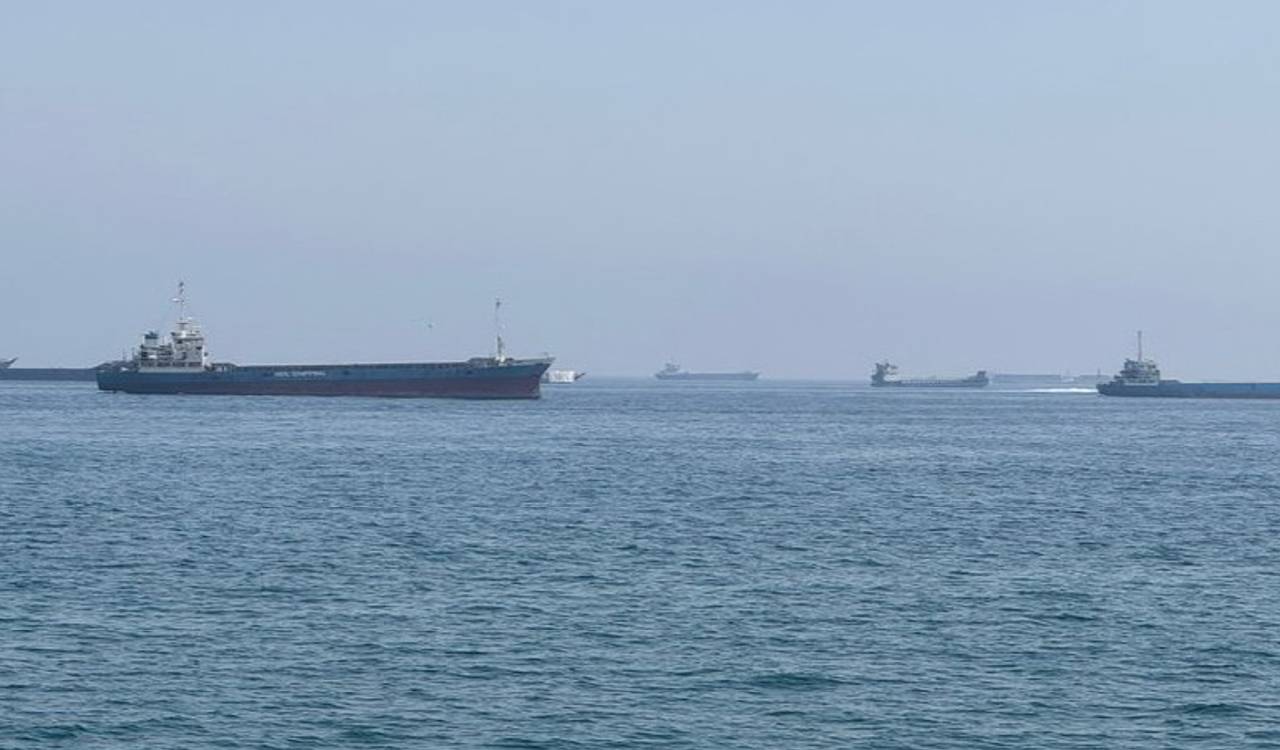
New Delhi: The possibility of disruption in the Strait of Hormuz due to rising tensions in West Asia should not be viewed merely as an external crisis. It should be treated as a strategic warning. For decades, India has depended heavily on imported oil and gas moving through vulnerable maritime routes. Any prolonged disruption can affect transportation, agriculture, industry, inflation and overall economic stability.
China recognised this vulnerability years ago and diversified its energy sources through renewable energy, electric mobility, strategic reserves, domestic production and alternative supply networks. India faces a similar challenge today but does not have the luxury of another decade to prepare.
The answer lies not only in finding alternative suppliers but in fundamentally reimagining India’s energy ecosystem. India’s greatest overlooked energy resource is not hidden underground. It is visible in every village, town and city.
Mountains of municipal waste, agricultural residue, animal waste, food waste and organic matter continue to accumulate daily. Much of it is burnt, dumped or left untreated, creating pollution and environmental damage.
This waste should be treated as a strategic national resource. India needs a National Waste to Energy Mission operating from Panchayats to the national level. The objective should be simple: every kilogram of waste should generate energy, fertiliser or revenue.
India’s waste challenge can become India’s energy opportunity. The biggest mistake would be to assume that waste to energy can only be achieved through large industrial projects.
India requires a multi-layer model. At the village level, cattle waste, agricultural residue and household organic waste can be converted into biogas through community plants. Panchayats should become local energy producers.
At the district level, clusters of villages can operate bio methane and compressed biogas units supplying fuel for transport and local industries. At the city level, municipal corporations should establish integrated waste processing facilities producing electricity, gas and recyclable materials.
At the national level, large waste processing parks should be developed with industry participation. Such a decentralised approach creates thousands of energy generation points rather than dependence on a few large facilities. India’s biggest strength is not its resources but its talent.
The Government should launch a National Waste Innovation Challenge involving IITs, NITs, universities, engineering colleges, schools and start-ups. Every year, thousands of students develop innovative projects that rarely move beyond laboratories. This talent should be directed towards solving the waste challenge.
Special awards, incubation grants and commercialisation support should be provided for innovations in waste collection, segregation, transportation, methane capture, recycling and waste-based electricity generation. Students should compete to create the world’s most efficient and affordable waste to energy technologies.
A mission comparable to India’s space and digital revolutions can unleash extraordinary creativity while promoting indigenous solutions. India should become a global leader in applying artificial intelligence to waste management.
AI can identify waste generation patterns, optimise collection routes, reduce transportation costs and improve segregation efficiency. Smart bins, sensor-based systems and predictive management models can significantly improve productivity.
Municipalities can use AI platforms to determine where waste is generated, what type of waste is produced and which conversion technology is most suitable.
The combination of AI and India’s digital infrastructure can create one of the world’s most efficient waste management ecosystems. Waste should no longer be viewed as garbage. It should become a tradable economic asset.
Citizens who segregate waste should receive incentives. Housing societies should receive rebates. Schools should be rewarded for recycling initiatives. Companies should receive tax benefits for waste conversion projects.
Large industrial houses in energy, infrastructure and manufacturing sectors should be encouraged to adopt districts and create integrated waste management ecosystems.
Public private partnerships must become the backbone of the mission. The government alone cannot manage the scale of India’s waste challenge.
Alongside waste to energy, solar power must expand rapidly. The PM Surya Ghar initiative is an important beginning, but the scale must grow substantially. Every rooftop should become a potential power station.
Schools, monasteries, temples, government buildings, commercial complexes and residential colonies should contribute electricity to the grid. Simplified procedures, easier financing and targeted subsidies should encourage mass participation.
The objective should be energy generation by millions of citizens rather than dependence on a limited number of producers. Renewable energy alone cannot immediately replace imported hydrocarbons. India must simultaneously pursue a second track strategy focused on diversification of supply.
Engagement with Central Asia, Russia, Turkmenistan, Myanmar and other potential suppliers should be intensified. Alternative pipeline corridors, long term gas agreements and expanded LNG infrastructure should become national priorities.
The Bay of Bengal should emerge as a major energy gateway supported by modern ports, storage facilities and diversified shipping routes.
Renewable energy, waste to energy initiatives and domestic production can significantly reduce dependence on imported fuel, but they cannot completely replace India’s energy requirements in the foreseeable future. India therefore needs a fourth pillar in its energy security architecture: Energy Diplomacy.
Just as defence diplomacy has become an important component of India’s strategic outreach, energy diplomacy must become a national mission. Every Indian Ambassador, High Commissioner and diplomatic mission should actively identify new sources of oil, gas, critical minerals, renewable technologies and long term energy partnerships.
India’s search for energy security cannot remain confined to the Gulf region. The country must deepen engagement with Central Asia, Russia, Mongolia, Southeast Asia, Africa and Latin America. Countries such as Turkmenistan, Kazakhstan, Uzbekistan, Russia and Myanmar deserve renewed strategic attention for long term cooperation.
China reduced its vulnerability not only through domestic reforms but also through sustained diplomatic efforts that created diversified supply chains and long term agreements. The “Energy diplomacy” is at the core of it.
The Ministry of External Affairs should establish a dedicated Energy Diplomacy framework under which Indian missions regularly report on emerging opportunities, technology partnerships, investments and supply diversification options. These inputs should be reviewed by a high-level Energy Security Council comprising representatives from relevant ministries, industry, scientists, IITs and policy experts submitting regular updates to the highest authority.
Energy security demands continuous monitoring, measurable outcomes and regular review. Every embassy should become a platform for advancing India’s energy interests. Energy diplomacy is no longer an option. It is a strategic necessity. The first year should focus on nationwide waste mapping, policy reforms and pilot projects.
The next two years should establish village biogas networks, district processing centres and urban waste conversion facilities. Simultaneously, innovation competitions should identify the most efficient indigenous technologies. Within five years, India should aim to become one of the world’s leading waste to energy economies.
The mission should be measured not only in megawatts generated but also in cleaner cities, healthier citizens, reduced landfills and lower dependence on imported fuel.
The Strait of Hormuz may remain vulnerable to geopolitical tensions for years to come. India cannot control events in West Asia, but it can control how prepared it is for them. The country’s response must rest on four pillars.
First, convert waste into energy through a nationwide mission. Second, accelerate solar power generation at household and community levels. Third, diversify energy supplies through multiple partners, routes and strategic agreements.
Fourth, institutionalise energy diplomacy as a key instrument of national security. India possesses the population, talent, entrepreneurial spirit and technological capability to achieve this transformation. What is needed now is urgency.
If India can mobilise its youth, involve industry, empower villages and convert waste into wealth, it can transform a major vulnerability into a strategic strength. The future of India’s energy security may not lie only in distant oil fields; it may also lie in the waste India throws away every day.

Related News
-

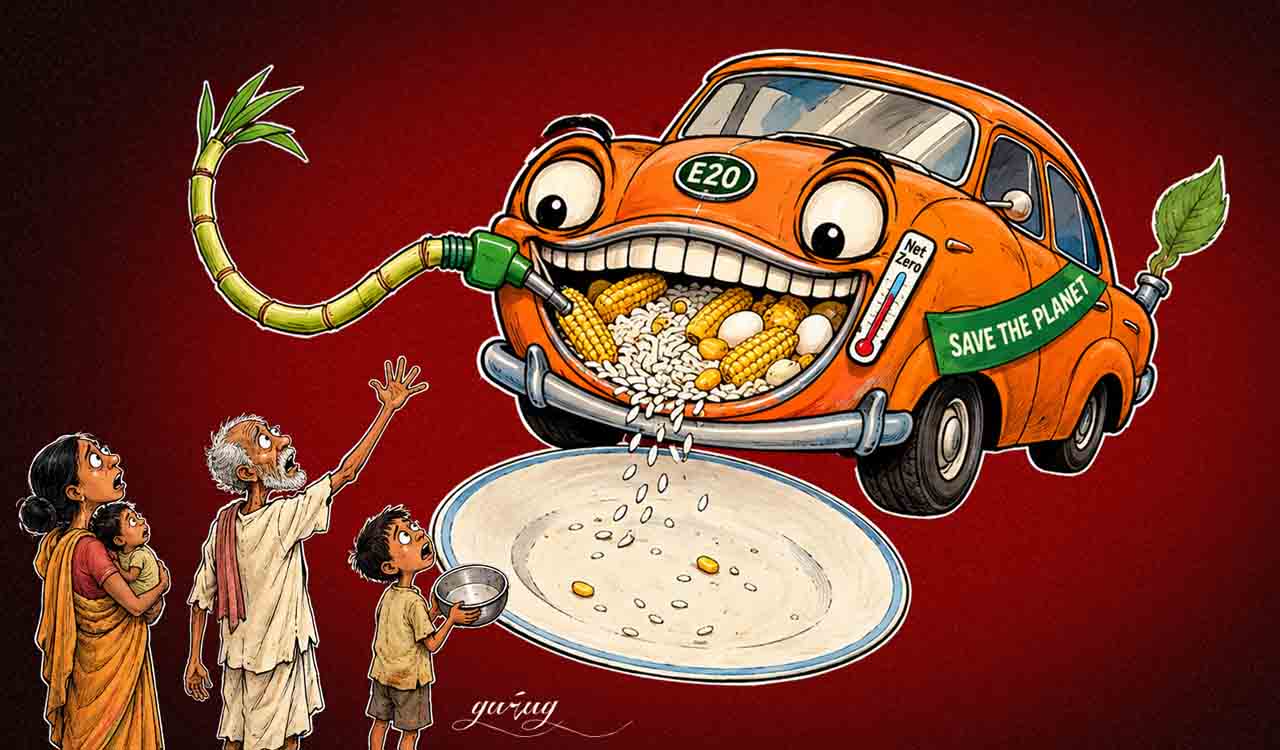
Opinion: Fuelling cars, emptying plates—the hidden costs of India’s ethanol policy
-
Iran’s IRGC says ‘violating’ supertanker exploded after hitting mines in Hormuz Strait
-
Iran reviewing US views on 7-day plan to cease hostilities: Senior diplomat
-
Iran’s IRGC hit 7 ‘violating’ oilers in Hormuz Strait in 5 days